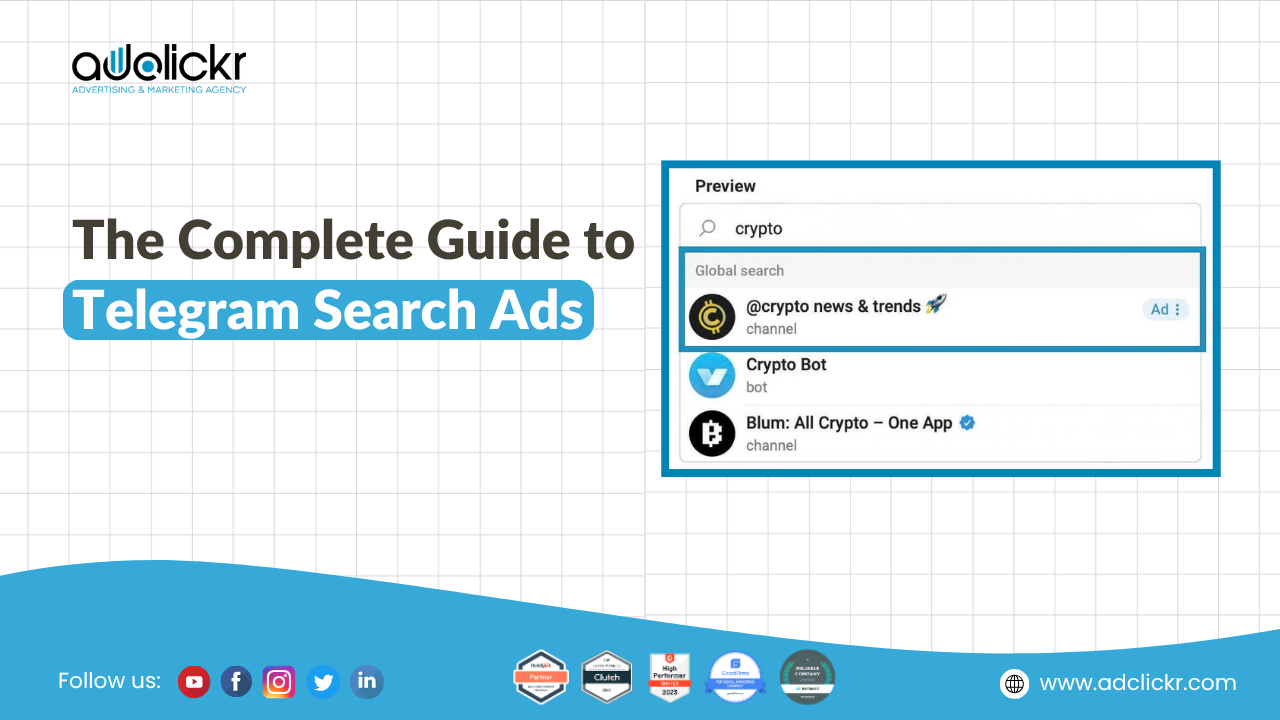
Are telegram search ads the shortcut to ready buyers inside Telegram?
Telegram search ads let you bid on keywords in Telegram search. Your channel or bot then appears at the top of results. The feature is new, so competition is still thin. Smart advertisers can claim strong positions before costs climb.
Telegram search ads are sponsored results triggered by keywords users type. You pick keywords, set a bid, and link a channel or bot. Telegram then shows your ad above organic results. Users see a small Ad label beside your listing.
This guide walks through the full process. You will learn setup, bidding, copy, and measurement. We also cover telegram search ads keyword targeting in detail. Everything here builds on our broader Telegram ads guide. If you want hands on help, explore our Telegram advertising services.
What Are Telegram Search Ads?
These promotions appear when someone searches a matching keyword. The format follows the logic of classic search advertising. Advertisers bid on terms, and the auction decides who wins. Read more about this model in this sponsored search auction overview.

Right now, channels and bots are the supported promotion targets.
How the Ad Looks in Search
A user opens Telegram and types a keyword. Sponsored results appear at the top with an Ad label. Below them, organic channels, bots, and messages follow.
Your listing looks native, which builds trust quickly. Tapping it opens your channel or bot directly.
Why the Format Matters Now
Search ads are the newest major update in the Telegram ad ecosystem. Interest is rising fast, while competition stays low. Early bidders often enjoy cheaper reach and stronger placement.
Nobody knows how long that window will last. Acting now gives you a real edge.
Why Search Intent Beats Passive Reach
Most Telegram ads interrupt people who are scrolling channels. Search works differently because the user asks first. That intent sits near the bottom of your marketing funnel.
People typing a keyword already want an answer. Your ad simply arrives as that answer.
Compare this with organic search, which takes months to build. Paid search placement gives you instant visibility instead. It also lets you test demand before investing in content.
Telegram Search Ads Keyword Targeting Explained
Keyword targeting is the engine behind every search placement. You choose words users type, and Telegram matches them. The system resembles Google Ads, though controls are simpler.
Targeting options may vary by account type. Some advertisers report keyword targeting on TON funded accounts. Check your dashboard for exactly what your account supports.
Types of Keywords to Target
Not every keyword deserves your budget. Group them by intent before you bid.
- Category keywords capture people exploring a topic, like crypto news.
- Problem keywords capture people looking for a solution.
- Brand keywords protect your name from competitors.
- Competitor keywords intercept people comparing alternatives.
Check Telegram policies before using competitor names. Where available, language and country settings refine reach further.
How to Set Up Your Keyword Campaign Step by Step
Follow these six steps to launch your first campaign.
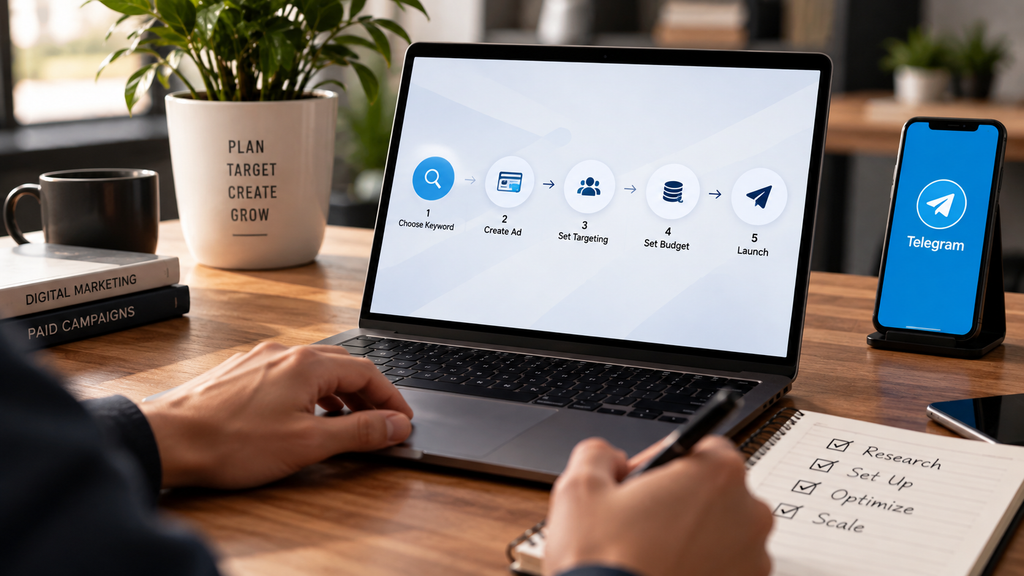
Step 1: Create and Fund Your Account
Visit the official Telegram Ads platform to begin. Create an account and choose your funding method. Keyword features may depend on which account type you pick. Review the ad policies before spending anything.
Step 2: Prepare Your Target Link
Your ad must point to a public channel or bot. Use a clean Telegram username link that users recognize. Polish your name, photo, and description first. Those elements decide whether searchers tap or scroll past.
Step 3: Choose Your Keywords
Start with a list of thirty candidate terms. Use a proper keyword research process to validate them. Tools like keyword search tools reveal related phrases.
Prioritize terms that match what your channel actually offers. Relevance protects your budget and your ad quality.
Step 4: Write a Short Ad
Search listings are compact, so every word must earn its place. Follow the character limits shown in your dashboard. Lead with the benefit, not your company history.
Mirror the keyword so users see instant relevance. Think of it like a meta description for your channel.
Step 5: Set Bids and Budget
Telegram runs an auction, so your bid influences position. Start with a modest daily budget and watch results. Raise bids only on keywords that convert well. Pause weak terms quickly to avoid wasted spend.
Step 6: Launch and Review
Submit the campaign and wait for moderation approval. Once live, check impressions, clicks, and new subscribers daily. Adjust keywords weekly as you learn what works. Consistent review beats occasional big changes.
How to Research Keywords for Telegram Search
Telegram offers limited keyword data, so research needs creativity. Begin by typing seed terms into the Telegram search bar. Note which channels and bots already rank organically. Their names and descriptions reveal the phrases people use.

Next, borrow ideas from web data using keyword search volume reports. Our guide on keyword research for SEO shows how to cluster terms.
Web demand does not equal Telegram demand, so test small. Finally, review the wording your best subscribers use in comments.
Sample Keyword Ideas by Niche
Ideas differ across niches, so adapt each list.
- Crypto channels might test market news, token alerts, and trading education.
- Education channels might test exam prep, study tips, and language practice.
- Utility bots might test converter, reminder, and assistant.
- Shopping channels might test deals, coupons, and product drops.
Always validate each idea with a tiny test budget.
Score Keywords Before You Bid
Rate each keyword on three factors.
- Relevance to your offer
- Estimated demand
- Competition level
Bid first on terms scoring high in relevance and demand. Test competitive terms only after you win easier ones.
Bidding Strategy to Secure Top Visibility
Top position matters because searchers tap the first results. Your bid, relevance, and engagement all influence placement. Treat bidding as a steady experiment, not a guess.

Start Low, Then Climb
Launch with bids near the suggested range. Increase bids by small steps every few days. Stop when extra spend no longer improves subscriber quality.
Protect Winning Keywords
Your best converting keywords deserve dedicated budget. Split them into separate campaigns for cleaner data. Then track each group through your social media marketing strategy.
Consistency across channels strengthens every paid effort.
Budget Planning for Your First Month
Treat month one as a learning phase. Divide your budget across three to five keyword groups. Give each group enough time to gather data.
Avoid judging results after only one day. Reserve twenty percent for retesting your best performers. Scale spend only when cost per subscriber stays stable.
Optimize Your Channel or Bot for Conversions
Winning the click is only half the job. Your destination must convince visitors to join or start. Treat it like a landing page, and apply conversion rate optimization thinking.

Clear names, pinned posts, and strong welcome messages help. For bots, keep the first reply short and useful. Consider AI automations to answer common questions instantly. Fast replies keep curious searchers from leaving.
Match Ad Promise and Landing Content
If your keyword promises daily tips, deliver them immediately. Mismatch causes quick unsubscribes and wasted budget. Pin your best post to prove value quickly.
Naming Your Channel for Search Success
Your channel name acts as your first impression in search. Include the main keyword naturally within the name. Avoid stuffing several keywords into one awkward title.
Pick a short username that is easy to remember. Write a description that explains value in one glance. Follow the same principles you use for meta title length decisions.
Targeting Language and Region Wisely
Language and region settings can sharpen relevance where available. A Hindi keyword needs a Hindi speaking audience. Match keyword language to your channel language always.
Regional demand differs, so learn from geo targeted SEO research. Test one market before expanding to several. Local wins give you data for bigger rollouts.
Who Benefits Most From Search Placements
Some businesses gain more than others from this format.
- Crypto and fintech channels seeking informed subscribers
- Course creators and coaches selling education
- Ecommerce brands running Telegram shops
- News, media, and community channels growing audiences
- Software teams promoting utility bots
Ecommerce sellers can pair this with ecommerce PPC campaigns. Local service brands can also test region specific keywords. Use local SEO keyword research ideas to find those phrases.
Example Campaign Scenarios
Imagine a language learning channel targeting English speakers. It bids on keywords like English practice and grammar tips. Searchers see the ad while looking for study help.
Now imagine a bot that converts documents into PDFs. It targets utility keywords such as converter and file tools. Both examples match ad promise with clear user intent.
Results depend on execution, so treat these as illustrations.
Telegram Search Ads vs Google and Meta Ads
Every ad platform captures demand differently. Google captures intent across the whole web. Meta interrupts users based on interests and behavior. Telegram sits between them inside an engaged messaging environment.

Our Google Ads management services cover the web side. Our Facebook advertising team handles interest based social campaigns. A blended plan works best for most brands. See how performance marketing vs growth marketing shapes that mix.
Key Differences at a Glance
- Google targets web searches, Telegram targets in app searches.
- Meta relies on interests, Telegram search relies on typed keywords.
- Telegram audiences already sit inside a chat first ecosystem.
Measuring the Performance of Your Campaigns
You cannot improve what you do not measure. Telegram provides impressions, clicks, and spend inside its ad dashboard. Subscriber quality needs extra tracking beyond those numbers.
Metrics That Matter
- Cost per new subscriber
- Click through rate
- Retention after seven days
- Conversion to sale or lead
Cost per subscriber tells you if bids are sustainable. Retention shows whether keywords attract the right people.
Review Results With Patience
Early numbers can mislead you. Wait for enough impressions before drawing conclusions. Look for trends across weeks, not single days.
Patient testing prevents costly overreactions. Document every winning setup for future campaigns.
Build Simple Reporting
Create a weekly sheet with one row per keyword. Add spend, joins, and leads beside each row. Strong analytics reporting dashboards make patterns easy to spot.
A data driven marketing mindset turns numbers into decisions. Review the report before changing any bids.
Track Results Beyond Telegram
Use unique tracking links for landing pages and offers. Compare Telegram joins against sales inside your CRM. Run a funnel audit checklist to find leaks after the click. Fixing leaks lifts profit without raising your bids.
Advanced Telegram Search Ads Keyword Targeting Tactics
Once basics work, refine your approach.

Prune Weak Keywords Often
Review keyword performance every seven days. Cut terms that bring joins but no engagement. Redirect that budget toward proven performers.
Test Multiple Creative Angles
Run two channel descriptions against the same keywords. Change only one element at a time. Small wording shifts can change join rates noticeably.
Combine Paid and Organic Search
Paid placement works best beside strong organic ranking. Optimize your channel name, username, and description for search. Our social media marketing tools roundup can speed up this work. Organic wins lower your reliance on paid bids.
Use AI to Scale Testing
AI can cluster keywords and draft description variations quickly. A strong AI marketing strategy keeps humans in control. Always edit machine drafts so they sound natural.
Extend Reach Across Messaging Channels
Telegram works best as one part of a system. Pair it with WhatsApp marketing for wider conversational reach. Follow an omnichannel marketing strategy so messages stay consistent. Consistent messaging builds trust across every touchpoint.
How Search Placements Fit Your Wider Strategy
Paid search placement should support bigger goals. Use it to feed a subscriber base you can nurture. Nurtured audiences later convert through posts, offers, and bots.
Our digital marketing strategies guide explains how to connect these pieces. Also explore social media advertising options across other platforms. Diversified channels protect you from sudden platform changes.
Where Telegram Search Advertising Is Heading
Search will likely grow as Telegram adds more features. More users mean more queries and more advertiser interest. Costs typically rise once a marketplace becomes crowded.

Early experience with keyword data becomes a lasting advantage. Keep watching official announcements for new targeting options.
Compliance and Policy Basics
Telegram reviews every ad before it goes live. Developers can study the sponsored messages API reference for technical context. Avoid misleading claims, prohibited products, and deceptive promises.
Rejected ads waste time and can hurt account standing. The Telegram FAQ also explains how the platform handles privacy.
Common Mistakes to Avoid
Many new advertisers repeat the same errors.
- Bidding on broad terms without clear relevance
- Sending traffic to weak, unfinished channels
- Ignoring retention and judging only cost per join
- Changing many variables at once
- Copying competitor names without checking policy
Each mistake is easy to fix with steady review.
A Quick Launch Checklist
- Confirm your channel or bot looks polished.
- Build a scored keyword list.
- Write clear, benefit led descriptions.
- Set a safe daily budget.
- Track joins, retention, and sales weekly.
- Prune, test, and scale winners.
Save this list and revisit it before each new campaign.
When to Bring in Experts
Some teams prefer to hand off campaign management. A specialist can speed up testing and reduce waste. Consider a full service social media marketing agency for ongoing support. Our search engine marketing team also blends paid and organic tactics.
Frequently Asked Questions
They promote channels and bots when users type chosen keywords into Telegram search. Sponsored listings appear near the top with an Ad label. This captures strong and immediate buying intent.
You select keywords, set a bid, and link a channel or bot. Telegram runs an auction. It shows winning ads when searches match your chosen terms. Better relevance helps too.
Cost depends on your bid, competition, and keyword demand. Telegram uses an auction, so prices vary. Start with a small budget and scale once results look healthy. Always track spend.
Availability depends on your account type and region. Currently, channels and bots are the supported promotion targets. Check your dashboard and policies before planning any campaign. Rules may change often.
Track impressions, clicks, cost per subscriber, and seven day retention. Add unique links for offers and compare joins against sales. Review results weekly and adjust bids accordingly. Document every change.
Conclusion
Keyword based placements give brands a rare chance to meet ready buyers. Start with clear keywords, a polished destination, and a modest budget. Measure subscriber quality, prune weak terms, and scale proven winners.
Telegram search ads may not stay this affordable forever. The advertisers who learn now will lead later. Ready to build your campaign with expert support? Explore our SEO services and paid media options today.

About the author
Ujjwal Kumawat
I specialize in SEO, website development, Google Ads and online business growth strategies. Through my blogs, I share practical insights, marketing tips and proven strategies to help businesses improve their online visibility, generate more leads and grow faster in the digital space.