What are core web vitals and why do they matter so much?
Quick Answer: Core web vitals are Google metrics. They measure loading speed, interactivity and visual stability. Together they show real user experience. Good scores can support better rankings.
Introduction
Core web vitals shape how visitors experience your website every day. Every click, scroll and tap gets measured. Google uses these signals to judge page quality. Slow or unstable pages frustrate users quickly. This frustration often leads to lost traffic and conversions.
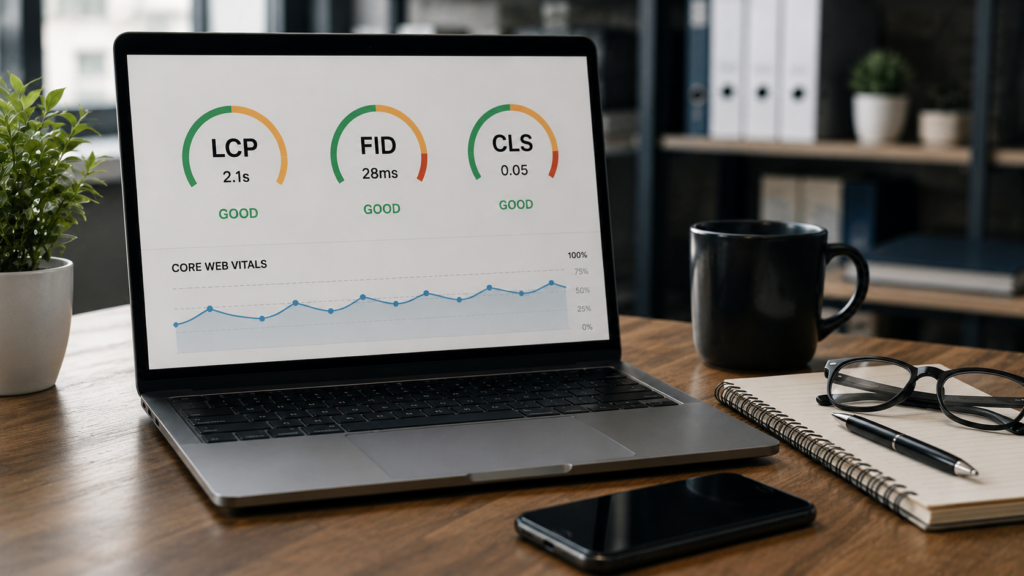
Understanding what is core web vitals helps you fix real problems. It also helps you plan smarter technical SEO audits. This guide breaks down every metric in simple terms. You will learn what each score means. You will also learn how to improve it.
We will also cover common mistakes and future trends. By the end, you will feel confident checking your own site. No advanced coding knowledge is required to follow along.
What Are Core Web Vitals
So what are core web vitals exactly? They are a set of Google measurements. These measurements track how a page performs for users. They focus on speed, responsiveness and layout stability.
Google introduced these metrics as part of page experience signals. They sit alongside factors like mobile first indexing and secure browsing. Unlike older speed tools, these vitals reflect real world usage. That makes them more trustworthy for site owners.
Many marketers still ask what is core web vitals in simple words. Think of it as a health checkup for your site. It tells you where users struggle the most. Fixing these issues often improves both rankings and revenue.
Why Core Web Vitals Matter in SEO
Core web vitals in SEO play a growing role today. Google confirmed page experience influences search rankings. Pages with poor scores may rank lower than rivals. This applies across desktop and mobile searches alike.
Search engines want to reward genuinely useful pages. A fast, stable page keeps visitors engaged longer. Longer engagement often signals quality content to Google. This connects directly to your organic search visibility.
Business owners running an ecommerce SEO strategy cannot ignore this. Shoppers abandon slow product pages within seconds. Every second of delay can cost real sales. That makes core web vitals a revenue issue too.
Beyond rankings, these vitals affect user trust directly. Visitors judge brands by how sites feel to use. A clunky, jumpy page looks unprofessional immediately. Smooth experiences build confidence and repeat visits.
Core Web Vitals Metrics Explained
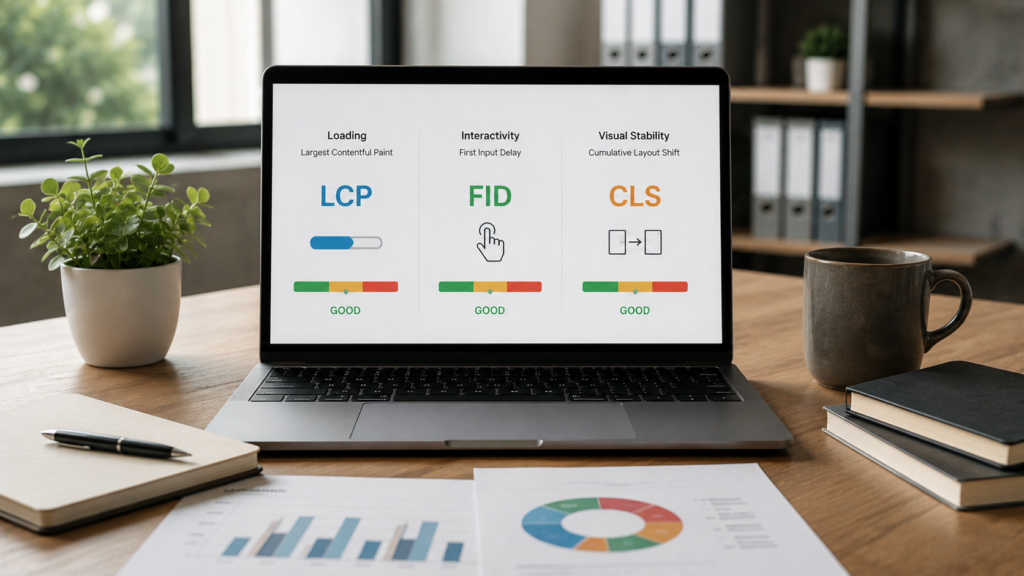
There are three core web vitals metrics tracked by Google. Each one measures a different part of user experience. Together they paint a full performance picture.
Largest Contentful Paint
Largest Contentful Paint measures how fast content loads. It tracks when the biggest visible element appears. This could be an image, video or text block.
A good score falls under two and a half seconds. Anything slower frustrates visitors waiting for content. Heavy images and slow servers often cause delays. Reviewing your site speed optimization strategy helps here.
Interaction to Next Paint
Interaction to Next Paint measures responsiveness after user actions. It checks how fast the page reacts to clicks. Delayed reactions make sites feel broken or slow.
Heavy JavaScript often causes poor responsiveness scores. Reviewing your approach to JavaScript SEO can help. Cleaner code usually leads to faster interactions.
Cumulative Layout Shift
Cumulative Layout Shift measures unexpected visual movement. It happens when elements jump while a page loads. Ads, images and fonts often trigger these shifts.
A low score means a stable, predictable layout. Users should never misclick buttons due to shifting content. Setting proper image dimensions reduces this problem significantly.
How Google’s Core Web Vitals Are Scored
Googles core web vitals use simple color coded results. Green means good, orange means needs improvement, red means poor. This scoring appears inside several free Google tools.
Google gathers real user data through Chrome browsing history. This differs from lab based testing tools. Real data reflects actual conditions across devices and networks. That includes slow connections and older phones too.
Site owners should check both mobile and desktop scores. Mobile often performs worse due to weaker hardware. Prioritizing mobile first indexing SEO fixes helps both experiences.
How to Measure Core Web Vitals
You can measure these vitals using free Google tools. PageSpeed Insights shows both lab and field data. Google Search Console reports vitals across your entire site.

Third party tools like GTmetrix offer deeper diagnostics. These tools highlight exactly what slows your pages down. Regular checks help catch problems before rankings drop.
Running a full SEO audit regularly is wise. Combine that with a dedicated core web vitals optimization guide for deeper fixes. This combination keeps performance consistent over time.
Field Data Versus Lab Data
Field data comes from real visitors using your site. It reflects actual devices, networks and locations. This data updates over a rolling twenty eight day window.
Lab data comes from controlled test environments instead. It offers instant feedback during development work. Both types matter for a complete performance view.
Developers often use lab data to catch issues early. Marketers rely more on field data for ranking context. Comparing both helps teams prioritize the right fixes.
Understanding Google Search Console Reports
Google Search Console groups pages by vital status. It labels groups as good, needs improvement or poor. This makes it easy to spot patterns quickly.
Reviewing this report monthly helps catch regressions fast. New template changes can suddenly hurt entire page groups. Checking your keyword research data alongside vitals adds useful context. You can see which important pages need urgent fixes first.
How to Improve Core Web Vitals
Improving these scores requires several practical steps. Below is a simple checklist to follow.
- Compress and resize all website images properly.
- Use proper alt text on images without adding bloat.
- Minimize unnecessary JavaScript and third party scripts.
- Set fixed dimensions for images and embeds.
- Choose reliable, fast hosting for your website.
- Enable browser caching for returning visitors.
- Use a clean, well structured sitemap for crawling.
Working with a proper technical SEO for website performance plan speeds this up. Many businesses also invest in custom website development for better foundations. A well built site handles vitals more easily long term.
If you run a larger platform, consider wordpress website development best practices. Bloated themes and plugins often hurt performance badly. Removing unused code speeds up loading noticeably.
Core Web Vitals and Other SEO Factors
Core web vitals do not work alone in SEO. They connect closely with other technical elements. Proper canonical tags prevent duplicate content confusion. Clean pagination SEO also supports smoother crawling.

Adding schema markup helps search engines understand pages faster. This often pairs well with strong performance scores. Together they build a stronger technical foundation.
Your meta description and meta title length also matter for clicks. Fast pages combined with strong titles improve overall results. This builds a full picture of on page SEO quality.
Regular content audits help remove bloated, outdated pages. Lighter pages generally score better on vitals. Pairing this with a solid backlink strategy strengthens rankings further.
Tracking domain authority alongside vitals gives a fuller picture. You can check current standing using a domain authority checker. Watching organic traffic trends shows real impact over time.
Businesses focused on local SEO should not skip vitals either. Local searchers often browse on mobile networks. Fast, stable pages win more local customers. A proper local SEO audit usually includes speed checks.
For structured planning, many teams rely on professional SEO services. Others explore AI SEO services for faster diagnostics. Both approaches can fold vitals into a wider strategy.
Common Mistakes That Hurt Core Web Vitals
Many websites repeat the same performance mistakes. Oversized hero images often slow loading dramatically. Too many pop ups cause layout shifts constantly.
Unoptimized fonts also delay text rendering noticeably. Third party ad scripts frequently block faster interactions. Ignoring mobile testing leaves major issues unnoticed.
Skipping regular checks on how your SEO is working is risky. Performance can quietly decline without anyone noticing. Scheduled reviews catch these issues early.
Industry experts at Moz also stress consistent monitoring habits. Their research shows small delays compound into major drop offs. Fixing one issue often reveals another hiding beneath it.
Publications like Search Engine Journal track algorithm changes closely too. Following trusted sources keeps your strategy current. SEO guidance shifts as Google updates its systems.
Weak crawl budget management can also slow discovery of fixes. Bots waste time on broken or bloated pages. Cleaning up your site structure helps crawlers work efficiently.
Reviewing your backlink checker tools alongside performance data reveals broader gaps. Strong links paired with slow pages waste real potential. Fixing speed first lets those links work harder for rankings.
The Role of Hosting and Servers
Server response time directly affects every core web vital. A slow server delays every single page element. Upgrading hosting plans often brings quick, noticeable gains.

Content delivery networks reduce distance between users and servers. This shortens loading times across different regions. Global businesses benefit greatly from this kind of setup.
Database heavy websites need special attention too. Poorly optimized queries slow down page generation badly. Regular database cleanup keeps everything running smoothly.
Core Web Vitals Checklist for Beginners
Beginners often feel overwhelmed by technical performance work. A simple checklist makes the process manageable. Follow these steps in order for best results.
- Run your homepage through PageSpeed Insights first.
- Note your current scores for each metric.
- Fix the largest, easiest problems first.
- Recheck scores after every major change.
- Track progress inside Google Search Console monthly.
- Repeat this process across your top pages.
Starting small builds confidence before tackling bigger fixes. Most sites see steady improvement within a few weeks. Consistency matters more than rushing every fix at once.
Pairing this checklist with a proper SERP tool helps track ranking movement. You can then connect performance changes to visibility shifts. This gives clear proof that your efforts are working.
The Future of Core Web Vitals
Google continues refining how it measures user experience. Interaction to Next Paint recently replaced an older metric. This shows vitals evolve as browsing habits change.
Future updates may focus more on mobile networks. Emerging markets often rely on slower connections. Sites built for resilience will likely benefit most.
Businesses investing early in performance gain a lasting edge. Competitors relying on outdated, heavy sites will struggle. Staying informed through a trusted AI SEO agency helps teams adapt quickly.
As artificial intelligence tools grow, monitoring becomes easier too. Automated alerts can flag sudden performance drops instantly. This lets teams respond before rankings suffer noticeably.
Core Web Vitals for Ecommerce and Business Sites
Ecommerce sites face unique performance challenges. Product galleries, filters and reviews add heavy elements. Balancing rich features with speed takes careful planning.

Strong ecommerce SEO strategies always factor in vitals. Faster checkout pages reduce cart abandonment significantly. Every improvement here often boosts conversion rates directly.
Service based businesses benefit too. Clinics exploring SEO for hospitals need fast, reliable pages. Patients expect instant access to information online.
Local shops and multi location brands also feel the impact. Fast pages help nearby customers find services quickly. Reviewing local SEO ranking factors alongside vitals gives a fuller strategy.
Law firms and clinics exploring local SEO for lawyers or healthcare listings share this need. Fast, trustworthy pages convert nervous visitors into clients. Every improvement builds credibility during a stressful decision.
Common Myths About Core Web Vitals
Many site owners misunderstand how these metrics work. Clearing up myths helps set realistic expectations.
Myth one: A perfect score guarantees top rankings. In reality, content relevance still matters most. Vitals act as a supporting ranking factor.
Myth two: Only large websites need to worry about this. Small business sites benefit just as much. Slow small sites lose visitors just as fast.
Myth three: Fixing vitals is a one time task. Websites change constantly through updates and new content. Ongoing monitoring keeps scores steady over time.
Understanding these myths helps teams focus on real priorities. Balanced strategies always combine speed with strong content. Neither factor alone guarantees lasting search success.
Final Thoughts on Core Web Vitals
Core web vitals are no longer optional for serious sites. They influence rankings, trust and revenue together. Treating them as ongoing maintenance pays off steadily.

Start by measuring your current scores today. Fix the biggest issues first for quick wins. Then build lasting habits around performance monitoring.
FAQs
Core web vitals are Google metrics measuring loading speed, interactivity and visual stability. They help evaluate user experience, guiding design decisions and SEO strategy for better search rankings and satisfaction.
Core web vitals measure website performance from a real user perspective. Google uses these scores as ranking signals, helping owners identify and fix issues that harm experience and search visibility.
You can check scores using PageSpeed Insights or Google Search Console. Both tools show field and lab data across mobile and desktop, highlighting problem areas needing attention for better performance.
Yes, core web vitals are officially part of Google’s page experience signals. Content quality remains most important, but poor vitals can hold back rankings when competing pages offer similar relevance.
You should monitor core web vitals monthly at minimum. Regular checks catch new issues from updates, plugins or added content early, preventing performance decline that could hurt rankings over time.
Conclusion
Core web vitals sit at the center of modern SEO. They combine speed, stability and responsiveness into one story. Ignoring them risks losing both rankings and visitors.
Businesses serious about growth treat vitals as a priority. Pair strong technical performance with smart content and outreach. Explore related guides like franchise SEO or enterprise SEO for broader strategy. Small performance fixes often lead to lasting, measurable results.
Remember that users notice speed before they notice content. A fast, stable page earns trust within seconds. That trust often turns casual visitors into loyal customers.
Make core web vitals part of your regular workflow. Review scores after every design or content update. This habit protects rankings and keeps visitors satisfied long term.

About the author
Ujjwal Kumawat
I specialize in SEO, website development, Google Ads and online business growth strategies. Through my blogs, I share practical insights, marketing tips and proven strategies to help businesses improve their online visibility, generate more leads and grow faster in the digital space.