What is the ideal meta description length for SEO?
Too short wastes valuable space. Too long gets cut off instantly. This guide explains the right balance clearly.
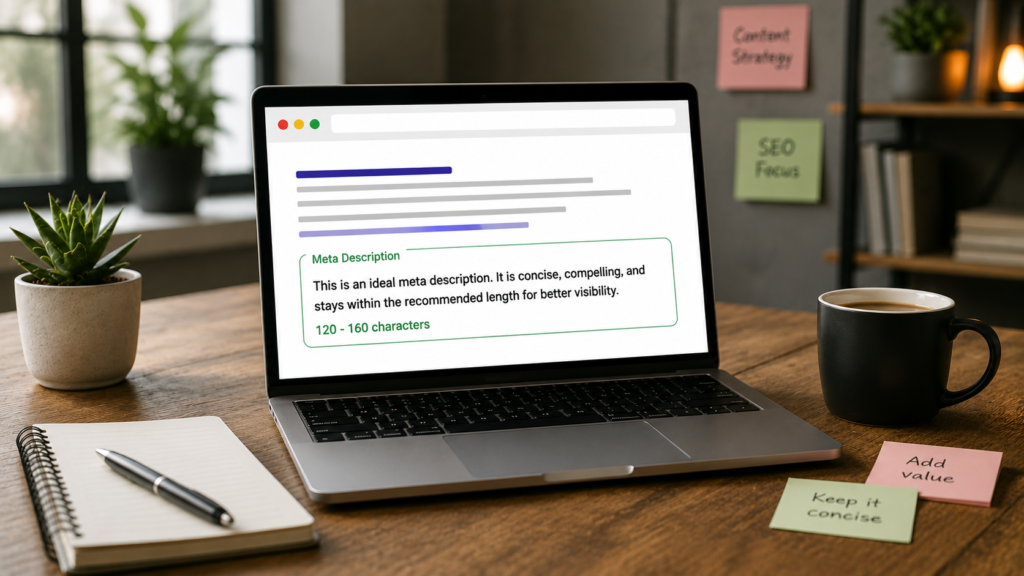
Quick Answer: Meta description length should stay between 120 and 158 characters. This range displays fully across most devices. Staying within this limit protects your message from truncation.
Introduction
Meta description length affects how your listing appears online. Getting it wrong wastes valuable search visibility. This article explains ideal length, character limits, and common mistakes. You will also learn simple tools to check length accurately.
Many writers guess at length without checking real limits. This guesswork often leads to cut off text. A little precision here protects your entire message.
What Is Meta Description Length
Meta description length refers to the character count of your summary. Search engines display only a limited portion of text. Anything beyond that limit gets truncated with dots.
This length matters because truncated text confuses readers. A cut off sentence rarely persuades anyone to click. Understanding this limit protects your click through potential.
Agencies offering SEO services pay close attention to this detail. Every page deserves a description that displays fully and clearly.
Ideal Meta Description Length Explained
The ideal meta description length sits within a specific range. Most experts recommend staying between 120 and 158 characters. This range works well across both desktop and mobile.
Shorter descriptions sometimes work fine too. However, they waste an opportunity to persuade searchers. Longer descriptions risk truncation and lost meaning entirely.
Testing different lengths helps confirm what performs best. Reviewing how to know if your SEO is working shows useful tracking approaches. Click through data reveals real audience preferences over time.
Meta Description Character Limit by Device
The meta description character limit changes slightly by device type. Desktop search results generally show more characters. Mobile results often display fewer characters overall.
This difference happens because screens vary in width. Google adjusts truncation points based on available space. Writing slightly shorter descriptions protects against mobile truncation.
Understanding mobile first indexing helps explain this priority shift. Google evaluates mobile experience first for most websites today.
Meta Description Limit: What Happens If You Exceed It
Exceeding the meta description limit causes automatic truncation. Google adds three dots where your text gets cut. This often breaks sentences in awkward, confusing places.
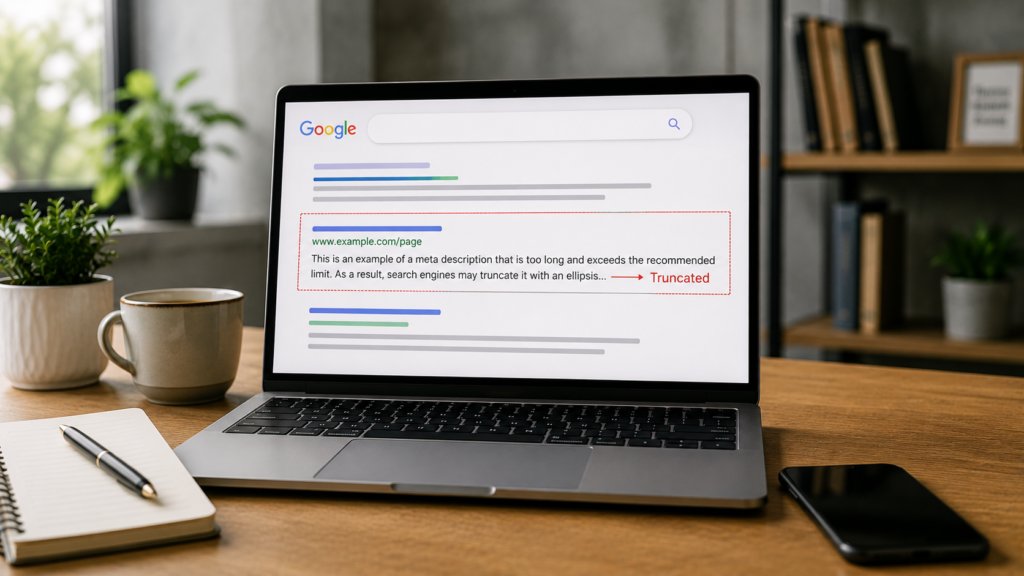
Truncated descriptions sometimes lose their entire call to action. This directly hurts click through rates significantly. Staying within limits protects your complete message instead.
Google sometimes rewrites descriptions that exceed ideal length anyway. This happens when the system decides another snippet fits better. Writing within limits reduces this rewriting risk.
Meta Description Max Length: Pixel Width Matters Too
Meta description max length is not only about character count. Google actually measures pixel width behind the scenes. Wide letters take up more space than narrow ones.
This means two descriptions with equal characters may differ. A description full of wide letters might truncate sooner. Simple, common words generally display more predictably.
Most writers do not need to calculate pixels manually though. Staying near the recommended character range usually works safely. Testing tools can confirm actual display results anyway.
Length of Meta Description by Content Type
The length of meta description can vary slightly by page type. Blog posts, products, and services sometimes need different approaches. Understanding these differences improves overall writing quality.
Blog Post Descriptions
Blog descriptions usually summarize key takeaways briefly. Following how to identify the right content length helps writers match description depth appropriately. Clear, direct summaries generally perform best here.
Product Page Descriptions
Product descriptions often highlight benefits within a tight limit. Following solid ecommerce SEO practices ensures consistency across large catalogs. Every word must earn its place within this short space.
Service Page Descriptions
Service pages benefit from confident, outcome focused wording. Pages like local SEO services often highlight results within limited space. Clear promises tend to perform better than vague claims.
Meta Description Should Be Between These Limits
Meta description should be between 120 and 158 characters typically. This range balances detail with safety against truncation. Staying slightly under the maximum protects your full message.
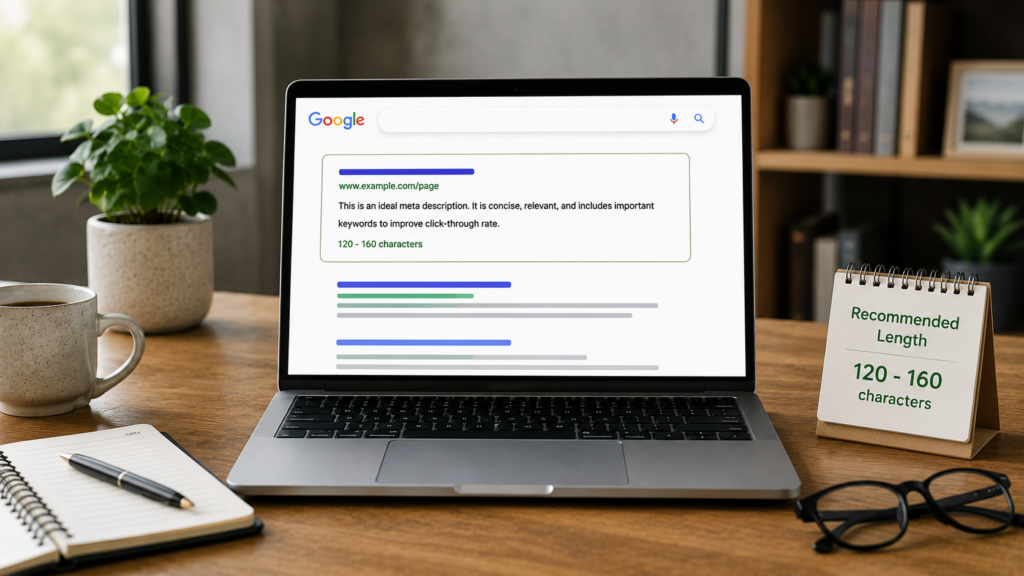
Some experts recommend an even tighter range for safety. Aiming for around 150 characters often works reliably. This buffer protects against unexpected pixel width differences.
Following a content audit guide helps identify descriptions outside this range. Many older pages contain descriptions written before current limits existed.
How to Measure Meta Description Length
Measuring length accurately prevents unpleasant surprises later. Several free tools exist for this exact purpose. Using them before publishing saves time and frustration.
- Write your description in a plain text editor
- Paste it into a character counting tool
- Check the count against recommended limits
- Preview how it looks in a snippet simulator
- Adjust wording until it fits comfortably
Reviewing best AI SEO tools reveals several options that include length checking features. Many AI writing platforms now build this check in automatically.
Common Mistakes With Meta Description Length
Many websites make avoidable length related mistakes. Awareness of these errors improves overall results quickly.
- Writing descriptions far too short to be useful
- Exceeding character limits without checking first
- Ignoring mobile display differences entirely
- Copying description length from unrelated competitor pages
- Forgetting to preview truncation before publishing
Following an image alt text guide reminds writers that small technical details matter everywhere. Length deserves the same careful attention as other on page elements.
Meta Description Length and Click Through Rate
Length directly influences how persuasive your description feels. A truncated sentence often loses its core message entirely. This weakens the connection between searcher and content.
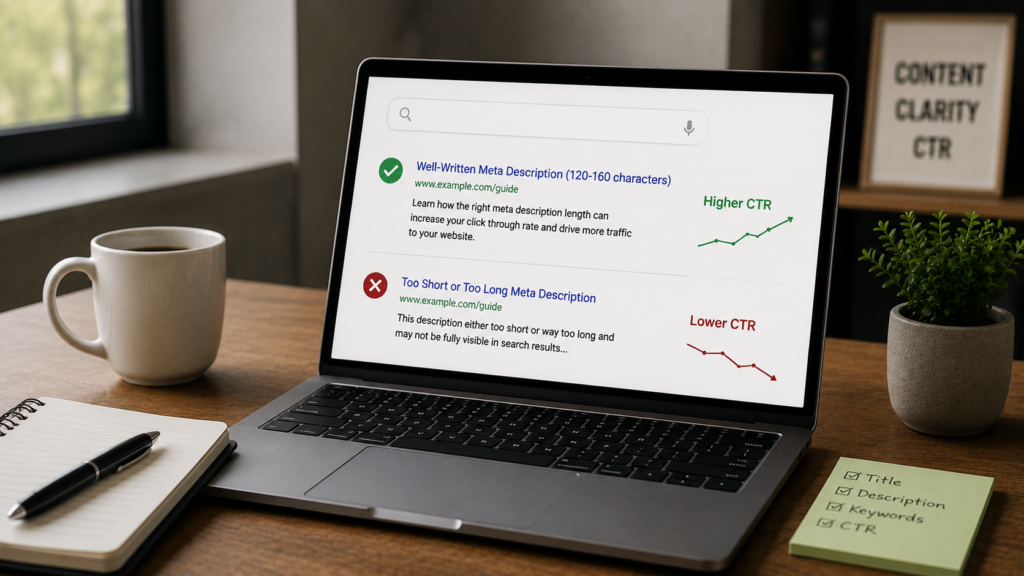
Properly sized descriptions display complete thoughts clearly. This clarity builds trust before someone even clicks through. Trust generally translates into stronger click through performance.
Tracking clicks over time confirms whether length changes helped. Reviewing check organic traffic data shows real world results. Small length adjustments sometimes produce measurable traffic improvements.
Technical Setup That Supports Proper Length Display
Technical health influences how descriptions actually display online. Proper canonical tags prevent duplicate content confusion across similar pages. This ensures search engines pull your intended description consistently.
Using consistent canonical URLs also supports accurate indexing overall. Confused indexing sometimes causes search engines to ignore length entirely.
Running a technical SEO audit checklist regularly catches oversized or missing descriptions. Many sites unknowingly publish pages without checking length at all.
Meta Description Length for Local and Specialized Pages
Local businesses often need location details within tight space. Mentioning city names naturally still fits recommended limits. This connects closely with broader local SEO strategies efforts.
Specialized industries face similar space constraints too. Healthcare providers reviewing SEO for hospitals must balance trust signals within limited characters. Restaurants following local SEO for restaurants often prioritize location and specialty details.
Meta Description Length for Enterprise and Franchise Sites
Larger websites face unique length management challenges. Hundreds of pages need consistent length checking. Manual review becomes difficult without a clear system.
A structured enterprise SEO approach helps manage this workload properly. Templates combined with length checking tools work best at scale.
Franchise businesses face similar challenges across many locations. Following a franchise SEO playbook helps standardize length while keeping local relevance. Consistency protects both branding and search performance.
Meta Description Length and AI Search in 2026
Search behavior continues shifting toward AI generated answers. This shift is called generative engine optimization, or GEO. Length rules may evolve alongside these newer search formats.
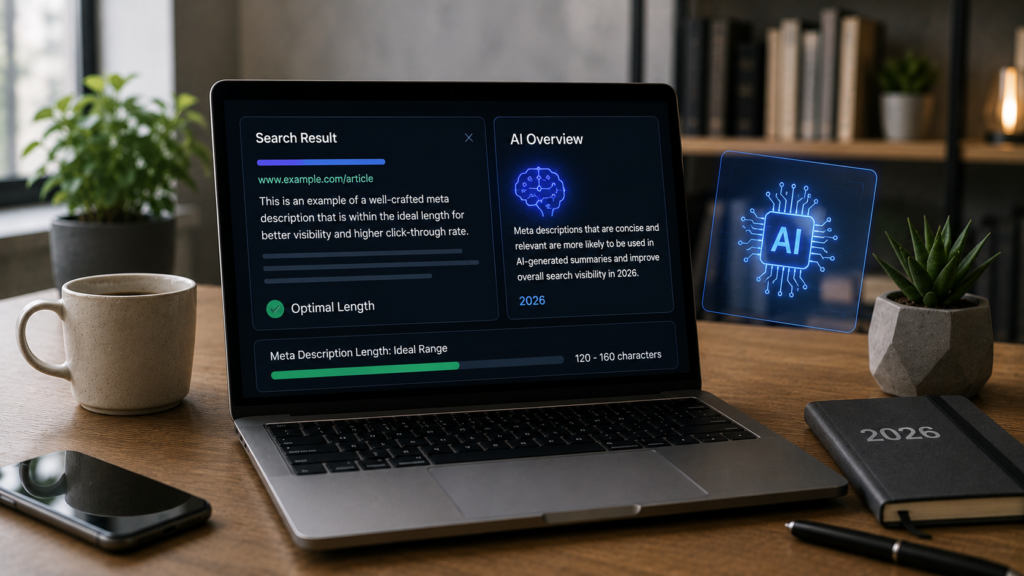
Understanding GEO vs SEO helps marketers prepare for these changes. Many brands now study what is AI SEO to stay current with evolving standards.
Following a GEO checklist keeps content ready for both traditional and AI search. Clear, well sized descriptions remain valuable across every search format.
Tools That Help Check Meta Description Length
Several tools make length checking fast and reliable. Using them regularly builds a strong writing habit. Below are common tool types worth exploring.
Character counters offer the simplest checking method available. They show exact counts as you type directly. This works well for quick, individual page checks.
Snippet preview simulators show how listings actually appear. These tools reveal truncation before you ever publish anything. Seeing the visual preview helps catch awkward cutoffs early.
SEO plugins often combine both features together conveniently. Reviewing AI SEO software options reveals platforms with built in length checking. Automated warnings save time across large websites especially.
Auditing Meta Description Length Sitewide
Regular audits keep length consistent across an entire website. Following how to perform an SEO audit reveals oversized or missing descriptions quickly. This process should happen periodically as sites grow larger.
Start by exporting every page description into one list. Sort results by character count from longest to shortest. This quickly reveals pages needing immediate attention first.
Next, identify any descriptions under sixty characters too. These short descriptions often waste valuable persuasive space. Expanding them slightly usually improves click through performance.
Finally, recheck length after every content update going forward. Small edits sometimes accidentally push descriptions past safe limits. Building this check into your workflow prevents future problems.
Meta Description Length and Schema Markup
Schema markup sometimes changes how listings display alongside descriptions. Rich results can add stars, prices, or other visual elements. This extra content competes for the same limited space.
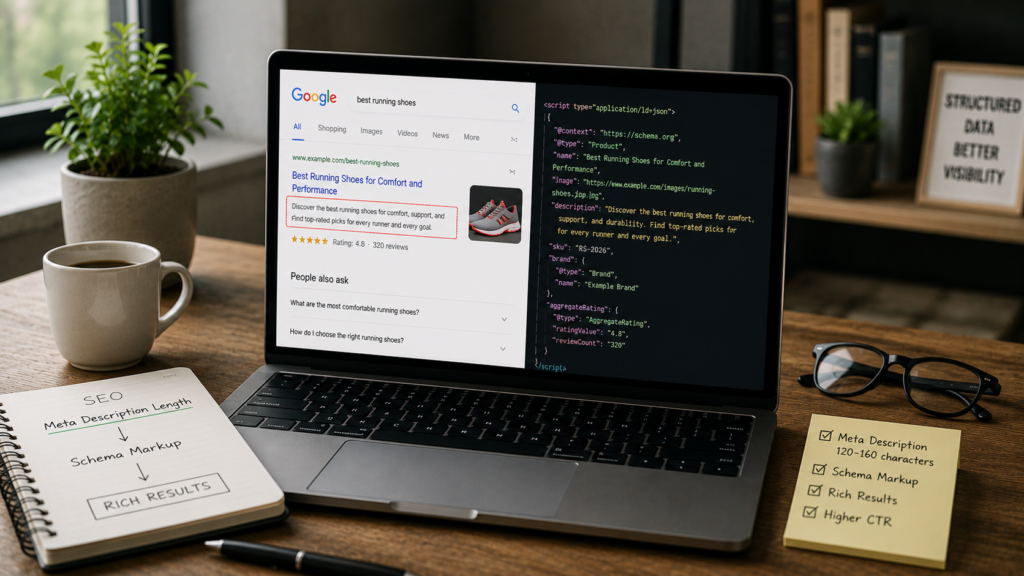
Following a schema markup complete guide helps writers understand this interaction better. Pages with rich results may benefit from slightly shorter descriptions.
This happens because rich elements take up visible space too. Balancing schema output with description length creates a cleaner listing. Testing different combinations reveals what displays most effectively.
Meta Description Length for WordPress and Custom Sites
Website platform choice can affect length management significantly. Some platforms warn you automatically about length issues. Others require manual checking without built in guidance.
Businesses using WordPress website development often rely on SEO plugins for this task. These plugins typically show live character counts while writing.
Custom built websites need slightly different handling instead. Working with a custom website development team ensures length warnings get built in properly. Missing this feature can lead to frequent length mistakes.
Choosing strong website design services from the start helps avoid these gaps. Planning for length checks early saves time during future updates.
Meta Description Length Within a Broader Content Strategy
Length management works best inside a complete content plan. Descriptions should reflect messaging used across your entire site. Consistency builds stronger recognition across every single page.
Aligning descriptions with a clear marketing funnel improves overall messaging consistency. Each funnel stage may need slightly different wording within the same length limits.
Running a funnel audit checklist occasionally reveals messaging gaps too. Descriptions sometimes promise something the landing page fails to deliver clearly.
Following a complete digital marketing strategies guide keeps this consistency intact sitewide. Meta description length becomes far more manageable within a unified strategy.
Meta Description Length for Multi Location Businesses
Businesses with many locations face unique length challenges. Each location page needs distinct, localized wording within limits. Templates help but still require careful customization.
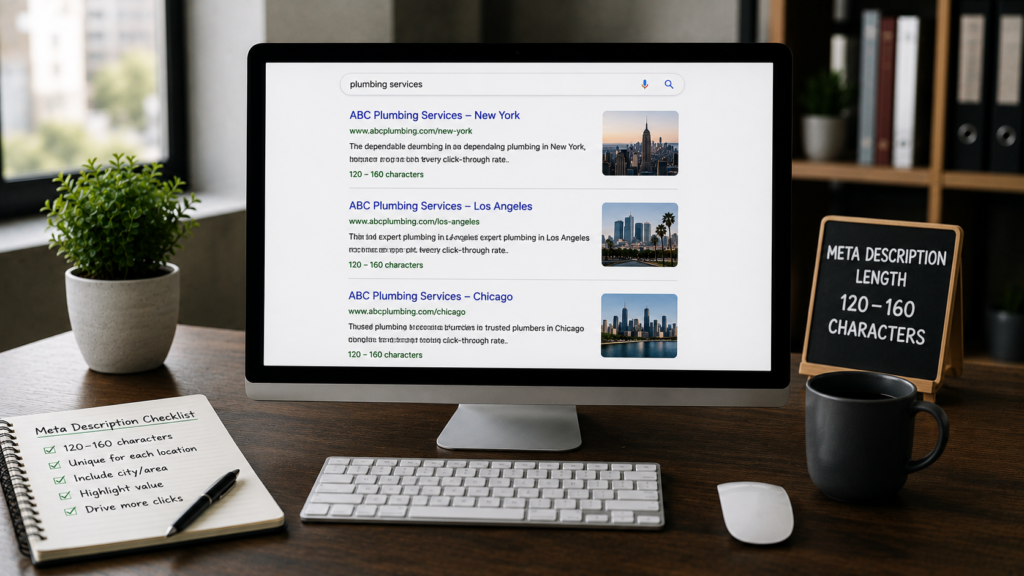
Following a multi location SEO guide helps standardize length while keeping local relevance. Consistency across locations protects both branding and search performance.
International businesses face similar constraints across languages too. Following a solid international SEO strategy guide helps manage length differences across translations. Some languages naturally require more characters than others.
Meta Description Length Checklist Before Publishing
A quick checklist helps avoid common length related mistakes. Reviewing these points before launch saves time later.
- Confirm the description falls between 120 and 158 characters
- Preview how it displays on both mobile and desktop
- Check for accidental truncation mid sentence
- Ensure the primary keyword still appears naturally
- Verify the description matches actual page content accurately
Following this simple checklist consistently improves overall listing quality. Small habits like this compound into stronger click performance over time.
Meta Description Length and Site Speed
Length is not the only factor influencing click success. A slow loading page can undo a great description quickly. Visitors often leave before content even fully appears.
Reviewing site speed optimization ensures your click actually turns into real engagement. Fast, properly sized descriptions consistently outperform slow, poorly measured ones.
External Resources Worth Reviewing
For deeper technical understanding, Google’s own Search Central documentation explains snippet behavior clearly. Moz also offers a helpful breakdown of meta description length guidelines.
Search Engine Journal regularly covers snippet length updates too. Ahrefs provides useful research through its SEO blog for further reading.
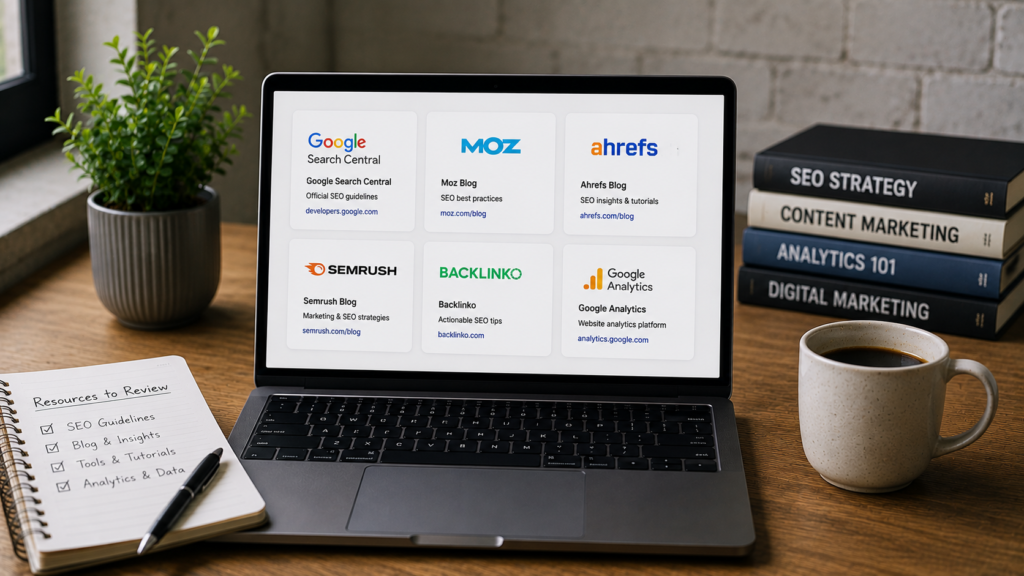
Semrush also offers strong on page SEO guides worth exploring further. These resources help teams refine their length testing approach.
Frequently Asked Questions
The ideal meta description length falls between 120 and 158 characters. This range displays fully across most desktop and mobile search results. Staying within this limit protects your message from unwanted truncation.
Exceeding the limit causes Google to truncate your text automatically. Three dots often appear where the description gets cut off. This can break your message and reduce click through performance significantly.
Yes, mobile screens typically display fewer characters than desktop screens. Google adjusts truncation points based on available screen width. Writing slightly shorter descriptions helps protect against mobile specific truncation issues.
No, length does not directly influence keyword rankings today. However, proper length affects click through rates significantly. Higher engagement can indirectly support performance through improved user interaction signals.
Use a character counting tool or snippet preview simulator online. Many SEO plugins also display length warnings automatically. Checking before publishing prevents unexpected truncation once your page goes live.
Conclusion
Meta description length remains a small but important SEO detail. Staying within 120 to 158 characters protects your full message. This simple habit prevents truncation and lost meaning entirely.
Businesses that check length consistently earn more reliable clicks. Combining proper length with clear, persuasive wording works best.
Agencies offering AI SEO services help simplify this process across large websites. Start checking your existing descriptions and adjust length where needed.
Small length adjustments often produce surprisingly noticeable results. A properly sized description can lift clicks within just a few weeks. Treat length checking as an ongoing habit, not a one time task.

About the author
Ujjwal Kumawat
I specialize in SEO, website development, Google Ads and online business growth strategies. Through my blogs, I share practical insights, marketing tips and proven strategies to help businesses improve their online visibility, generate more leads and grow faster in the digital space.