You have been investing in SEO for months, but how do you actually know SEO is working and paying off?
This is one of the most common and most important questions any business owner or marketing manager faces. Unlike paid advertising, where results appear almost immediately, SEO builds momentum over time. The absence of instant results does not mean your strategy is failing.
But it also does not mean you should keep investing blindly. This guide gives you the exact metrics to monitor, the clear signs that your SEO is working, the warning signals that something is wrong, and the steps to fix it.
What Does “SEO Is Working” Actually Mean?
Saying your SEO is working does not simply mean your website is appearing somewhere in search results. It means your organic search activity is generating measurable business outcomes: more qualified visitors, stronger keyword positions, higher engagement, and ultimately more leads, enquiries, or sales attributable to organic search.

The distinction matters because many businesses track the wrong signals. A surge in overall website traffic looks impressive but tells you nothing about quality if those visitors are bouncing within seconds without taking any action. A business reporting that SEO is working should be able to point to specific, meaningful improvements across a combination of traffic, rankings, engagement, and conversion metrics simultaneously.
Understanding what SEO success looks like is the foundation for every digital marketing strategy built on organic growth. Without this clarity, investment decisions become guesswork rather than strategy.
How Long Before SEO Shows Results?
SEO is not a switch you flip. It builds momentum in layers, and the timeline varies based on your website’s current authority, the competitiveness of your target keywords, and the quality and consistency of the work being done.
Weeks 1 to 4: Search engines crawl and begin evaluating new or updated content. Technical fixes start improving crawl efficiency. No visible ranking changes are expected yet.
Months 1 to 3: Early signs appear. Some lower-competition keywords begin moving up in search results. Impressions in Google Search Console start increasing even before significant clicks occur.
Months 3 to 6: Measurable ranking improvements for target keywords. Organic traffic begins a consistent upward trend. Engagement metrics improve as better-optimised content reaches more relevant visitors.
Months 6 to 12: Significant ranking gains for primary commercial keywords. Organic leads and enquiries from search become a consistent, trackable revenue channel.
Beyond 12 months: Compounding returns. High-authority pages continue ranking without proportional additional investment. The cost per organic lead decreases steadily as content and authority compound.
For businesses that have recently launched a new website or undergone a site migration, professional website development services that build technical SEO foundations correctly from the start compress this timeline significantly.
Key Signs Your SEO Is Working
Organic Traffic Is Growing Consistently
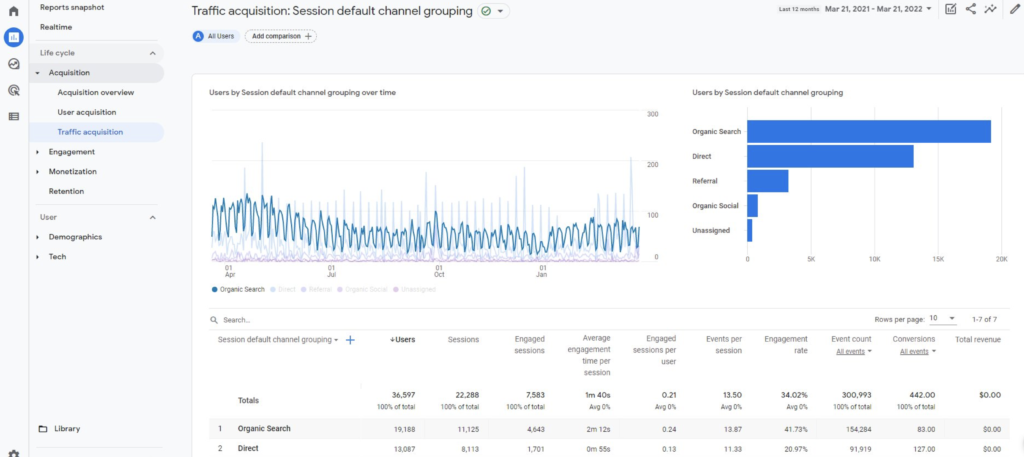
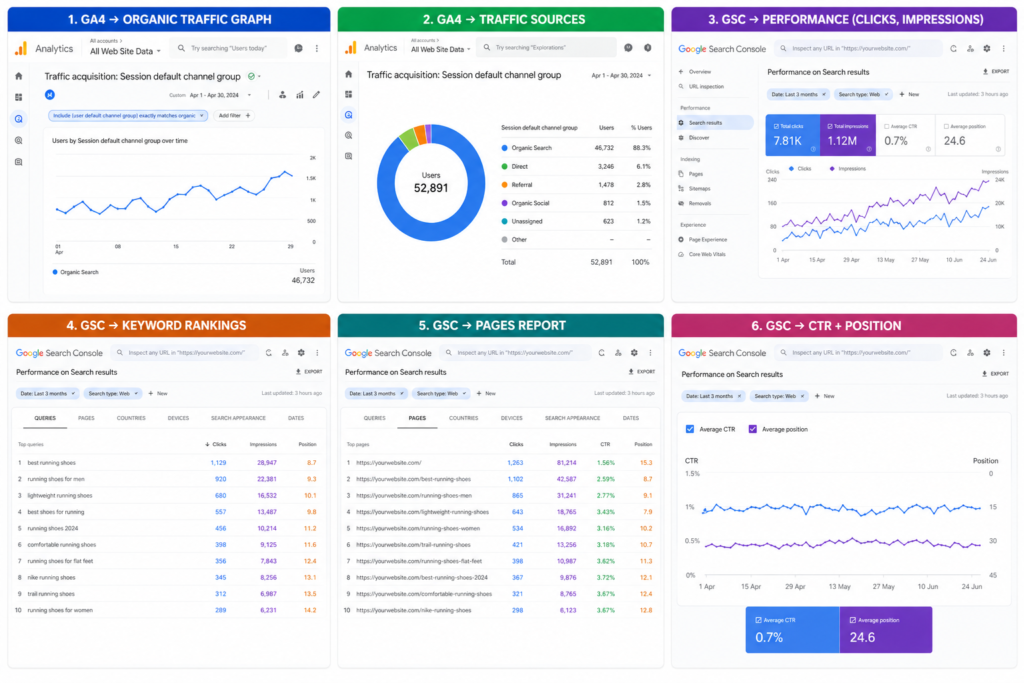
The clearest sign SEO is working is a steady upward trend in organic traffic over time. Open Google Analytics and review your organic sessions month over month and quarter over quarter. A consistent upward trend, even if gradual, confirms that search engines are sending more users to your site as a result of improved rankings and visibility.

Sudden spikes are less meaningful than sustained growth. A spike from one viral piece of content does not indicate that your broader SEO strategy is performing. Consistent month-on-month organic traffic growth does.
Keyword Rankings Are Improving
Keyword ranking movement is the most direct evidence that your optimisation work is having the intended effect. Track positions for your primary and secondary target keywords weekly. Rankings moving from page three to page two, or from position fifteen to position eight, represent meaningful progress even before significant traffic volumes arrive.
Focus particularly on movement for commercial and transactional keywords that carry actual purchase or enquiry intent. These are the rankings that convert, not just drive traffic.
Impressions Are Rising in Search Console
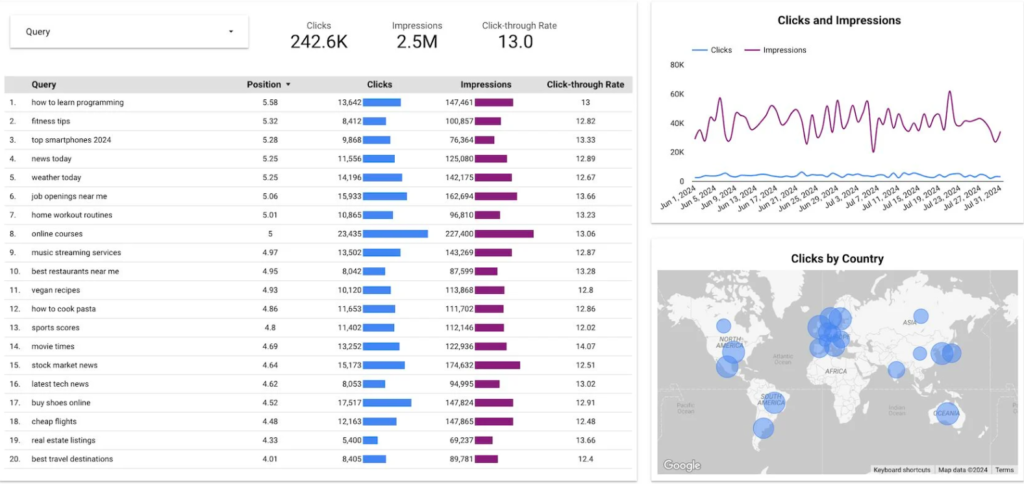
Google Search Console shows how many times your pages appeared in search results even when users did not click. Rising impressions, even before click-through rates improve, confirm that Google is showing your content for a broader range of relevant queries. This is an early-stage indicator that SEO work is building visibility that will translate into traffic over the coming weeks.
Engagement Metrics Are Improving
Working SEO brings the right visitors, not just more visitors. When organic traffic quality improves, engagement metrics follow. Look for: time on page increasing, bounce rate decreasing for key landing pages, pages per session rising, and scroll depth showing that users are consuming content rather than immediately leaving.
Poor engagement metrics after increased organic traffic often indicate a keyword-to-content mismatch where you are ranking for queries your page does not properly address.
Leads and Enquiries From Organic Search Are Growing
The most meaningful sign that SEO is working for a business is that contact form submissions, phone calls, chat enquiries, and product purchases attributable to organic search are increasing. Set up conversion tracking in Google Analytics with goals assigned to key conversion actions, and filter by organic traffic source to measure this directly.
Conversion rate optimisation plays a critical role here. Traffic without conversion means either the wrong visitors are arriving or the landing page experience is not compelling enough to convert the right ones.
Critical Metrics That Prove SEO Performance
Organic traffic volume and trend: Measured in Google Analytics under Acquisition. Track sessions from organic search over rolling 30, 90, and 180-day windows to identify trends.
Keyword ranking positions: Track primary commercial keywords weekly using Google Search Console or a dedicated rank tracker. Focus on position changes for your highest-intent terms.
Click-through rate from search results: A rising CTR means your title tags and meta descriptions are compelling enough to earn clicks even when rankings have not changed dramatically. Average CTR benchmarks for 2026 place position one at roughly 30 to 40 percent of clicks, position two at 15 to 20 percent.
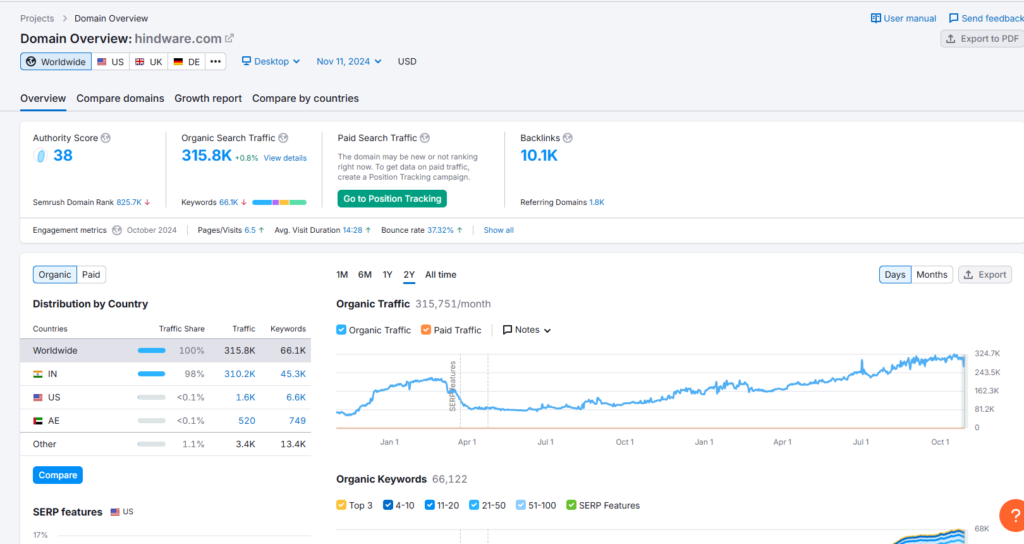
Backlink profile growth: New links from relevant, authoritative websites are a direct signal that your content is earning trust and authority. Track new linking domains monthly through Google Search Console or a backlink monitoring tool. A backlink audit should be conducted quarterly to identify and disavow harmful links that may be suppressing rankings.
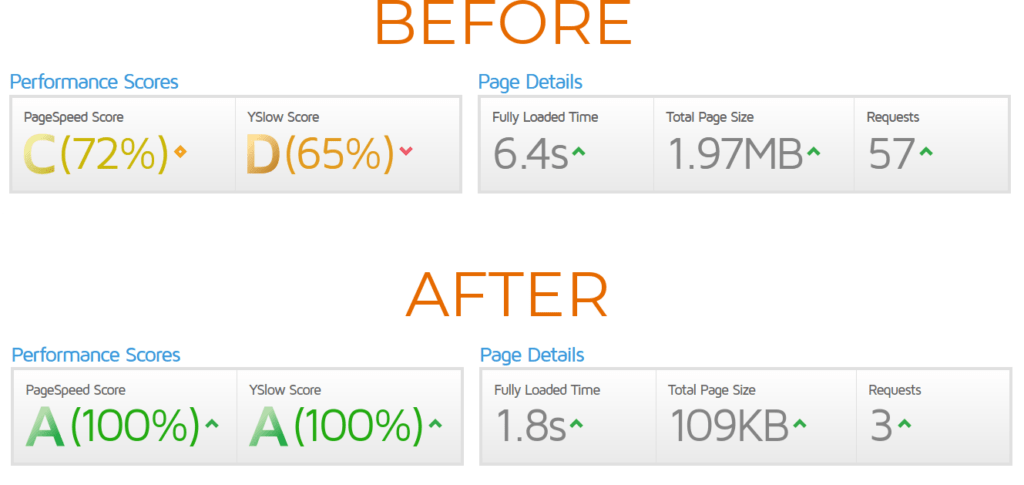
Core Web Vitals scores: Google uses page experience signals including loading speed, interactivity, and visual stability as ranking factors. Improving these metrics directly supports ranking performance for all target keywords. Our Core Web Vitals optimisation guide covers every metric and how to address common failures.
Organic conversion rate: The percentage of organic visitors completing a target action. This connects SEO performance directly to revenue and is the metric that justifies continued investment.
The full picture of SEO performance emerges when these metrics are tracked together in structured analytics and reporting dashboards that give marketing teams a real-time view of what is working and what needs attention.
Signs Your SEO Is Not Working
Recognising when SEO is failing is as important as tracking success. These are the clearest warning signals:

Flat or declining organic traffic over three or more consecutive months. Seasonal fluctuations are normal. A sustained downward trend is not.
Rankings dropping across multiple keywords simultaneously. This often indicates a Google algorithm update has penalised a pattern on your site, a technical issue has blocked crawling, or a competitor has significantly strengthened their content.
Zero movement after six months of consistent effort. If nothing is changing despite regular content publication and link building, the strategy, the keyword targets, or the technical foundation is fundamentally flawed.
Organic traffic rising but conversions flat or declining. This signals a traffic quality problem. Your content is attracting visitors who are not potential customers, or the landing page experience is not converting the right ones.
A sudden sharp drop in organic traffic. This is often triggered by a Google core algorithm update, a manual penalty, a technical error such as a robots.txt change accidentally blocking crawling, or a site migration that broke URL structures.
What to Do When SEO Is Not Delivering Results
Run a Full Technical SEO Audit
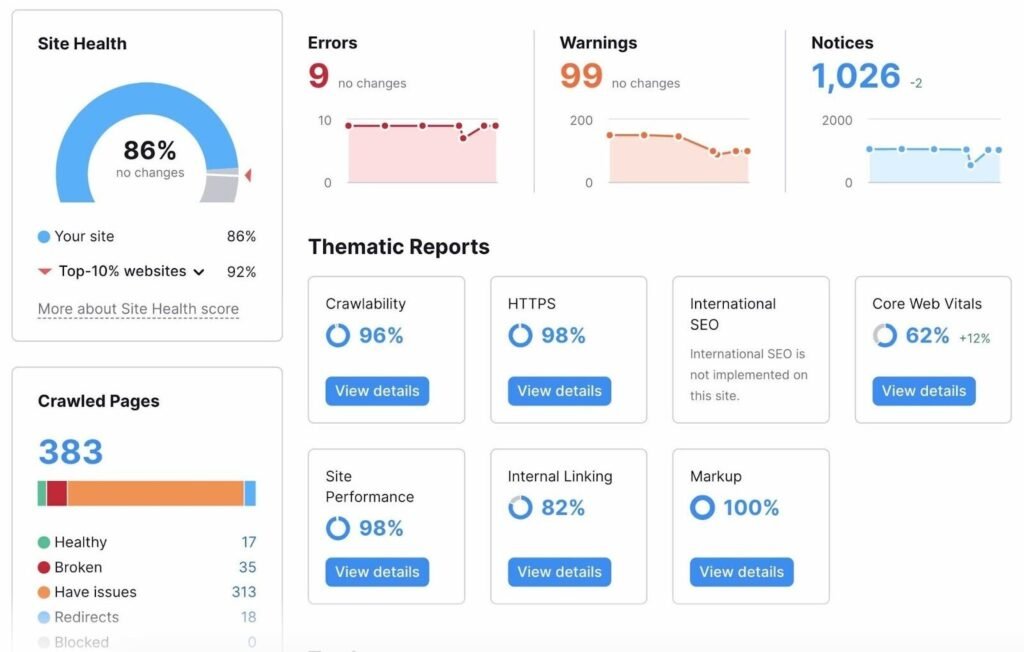
Most underperforming SEO campaigns have technical problems preventing Google from crawling and indexing pages correctly. A comprehensive technical SEO audit reveals crawl errors, duplicate content, broken links, slow page speeds, missing canonical tags, and indexing blocks that silently suppress rankings regardless of content quality.
Fix critical technical issues before investing further in content or link building. Building on a broken technical foundation produces no results.
Review and Refresh Your Content
Outdated, thin, or poorly structured content is one of the most common reasons SEO fails. Conduct a content audit to identify which pages are receiving organic traffic, which are ranking but not converting, and which are invisible to search engines entirely. Refreshing high-potential pages with updated information, better keyword targeting, and stronger internal linking often produces faster ranking improvements than creating entirely new content.
Understanding how to identify the right content length for each topic and keyword type ensures your pages match what Google is currently rewarding in search results.
Reassess Your Keyword Strategy
Many SEO campaigns underperform because they target keywords that are either too competitive for the site’s current authority or too broad to attract visitors with genuine purchase or enquiry intent. Shift focus toward long-tail keywords with specific intent. A business searching “freight forwarding services from Jaipur to London” is significantly more likely to convert than one searching “logistics.”
For businesses operating in specific geographic markets, local SEO services targeting location-specific keyword combinations consistently outperform generic national terms for conversion quality.
Strengthen Your Backlink Profile
If your content quality is strong and your technical foundations are sound but rankings are still stagnant, authority is likely the issue. Your site does not yet have enough trust signals from external websites to compete in your target keyword space.
Focus on earning links from relevant, authoritative websites in your industry through guest contributions, industry directories, digital PR, and strategic partnerships. Quality consistently outperforms quantity in backlink strategy.
Improve the User Experience
Search engines reward websites that users find valuable and easy to use. If visitors are arriving from organic search and immediately leaving, Google interprets this as a signal that your content does not satisfy the query. Improvements to navigation, mobile performance, page loading speed, and content clarity all contribute to better engagement signals that support ranking improvement. A structured approach to site speed optimisation addresses the performance issues most likely to be suppressing both rankings and conversions simultaneously.
For eCommerce businesses specifically, eCommerce SEO combines product page optimisation, category structure, and technical performance into a focused strategy for organic revenue growth.
SEO Tools to Track Performance
Google Search Console is the primary tool for monitoring keyword impressions, clicks, average position, crawl errors, and indexing status. It is free and should be checked weekly.

Google Analytics 4 tracks organic traffic volume, session behaviour, goal completions, and conversion attribution by channel. Essential for connecting SEO performance to business outcomes.
Ahrefs or SEMrush provide keyword ranking tracking, competitor analysis, backlink monitoring, and site audit functionality. These tools give the competitive context that Google’s free tools cannot provide.
PageSpeed Insights and Lighthouse measure Core Web Vitals and page performance issues for individual URLs.
AI SEO tools now automate significant portions of technical auditing, content gap analysis, and performance monitoring, making it possible to identify and address issues faster than manual review processes allow.
SEO KPI Benchmarks for 2026
| KPI | Target Range |
|---|---|
| Organic Traffic Growth | 10 to 30 percent month on month |
| Click-Through Rate (Position 1) | 30 to 40 percent |
| Click-Through Rate (Position 3) | 10 to 15 percent |
| Bounce Rate | Below 50 percent |
| Average Session Duration | Above 2 minutes |
| Keyword Ranking Target | Top 10 for primary terms |
| Organic Conversion Rate | 2 to 5 percent |
| New Linking Domains Per Month | Positive growth trend |
These benchmarks vary by industry and competition level. Use them as directional targets rather than absolute standards, and always compare your performance against your own historical data first before benchmarking against industry averages.
How AI Search Changes What Working SEO Looks Like
In 2026, tracking whether your SEO is working requires an expanded definition. Google AI Overviews, ChatGPT search, and Microsoft Copilot now answer many queries directly, meaning a well-optimised website may be cited in AI-generated answers even when a user does not click through to the page.
This creates a new metric: AI citation visibility. If your content is consistently referenced in AI-generated answers for your target queries, your SEO is working in ways that traditional click-based metrics do not fully capture.
Understanding generative engine optimisation and how to optimise for AI-powered search experiences is now an essential component of measuring and improving organic visibility for any competitive keyword category.
For enterprise-level organisations managing complex organic search strategies across multiple business units or markets, enterprise SEO provides the framework and tooling to measure and improve performance at scale.
Frequently Asked Questions
Most websites see early ranking improvements within three to six months of consistent SEO work. Significant organic traffic and lead generation growth typically emerges between six and twelve months. Highly competitive keywords or new websites with low authority may take twelve to eighteen months for meaningful results.
The five most important metrics are organic traffic volume, keyword ranking positions, click-through rate from search results, organic conversion rate, and backlink profile growth. Track all five together rather than relying on any single metric, as each tells a different part of the performance story.
Keyword ranking fluctuations are normal and occur due to algorithm updates, competitor activity, seasonal search behaviour, and Google testing different page orderings. Consistent fluctuations without an overall upward trend indicate a strategy or content quality issue that needs investigation.
Yes. SEO generates organic traffic without paid advertising costs. The investment is in time, expertise, and content rather than per-click fees. However, combining Google Ads management with organic SEO during the early months provides immediate visibility while organic rankings build, maximising total search visibility across both paid and organic channels.
Google releases thousands of algorithm updates annually, including several major core updates per year. Core updates can cause significant ranking changes across entire categories of websites. Sites with high-quality content, strong technical foundations, and genuine authority signals typically recover faster or are less affected. Monitoring how your SEO is performing through algorithm update periods reveals whether your strategy is built for long-term resilience.
Conclusion
Knowing whether your SEO is working requires moving beyond surface-level traffic numbers and looking at the combination of metrics that collectively tell the story of organic search performance. Organic traffic trends, keyword ranking movements, engagement quality, backlink growth, and organic conversion rates together reveal whether your strategy is building the visibility and business outcomes it should.
If your SEO is not delivering results, the solution almost always lies in one of three areas: technical foundations blocking crawl efficiency, content that does not match search intent, or insufficient authority signals from quality backlinks. Address these systematically using data rather than guesswork.
For businesses that want expert support building and measuring an organic search strategy that consistently delivers qualified leads and measurable revenue, our SEO services combine technical expertise, content strategy, and data-driven reporting into a framework that produces transparent, measurable results.
Explore our full services overview or read our enterprise growth strategy guide to understand how organic SEO fits within a complete growth marketing approach.
About the author
Ujjwal Kumawat
I specialize in SEO, website development, Google Ads and online business growth strategies. Through my blogs, I share practical insights, marketing tips and proven strategies to help businesses improve their online visibility, generate more leads and grow faster in the digital space.