What is link building and why does every SEO plan need it?
What is link building in SEO exactly? Link building means earning links from other websites. Those links point back to your pages. Search engines treat links as trust signals. More trusted sites often rank higher. This beginner friendly guide explains everything simply. You will learn methods, mistakes, and measurement.
Link building for SEO connects your site to the wider web. It signals relevance, authority, and credibility. Without links, even great content struggles to rank. That is why this skill matters so much.
Both new and experienced marketers need this skill. Search engines change often, but links still matter. Learning solid fundamentals protects your strategy long term. This guide covers those fundamentals in clear, simple terms.
Quick answer: Link building means earning backlinks from other websites. It boosts authority, trust, and search rankings over time. Strong seo link building remains essential for lasting organic growth.
What Is Link Building in SEO?
Link building in SEO means gaining external backlinks. Other websites link to your pages naturally. Search engines crawl these links regularly. Each link acts like a small vote. More quality votes usually mean better rankings.

This differs from internal linking within your own site. External links carry more ranking weight generally. Still, both link types support overall SEO health.
Link building and SEO work closely together always. It sits alongside keyword research and technical SEO audits. None of these tactics work well fully alone.
Why Link Building Matters for SEO
Backlinks remain one of Google’s top ranking factors. Quality links signal trust across the entire web. A single strong link often beats many weak ones. This is why seo link building stays valuable.
Beyond rankings, links drive direct referral traffic too. Readers click through from articles that mention you. That traffic can convert into leads or sales. Strong link profiles also boost brand credibility broadly.
Authority and Trust Signals
Search engines use links as trust indicators. Sites with many quality links seem more credible. Over time, this trust compounds across your domain. It supports every other SEO effort you run.
Referral Traffic Beyond Rankings
Not every benefit shows up in rankings data. Some links send steady, valuable referral traffic. This traffic often converts better than cold visits. Readers already trust the site that linked you.
How Link Building Works
Link building for SEO relies on simple hyperlink mechanics. Another website adds a link to yours. Search engines discover that link during crawling. This process feeds directly into organic search rankings. Consistent quality links help pages climb steadily over time.
Dofollow Versus Nofollow Links
Dofollow links pass ranking authority to your site. Nofollow links do not pass that authority. Many sites now default to nofollow links. Both link types still bring valuable exposure though.
A healthy backlink profile includes a natural mix. Relying only on dofollow links looks suspicious. Search engines expect variety across any real website. Review your mix using a backlink checker tool regularly.
Anchor Text Best Practices
Anchor text is the clickable, linked phrase itself. It should describe the destination page naturally. Avoid stuffing exact match keywords repeatedly. Vary your anchor text across different links.

Tools like an anchor text generator can suggest natural phrasing. Still, human judgment matters most here. Context should always guide your final choice.
Link Building Guide: Step by Step
Following a clear process improves link building results. Here is a practical link building guide for beginners.
Step 1: Audit Your Current Links
Check your existing backlink profile first. Use a backlink audit to spot gaps. Identify weak or broken links quickly. This baseline guides your future strategy.
Step 2: Create Link Worthy Content
Write content people genuinely want to reference. Include original data, guides, or useful tools. Strong content naturally attracts organic links. Weak content rarely earns links on its own.
Step 3: Find Relevant Prospects
Search for sites within your specific niche. Check their authority and audience size. Confirm they link to similar content already. This step saves wasted outreach effort later.
Step 4: Pitch With Value First
Send a short, personalized outreach email. Explain how your content helps their readers. Avoid pushy, generic mass pitches entirely. Genuine value always earns better responses.
Step 5: Track and Maintain Links
Monitor new links using reliable tracking tools. Check for lost or broken links regularly. Reach out again if a link disappears. Consistent maintenance protects your long term gains.
Link Building Strategies That Work
Several proven strategies drive strong link building results. Choosing the right mix matters most.

- Guest posting on relevant industry blogs
- Broken link building on outdated resource pages
- Digital PR campaigns for natural mentions
- Resource page outreach for helpful tools
- Skyscraper content that improves existing top results
Each strategy suits different goals and budgets. Testing several methods reveals what works best.
Guest Posting for Links
Guest posting means writing for other websites. You earn a backlink within your author bio. This method still works when done thoughtfully. Quality matters far more than volume here.
Broken Link Building
Broken link building finds dead links on sites. You suggest your own page as a fix. This method takes time but works well. It often produces high value, relevant links.
Common Link Building Mistakes
Many beginners rush the link building process. This leads to avoidable, costly mistakes.
- Buying links from low quality networks
- Using the same exact match anchor repeatedly
- Ignoring site relevance during outreach
- Skipping proper tracking after link placement
- Chasing volume over genuine link quality
Avoiding these mistakes protects your site’s reputation. It also improves long term ranking stability significantly.
Ignoring Site Relevance
Links from unrelated sites rarely help much. Search engines weigh topical relevance heavily. A gaming blog link rarely helps a law firm. Always match niche before pursuing any link.
Overusing Exact Match Anchors
Repeating the same anchor text looks unnatural. Search engines may flag this as manipulation. Vary your anchor text across every campaign. Natural variation protects your site from penalties.
Link Building for Local and Niche Businesses
Local businesses benefit from location specific link building. Regional publications and directories build local trust. This pairs well with local SEO for restaurants. It also suits local SEO for dentists campaigns nicely.

Healthcare providers can explore SEO for hospitals alongside link building. Niche industries benefit from highly targeted link sources. A specific audience often converts better than a broad one.
Ecommerce brands can pair link building with ecommerce SEO work. Combining strategies compounds long term organic growth steadily.
Link Building and Domain Authority
Domain authority reflects a site’s overall link strength. Quality link building can raise this score. Check your current standing with a domain authority checker first.
Set realistic goals before starting any campaign. Focus on increasing domain authority through consistent, relevant links. Avoid shortcuts that promise instant authority gains. Real growth takes months, not days.
Rising authority often brings rising organic traffic too. These two metrics tend to move together. Track both consistently using reliable analytics tools.
Measuring Link Building Success
Success looks different for every campaign. Still, some metrics matter almost universally.
- New backlinks earned during each campaign
- Ranking changes for targeted keywords
- Growth in overall organic traffic
- Referral traffic from linking domains
- Domain authority movement over time
Run a backlink audit every few months. This confirms your links remain live and healthy. Pair this with a broader technical SEO audit for full visibility.
Link Building Tools and Resources
Several tools simplify the link building workflow. A solid keyword research tool helps find content gaps. Meanwhile a backlink generator tool can surface fresh prospects.
Writers should also study meta title length rules. Well optimized titles improve click through rates. Similarly, review meta description guidelines before publishing content.
For agencies managing many clients, structured content writing services save time. Professional SEO services often bundle link building into wider campaigns.
External resources also help teams stay current. Google’s own Search Central guidelines explain link quality rules clearly. Industry guides from Moz cover link building fundamentals well. Data driven insights from Ahrefs explore backlink strategy deeply. Reporting frameworks from Search Engine Journal track industry trends closely. Practical outreach tips from Backlinko round out the picture nicely.
Link Building Within a Wider Marketing Funnel
Link building rarely works in isolation properly. It fits within a broader marketing funnel strategy. Top of funnel readers discover your brand through linked content. Later, retargeting and email nurture them further.
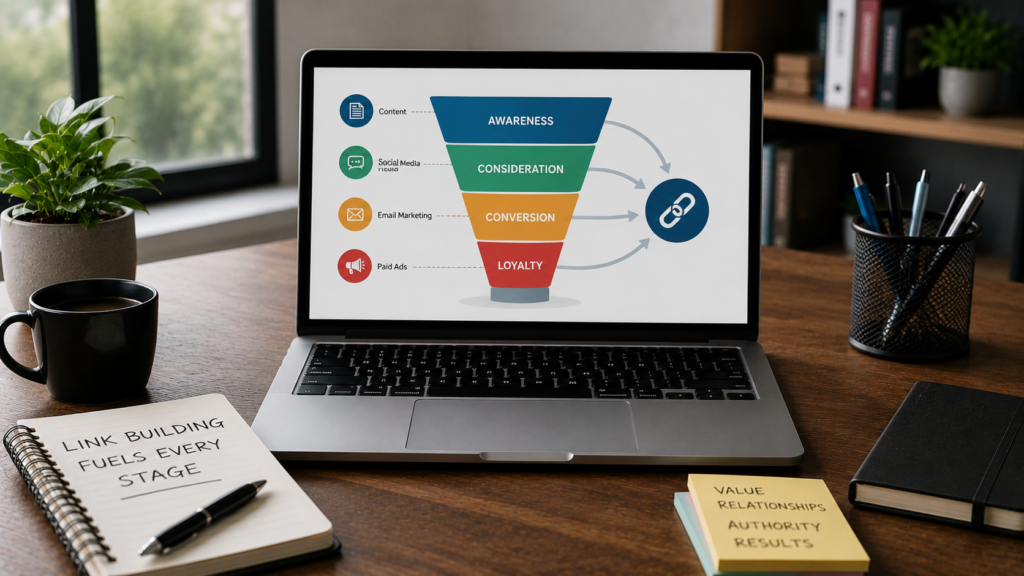
Combine link building with social media marketing for wider reach. Sharing linked content across channels multiplies visibility significantly. This layered approach strengthens every stage of the funnel.
Businesses seeking full support can explore enterprise SEO services. Larger teams often need structured, scalable link building programs.
Link Building and Content Strategy
Link building works best inside a wider plan. It should never sit as an isolated tactic. Pair it with strong keyword research for blogging efforts. This ensures your content targets real search demand.
Track your visible presence using a reliable SERP tool. This shows how new links affect rankings over time. Regular tracking keeps your strategy grounded in real data.
Consider a proper sitemap for your own site too. This helps search engines index new pages faster. Faster indexing means your links get discovered sooner.
Link Building Outreach Tips
Outreach quality often decides link building success. Generic emails rarely get positive replies.
Personalize every single pitch you send. Mention a recent post from their site. Show genuine familiarity with their content style. This small effort builds early trust quickly.
Keep your subject line short and clear. Avoid spammy words like free or guaranteed. A clean subject line improves your open rate. First impressions matter more than people realize.
Follow up once if you hear nothing back. Wait at least one full week first. Persistent, polite outreach often earns a second look. Never send more than two follow up emails.
Link Building Trends to Watch
Link building keeps evolving alongside search engines. Staying updated protects your long term strategy.
AI tools now help teams find prospects faster. Editors still expect genuine, relevant outreach though. Quality checks matter more as automation grows. Tools like an AI SEO content generator can support content creation. Human review remains essential before any outreach begins.

Search engines increasingly reward genuine expertise signals. Author credentials and site reputation matter more now. This shift rewards long term relationship building over quick pitches.
Voice search and AI answer engines are also growing. Reviewing answer engine optimization helps teams adapt content structure. Clear, direct answers now matter across every content format.
Types of Backlinks to Understand
Not all backlinks carry equal value. Understanding the types helps you prioritize outreach.
Editorial Backlinks
Editorial backlinks come from genuine content mentions. A writer links to you naturally. These links carry the strongest ranking signal. They also reflect real audience trust.
Directory and Citation Links
Directory links come from business listing sites. These help local businesses build trust. Check tools like local SEO ranking factors for guidance. Consistency across directories matters more than volume here.
Guest Post Backlinks
Guest post backlinks come from contributed articles. You write content for another website. In return, you often receive a link. This method remains popular among many marketers today.
Link Building Budget Considerations
Link building often requires ongoing budget planning. Costs vary based on strategy and scale.
Content creation usually takes the largest share. Strong resources take real time to produce. Outreach tools and software add smaller costs. Budget for both content and outreach separately.
Agencies offering enterprise digital marketing services can help scale campaigns. Smaller teams may prefer manual, targeted outreach instead. Either approach can work with clear planning.
Track your return on investment carefully over time. Compare campaign costs against actual ranking gains. This data guides future budget decisions wisely. Smart budgeting protects long term campaign sustainability.
Link Building for Ecommerce and Enterprise Sites
Ecommerce sites face unique link building challenges. Product pages rarely attract natural links alone. Category pages and buying guides work better instead.

Pairing link building with strong ecommerce SEO practices helps significantly. Enterprise sites often need scalable, structured campaigns too. Explore enterprise growth strategies for larger scale planning.
Franchise businesses face similar structural challenges as well. A solid franchise SEO approach helps coordinate multiple locations. Centralized strategy prevents duplicate or conflicting campaigns across teams.
Link Building SEO Checklist
Before starting outreach, run through this quick checklist.
- Confirm the target site’s relevance and authority
- Create genuinely useful, original content
- Personalize every outreach pitch you send
- Vary your anchor text sensibly
- Track results after each campaign consistently
This checklist keeps link building campaigns organized. It also protects your site from low quality links.
Frequently Asked Questions
Link building means earning backlinks from other relevant websites. These links act as trust signals for search engines. They help improve your rankings, authority, and overall organic visibility online.
Yes, link building still works well today. Quality matters more than quantity now. Search engines reward relevant, earned links. They penalize spammy, low quality, or purchased link schemes heavily.
There is no fixed universal number here. Focus on quality over speed instead. A few relevant, well earned links help most. They often beat dozens of rushed, low quality submissions from unrelated sites.
Yes, poor link building can hurt rankings. Spammy links from irrelevant sites raise red flags quickly. Always prioritize relevance, editorial quality, and natural anchor text over sheer link volume.
Start with a content audit and outreach list. Create one strong, link worthy resource first. Pitch it to a small group of highly relevant, engaged websites.
Conclusion
Link building remains a core SEO strategy today. It builds authority, trust, and genuine referral traffic. Success depends on relevance, quality, and consistency.
Follow this link building guide to start smart. Focus on genuine value over promotional pitches. Track your results and refine your approach.
Over time, link building compounds real value. It supports rankings, brand trust, and steady growth. Start small, stay consistent, and results will follow.
Remember that relevance always beats raw volume. One great backlink can outperform many weak ones. Choose your target sites carefully every time. Write for readers first, search engines second. That mindset keeps your link building strategy sustainable for years ahead.

About the author
Ujjwal Kumawat
I specialize in SEO, website development, Google Ads and online business growth strategies. Through my blogs, I share practical insights, marketing tips and proven strategies to help businesses improve their online visibility, generate more leads and grow faster in the digital space.