Are your facebook ads spending budget without delivering the results your business actually needs?
Most advertisers launch facebook ads without a clear strategy. They choose an objective randomly, set a budget without data, and wonder why results disappoint. Facebook advertising rewards structure, precision, and systematic testing.
Understanding how the platform works at every level from campaign setup through to ad dimensions, cost control, and performance measurement separates profitable advertisers from those who consistently waste budget. This guide covers every element you need to run effective facebook ads in 2026, from your first campaign setup through to scaling what works.
What Are Facebook Ads?
Facebook ads are paid placements on Meta’s advertising platform. They appear across Facebook, Instagram, Messenger, and the Audience Network. Advertisers choose a campaign objective, define a target audience, set a budget, and create ad creative. Meta’s algorithm then delivers those ads to users most likely to take the desired action.
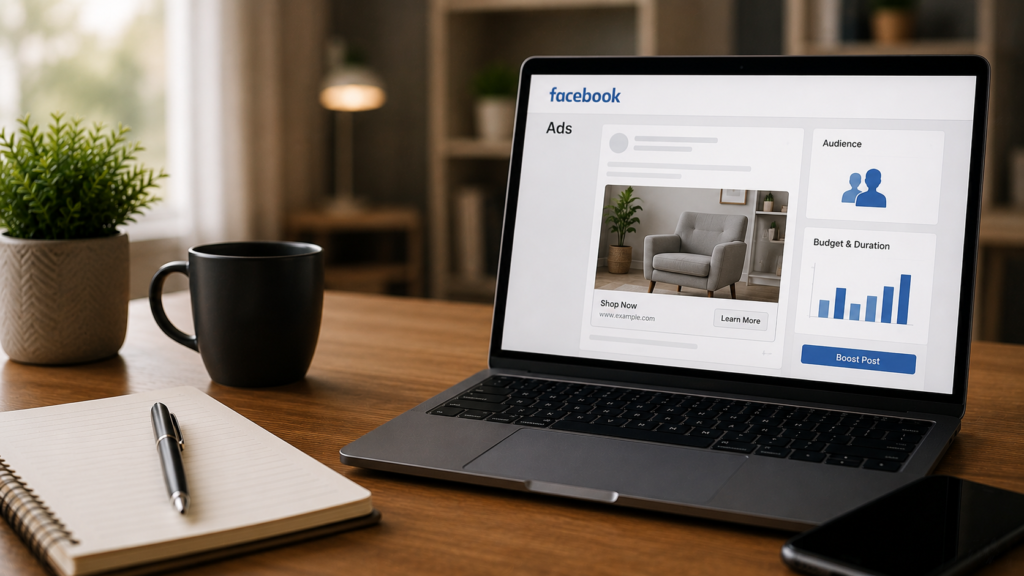
Facebook ads reach over three billion active users monthly. No other platform offers equivalent audience scale with comparable targeting precision. Every ad you run competes in a real-time auction that evaluates your bid, your predicted action rate, and your ad quality simultaneously. Understanding this system is essential before spending a single pound or dollar.
For businesses building digital marketing strategies across multiple channels, Facebook advertising sits at the centre of paid social investment. It connects brand awareness at the top of the funnel to conversion campaigns at the bottom. Managing that full funnel efficiently is what professional facebook ads management delivers.
How Facebook Ads Advertising Works
The Meta Auction System
Facebook ads advertising runs through a real-time auction. Every time a user is eligible to see an ad, Meta runs an instant auction among competing advertisers. The winner is not always the highest bidder. Meta calculates a total value score combining your bid, your predicted conversion rate, and your ad quality rating.
This means creative quality and audience relevance directly affect your cost. A highly relevant ad with strong predicted engagement wins placements at lower cost than a higher-bid competitor with weaker creative. Advertising facebook ads profitably requires optimising all three auction inputs simultaneously.
Performance marketing vs growth marketing principles apply directly here. Conversion-focused campaigns compete in different auction pools than awareness campaigns. Understanding which objective your campaign actually needs prevents misaligned bidding that drives up costs unnecessarily.
Setting Up Your Facebook Ads Campaign
Step One: Choose Your Campaign Objective
Every facebook ads campaign begins with an objective selection. Meta organises objectives into three categories. Awareness objectives maximise reach and brand exposure. Consideration objectives drive traffic, engagement, video views, and lead generation. Conversion objectives optimise for purchases, app installs, and catalogue sales.
Choose the objective that matches what you actually want buyers to do. Running a traffic campaign when you want purchases tells Meta to optimise for clicks, not conversions. This fundamental misalignment inflates cost per purchase significantly. Always match objective to your actual business goal.
Step Two: Define Your Ad Set Structure
Your ad set contains your audience targeting, placement selection, budget, schedule, and bidding strategy. Each ad set targets one distinct audience segment. Mixing multiple audience types in one ad set prevents Meta’s algorithm from learning which users convert best for your offer.
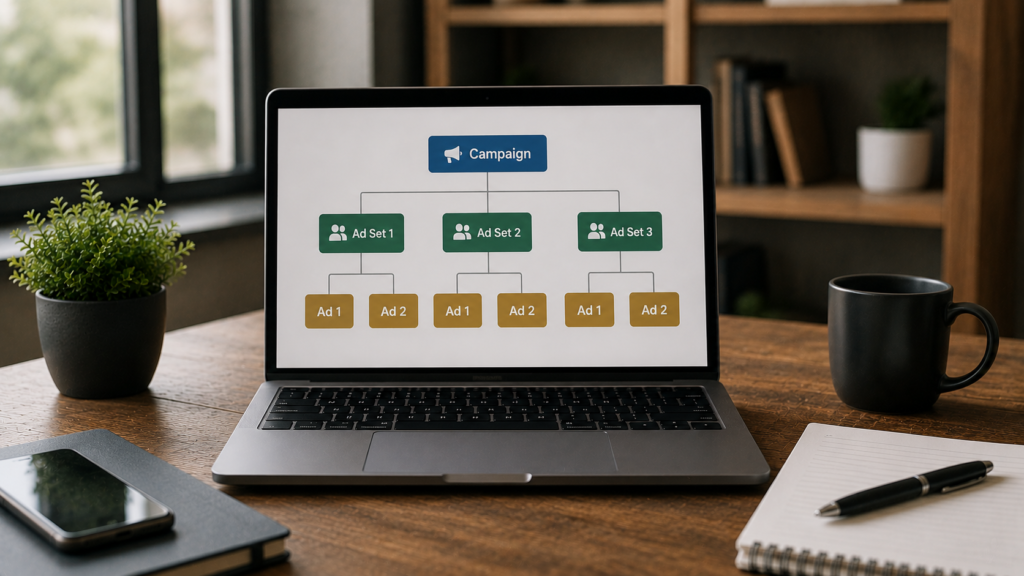
Use the marketing funnel as your structural guide. Create separate ad sets for cold audiences at the top, engaged audiences in the middle, and retargeting audiences at the bottom. This separation allows independent budget control and performance evaluation for each funnel stage. Run a funnel audit checklist review to identify where your current campaigns lose buyers between stages.
Step Three: Create Your Ads
Your ad creative includes your image or video, primary text, headline, description, and call to action. Each element contributes to whether users stop scrolling and take action. Test one variable at a time across ads within the same ad set to identify which elements drive the strongest performance.
AI automations now support creative production at scale through dynamic creative optimisation. Meta automatically tests combinations of your headlines, images, and copy to find the best-performing variants. This testing velocity is impossible to achieve manually across large ad accounts.
Facebook Ads Cost: What Determines What You Pay
The Key Cost Metrics
Facebook ads cost varies significantly by industry, audience, objective, and creative quality. The primary cost metrics are cost per click, cost per thousand impressions, cost per lead, and cost per purchase. Which metric matters most depends entirely on your campaign objective.
According to WordStream’s Facebook ads cost research, average cost per click across industries ranges from 0.50 to 3.50 US dollars, with legal, finance, and insurance verticals commanding the highest rates. Healthcare and retail sit in the mid range. These benchmarks provide a starting point but your actual costs depend on your specific audience and creative performance.
What Drives Your Cost Up or Down
Several factors directly influence your facebook ads cost. Audience size affects cost because smaller, more competitive audiences command higher bids. Creative relevance affects cost because higher engagement scores reduce your effective cost per impression. Seasonality affects cost because Q4 drives dramatically higher CPMs across all advertisers competing for the same placements.
Conversion rate optimisation on your landing pages directly reduces your effective cost per acquisition. Sending traffic from well-optimised ads to poorly converting landing pages inflates your cost per result regardless of how efficiently your ads are set up. Both elements must perform together.
Facebook Ads Dimensions and Sizes Reference
Required Image Dimensions
Facebook ads dimensions vary by placement type. Using the wrong dimensions results in cropped or distorted creative that reduces click through rates and wastes budget. Always design to the correct specifications before uploading.
Feed image ads require a minimum size of 1080 by 1080 pixels in a 1:1 square ratio. Story and Reels ads require 1080 by 1920 pixels in a 9:16 vertical ratio. Right column ads require 1080 by 1080 pixels minimum. Marketplace ads require the standard 1:1 ratio at 1080 by 1080 pixels.
Required Video Specifications
Facebook ads size requirements for video placements differ from image specs. Feed video ads support 1:1, 4:5, and 16:9 ratios depending on placement. Story video ads require the 9:16 vertical format at 1080 by 1920 pixels. All video files should be H.264 encoded, in MP4 or MOV format, with a maximum file size of 4GB.
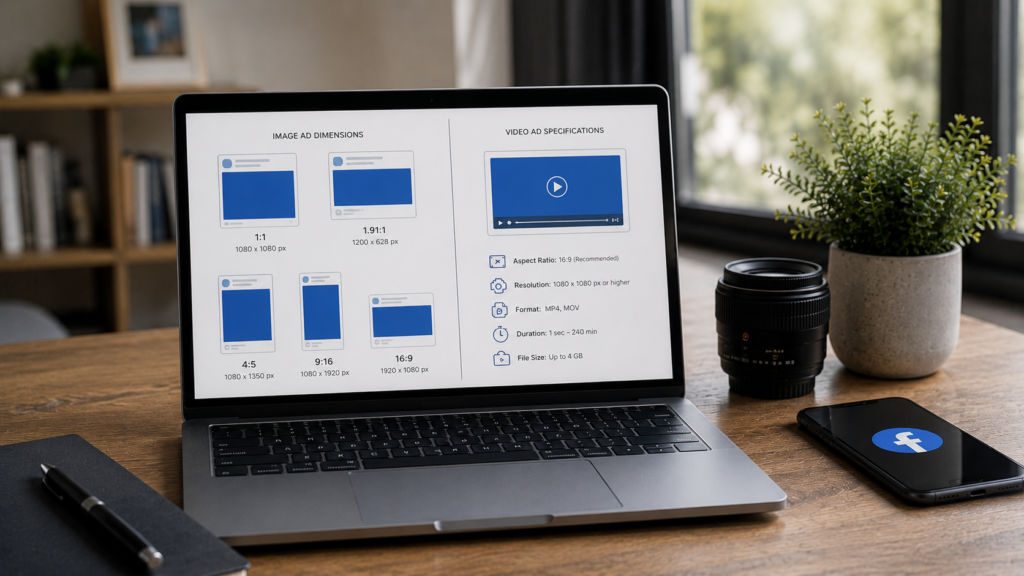
According to Meta’s official ads guide, using the recommended 1:1 and 4:5 ratios for feed placements maximises screen space on mobile devices where the majority of ad impressions occur. Designing for mobile-first ensures your creative performs across the largest portion of your audience.
Alt text on images in your facebook ads improves accessibility and provides additional context to Meta’s algorithm about your creative content. Always add descriptive alt text to every ad image as standard practice.
Facebook Ads Library: Research and Compliance
Using the Facebook Ads Library for Competitive Intelligence
The facebook ads library is Meta’s public database of all active advertisements running across its platforms. It is available at no cost to any user without requiring an advertising account. Every active ad from every advertiser is searchable by keyword, advertiser name, or country.
Use the ads library to research what your competitors are running, which creative formats they favour, and how long specific ads have been active. Long-running ads indicate strong performers worth analysing for creative and messaging insights. According to Social Media Examiner’s ads library guide, systematic competitor research through the library produces creative intelligence that improves your own ad performance significantly.
The library also serves compliance purposes. Advertisers running ads related to social issues, elections, or political content must complete an authorisation process and their ads are archived in the library permanently. Understanding these requirements prevents campaigns from being disapproved or accounts from being restricted.
Facebook Ads Management Best Practices
Organising Your Account for Scale
Professional facebook ads management begins with clean account architecture. Campaigns should be organised by objective with ad sets targeting distinct audience segments and ads testing specific creative variables within each ad set. Messy account structures prevent accurate performance analysis and slow down optimisation decisions.
Never make more than one significant change to an ad set at a time. Budget increases, audience changes, and creative swaps each reset the learning phase. Making multiple changes simultaneously means you cannot identify which change caused the performance shift. Disciplined, single-variable testing is the foundation of sustainable improvement. Our data-driven marketing guide covers this testing methodology in detail across paid channels.
Budget Management and Scaling
Scale facebook ad budgets gradually to avoid resetting the learning phase. Increase budgets by no more than 20 percent every three to five days. Larger single-step increases force the algorithm to relearn optimal delivery, temporarily degrading performance. Horizontal scaling through new audience ad sets is often more effective than vertical budget increases alone.
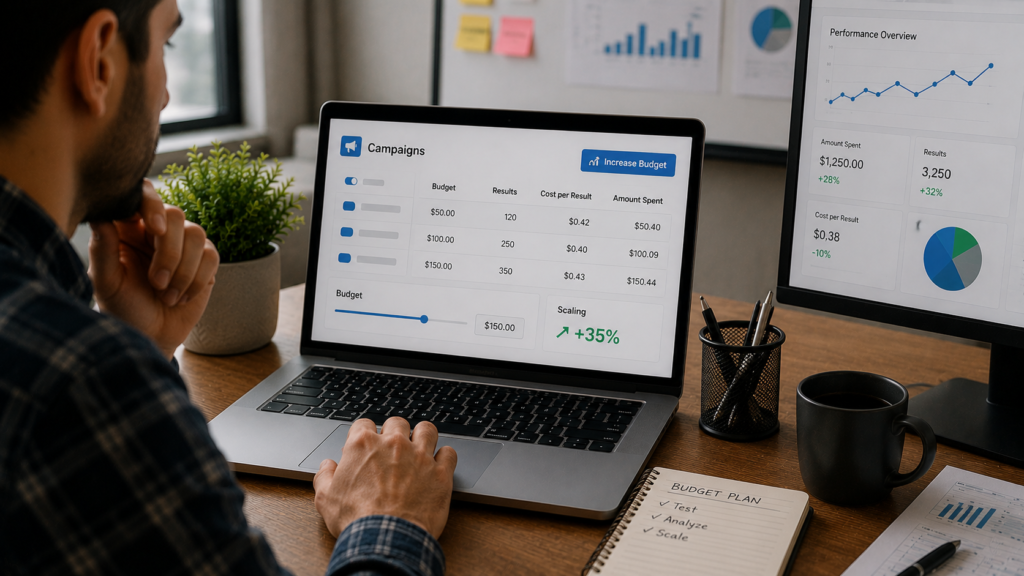
Social media automation tools help manage routine optimisation tasks like budget pacing, frequency monitoring, and creative rotation at scale. Combining automation for repetitive tasks with human judgment for strategic decisions produces the best long-term account performance.
Audience Targeting for Facebook Advertising
Cold Audience Strategies
Facebook advertising cold audience targeting uses interest, behaviour, demographic, and lookalike data to reach users who have no prior relationship with your brand. Lookalike audiences built from your best customers consistently outperform pure interest-based targeting for conversion objectives because they use behavioural similarity rather than self-reported interests.
Build lookalike audiences from your highest-value customer segments rather than your full customer list. A 1 percent lookalike of your top 100 buyers by lifetime value targets users who most closely resemble those who have already demonstrated the highest commercial intent. This precision consistently produces lower cost per acquisition than broad lookalike audiences. For businesses also running ecommerce seo, organic search keyword data reveals buyer intent signals worth incorporating into your paid audience strategy.
Retargeting Audiences
Retargeting is the highest-converting audience type in any mature facebook ads account. TheRetargeting audiences include website visitors, video viewers, lead form completers, Instagram profile visitors, and Facebook page engagers. These audiences already have brand familiarity that dramatically increases conversion probability at lower cost per result than cold audiences.
Segment retargeting audiences by recency and engagement depth. A visitor who reached your checkout page in the last seven days requires different messaging than a visitor who viewed a blog post 30 days ago. Precise segmentation allows your ad copy to match exactly where each audience member is in their buyer journey. Social media management activity that increases organic engagement simultaneously builds larger retargeting pools for your paid campaigns.
Creative Strategy for Facebook Ads
What Makes Scroll-Stopping Creative
Your ad creative determines whether users stop scrolling or keep moving. Even perfect targeting and bid strategy produce poor results when paired with weak creative. The first frame of your video or the dominant element of your image must create immediate visual interest within half a second.
Test video against static images for your primary audience before committing production budget to one format. Some audiences and products convert better with simple image ads. Others respond to video demonstrations. How AI converts text or images into video is transforming creative production at scale, allowing advertisers to test more formats at lower cost than traditional video production allows.
Ad Copy That Converts
Your primary text should lead with the most relevant benefit to your target audience. Address the specific problem your product solves before explaining how it solves it. Buyers care about outcomes before they care about features. Content writing services that specialise in direct response copy consistently produce higher-converting ad text than generic brand-voice copy that prioritises tone over action.

Keep headlines specific and benefit-driven. Your description should reinforce the headline with a supporting point or urgency signal. Your call to action should match the exact action you want the user to take. “Learn More” for awareness. “Shop Now” for ecommerce. “Get Quote” for lead generation. Matching CTA to intent prevents friction at the final click.
Measuring and Scaling Your Facebook Ads Campaign
The Metrics That Matter
Facebook ads campaign performance measurement should focus on metrics that connect directly to revenue rather than platform engagement vanity metrics. Cost per acquisition, return on ad spend, customer lifetime value relative to acquisition cost, and contribution margin per campaign are the metrics that determine whether your campaigns are actually profitable.
Analytics reporting dashboards that consolidate Meta campaign data alongside website conversion data and customer lifetime value provide the complete picture that budget allocation decisions should be based on. Meta’s own reporting tends to overstate conversions due to attribution window differences from other measurement sources. Always triangulate with your own analytics data. Understanding how to know if your seo is working alongside your paid social measurement creates a unified view of your total digital marketing performance.
For businesses combining facebook advertising with Google Ads management, cross-channel attribution analysis reveals which platform drives which stage of the buyer journey. As Neil Patel’s Facebook advertising guide explains, Facebook typically excels at demand generation and retargeting while Google Ads captures existing demand. Both channels serve distinct roles in a complete omnichannel marketing strategy.
For businesses also investing in Instagram advertising, email marketing, and search engine marketing, connecting all paid channel data to a unified performance view maximises total marketing efficiency across every buyer touchpoint.
Frequently Asked Questions
Facebook ads are paid placements on Meta’s platform reaching billions of users through targeted campaigns. Businesses set objectives, audiences, budgets, and creative. Meta’s auction delivers ads to users most likely to take the desired action based on relevance and bid.
Facebook ads cost varies by industry, audience, and objective. Average cost per click ranges from 0.50 to 3.50 dollars. Monthly budgets from 500 to 5000 dollars produce meaningful data for most small business campaigns. Higher competition industries require larger budgets for statistically reliable optimisation.
The recommended facebook ads dimensions for feed image placements are 1080 by 1080 pixels in a 1:1 ratio. Story and Reels placements require 1080 by 1920 pixels in a 9:16 ratio. Always design to placement-specific specifications to prevent cropping or distortion that reduces creative performance.
The facebook ads library is Meta’s public database of all active ads across its platforms. Use it to research competitor creative, identify long-running high-performing ads, and monitor industry messaging trends. It is free to access without an advertising account and available in every country.
Most facebook ads campaigns require a minimum learning phase of 50 conversion events before stable performance is achieved. This typically takes one to three weeks depending on budget and conversion volume. Avoid making significant changes during the learning phase as this resets the algorithm optimisation process.
Conclusion
Running profitable facebook ads requires mastering campaign structure, cost control, creative quality, and performance measurement as interconnected disciplines rather than separate tasks. No single element alone determines success. Strong creative with poor audience targeting wastes budget. Perfect targeting with weak creative produces no clicks. Correct facebook ads dimensions and sizes ensure your creative performs across every placement without distortion.
Use the facebook ads library to understand your competitive landscape before launching. Build clean facebook ads campaign architecture that separates funnel stages. Control facebook ads cost through relevance improvement rather than bid reduction alone. And measure performance against revenue metrics that connect directly to business growth.
For businesses ready to build a complete facebook advertising strategy with professional management support, explore our full services overview or read our digital marketing strategies guide to see how Facebook ads connect to every channel in your growth plan.

About the author
Ujjwal Kumawat
I specialize in SEO, website development, Google Ads and online business growth strategies. Through my blogs, I share practical insights, marketing tips and proven strategies to help businesses improve their online visibility, generate more leads and grow faster in the digital space.