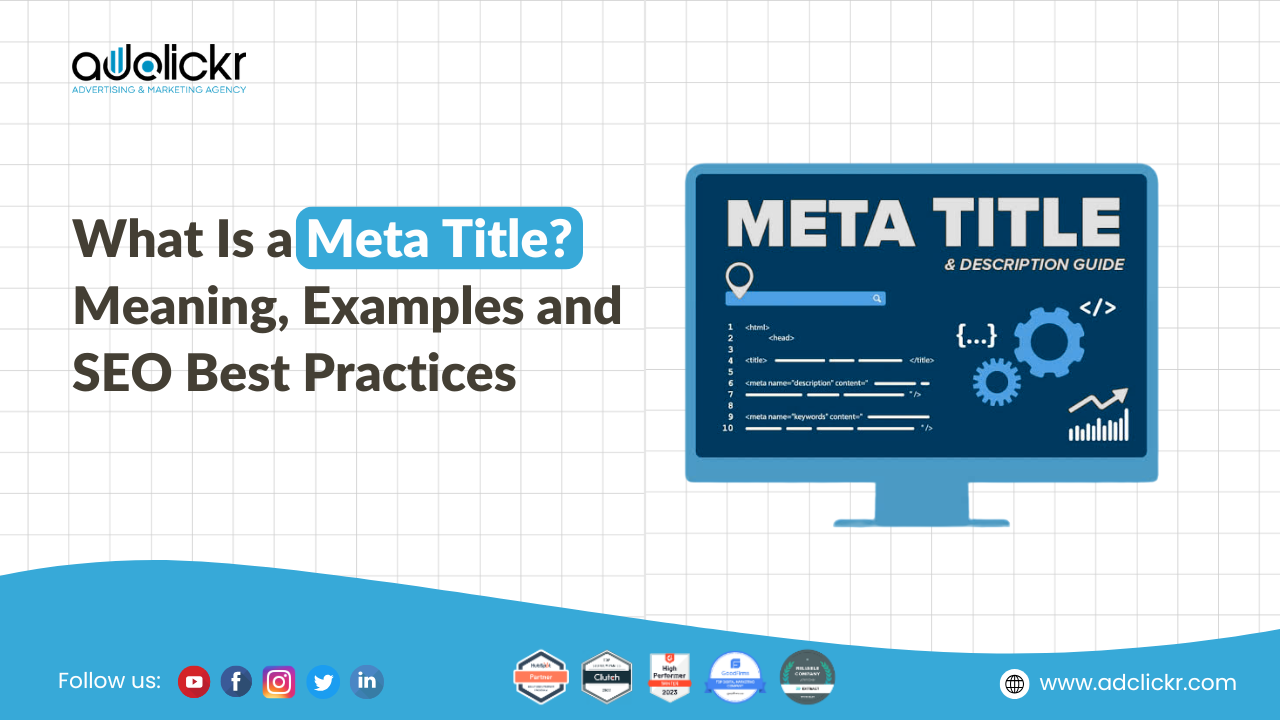
What is a meta title and why does it matter?
It sits right at the top of search results. It shapes first impressions instantly. This guide explains everything clearly.
Quick Answer: A meta title is the clickable headline shown in search results. It appears above the meta description on every page. Strong titles improve both clicks and search relevance.
Introduction
A meta title helps searchers understand a page instantly. It sits at the very top of search listings. This article explains its meaning, examples, and writing process. You will also learn common mistakes to avoid.

Many websites treat this element carelessly during publishing. A weak title quietly reduces clicks and visibility. A little extra care here brings noticeable traffic gains.
What Is a Meta Title
Understanding what is meta title starts with its basic role. A meta title is short text describing a web page. It appears as the clickable link in search results.
Search engines display this text prominently within listings. It often becomes the first thing searchers actually read. This makes it one of the most important on page elements.
Agencies offering SEO services treat titles as a top priority. Every page deserves a title written with real intention.
Meta Title Meaning in SEO
The meta title meaning goes beyond simple page naming. It signals relevance to both users and search engines. A clear, accurate title improves how pages get ranked.
This element also builds trust before someone clicks anything. A confusing or generic title often gets skipped entirely. Clarity and relevance work together to earn that click.
Understanding keyword research helps writers choose the right title focus. Titles should reflect real search terms people actually use.
Meta Title Tag Explained
A meta title tag is the code holding this title text. It lives inside the page header, invisible to visitors directly. Search engines read this tag to display results properly.
Technical accuracy matters greatly for this tag. Missing or duplicate tags confuse search engines quickly. Following technical SEO for website performance helps ensure tags function correctly sitewide.
Proper canonical tags also support accurate title display. Duplicate content issues can sometimes cause title mismatches otherwise.
Meta Tags Meaning: Title Versus Other Elements
Understanding meta tags meaning helps clarify common confusion. A meta title differs clearly from a meta description. Both matter but serve very different purposes.
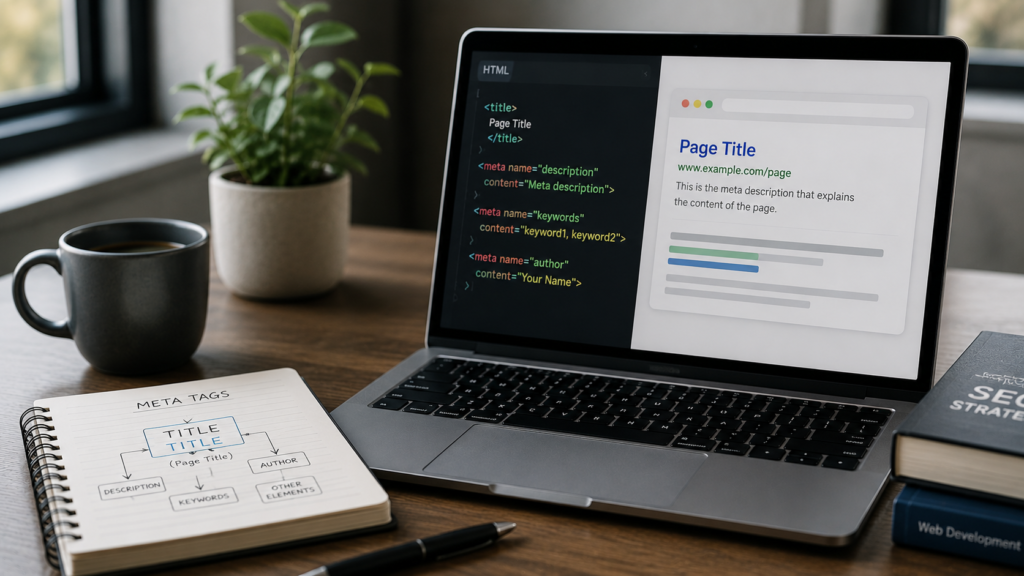
The meta title acts as a short, clickable headline. The meta description then adds supporting context underneath. Together they form your complete search result listing.
Other meta tags exist too, though less visible directly. Reviewing JavaScript SEO explains how technical tags affect indexing broadly. Understanding this bigger picture helps writers prioritize correctly.
SEO Meta Title Best Practices
Following SEO meta title best practices improves both clicks and rankings. These guidelines apply across nearly every website type. Consistency here builds stronger overall search performance.
Keep It Concise and Clear
Titles should stay short enough to display fully. Long titles often get truncated within search results. Reviewing how to identify the right content length helps writers judge appropriate brevity.
Include Your Primary Keyword
Placing your target keyword naturally improves relevance signals. Forced or repeated keywords look unnatural and spammy though. Checking keyword search volume confirms which terms deserve this priority placement.
Make Every Title Unique
Every page should have its own distinct title. Duplicate titles confuse both users and search engines equally. Following a content audit guide helps identify pages sharing identical titles.
Meta Title Example by Page Type
Reviewing a meta title example clarifies these best practices further. Different page types often need slightly different structures. Below are common examples explained simply.
A blog title might state the core benefit directly. A product title might include the brand and key feature together. A service title often includes location and core offering clearly.
Service pages benefit from confident, specific language especially. Pages like local SEO services often combine service type with location details. This builds immediate relevance for local searchers.
How to Write a Meta Title Step by Step
Writing strong titles becomes easier with a clear process. Follow these steps for consistent, reliable results.

- Identify the primary keyword for the page
- Summarize the core page benefit briefly
- Place the keyword near the beginning naturally
- Keep total length under sixty characters roughly
- Review for clarity and natural human tone
Skipping this process often produces vague, forgettable titles. A little structure here saves time and improves quality.
Meta Title Length Guidelines
Title length affects how listings display in search results. Titles that are too long get cut off with dots. This often hides important information from potential visitors.
Most experts recommend staying around fifty to sixty characters. This range displays fully across most devices reliably. Mobile screens sometimes show slightly fewer characters though.
Following mobile first indexing guidelines helps explain this mobile priority. Testing your titles on mobile confirms proper display consistently.
Common Meta Title Mistakes to Avoid
Many websites make avoidable mistakes with their titles. Awareness of these errors improves results quickly.
- Writing titles that exceed recommended length
- Stuffing multiple keywords unnaturally together
- Using identical titles across many pages
- Leaving titles blank or auto generated poorly
- Ignoring brand name placement entirely
Following an image alt text guide reminds writers that small SEO details matter everywhere. Titles deserve the same careful attention as images and headings.
Meta Title and Click Through Rate
Title quality directly influences click through rate performance. A clear, compelling title earns more clicks naturally. This makes titles worth genuine time investment.

Tracking performance helps confirm what actually works well. Reviewing how to know if your SEO is working shows useful tracking methods. Testing different titles reveals which versions perform best.
Ecommerce pages benefit especially from strong, specific titles. Following solid ecommerce SEO practices includes writing persuasive product titles. Small wording changes sometimes produce meaningful traffic increases.
Technical Setup That Supports Accurate Titles
Technical health influences how titles actually display online. Using consistent canonical URLs supports accurate indexing across similar pages. Confused indexing sometimes causes search engines to ignore your title entirely.
Running a technical SEO audit checklist regularly catches missing or duplicate titles. Many sites unknowingly leave key pages without any unique title at all.
Structured data also supports stronger listings overall. Following a schema markup complete guide helps titles appear alongside rich result features properly.
Meta Titles for Local and Specialized Businesses
Local businesses benefit from location specific titles clearly. Mentioning city names naturally improves local relevance signals. This connects closely with broader local SEO strategies efforts.
Specialized industries need tailored language too within their titles. Healthcare providers reviewing SEO for hospitals should emphasize trust and expertise clearly. Restaurants following local SEO for restaurants often highlight cuisine or location details instead.
Meta Titles for Enterprise and Franchise Websites
Larger websites face unique title management challenges. Hundreds of pages need unique, consistent titles. Manual writing becomes difficult without a clear system in place.
A structured enterprise SEO approach helps manage this workload properly. Templates combined with human review usually work best here.
Franchise businesses face similar challenges across many locations. Following a franchise SEO playbook helps standardize titles while keeping local relevance. Each location page still needs distinct, localized wording.
Using AI Tools to Write Meta Titles
AI tools now help speed up title writing significantly. They generate multiple options within seconds easily. Human editing still remains important for quality control.

Reviewing best AI SEO tools reveals strong writing assistant options available today. Exploring AI SEO writing tools specifically helps teams scale content production.
An AI SEO content generator can draft titles for large sites quickly. This saves significant time across hundreds of pages simultaneously.
Meta Titles and the Future of AI Search
Search behavior continues shifting toward AI generated answers. This shift is called generative engine optimization, or GEO. Traditional title writing still matters, but new signals are emerging.
Understanding GEO vs SEO helps marketers prepare properly for this change. Following a GEO checklist keeps content ready for both search formats.
Clear, direct titles perform well across both systems equally. Reviewing answer engine optimization helps writers structure content for direct answers effectively.
External Resources Worth Reviewing
For deeper technical understanding, Google’s own Search Central documentation explains title behavior clearly. Moz also offers a helpful breakdown of title tag best practices.
Search Engine Journal regularly covers title optimization updates too. Ahrefs provides useful research through its SEO blog for further reading.
Semrush also offers strong on page SEO guides worth exploring further. These resources help teams refine their title writing approach.
Frequently Asked Questions
A meta title is the clickable headline shown in search results. It summarizes page content briefly for searchers before they click. Clear, relevant titles often improve click through rates significantly over time.
Yes, a meta title influences rankings more directly than descriptions do. It signals relevance through keyword placement and clarity. Search engines use this text to understand page topic and intent.
Most meta titles should stay around fifty to sixty characters. Longer titles often get truncated within search results. Staying within this range ensures your full message displays properly for searchers.
No, duplicate meta titles confuse both search engines and users. Each page should have a unique, relevant title instead. This helps search engines understand distinct page purposes more accurately.
A strong example clearly states the page topic within limits. It naturally includes relevant keywords without stuffing them awkwardly. It also reflects genuine page content accurately for better trust.
Conclusion
A meta title remains one of the most important SEO elements. Understanding its meaning, examples, and writing process builds real skill. Small improvements here often produce noticeable traffic gains.
Businesses that write thoughtful titles consistently earn more clicks. Combining clear language with genuine relevance works best every time.
Agencies offering AI SEO services help simplify this writing process at scale. Start reviewing your existing titles and improve them one page at a time.

About the author
Ujjwal Kumawat
I specialize in SEO, website development, Google Ads and online business growth strategies. Through my blogs, I share practical insights, marketing tips and proven strategies to help businesses improve their online visibility, generate more leads and grow faster in the digital space.