Are you using amazon advertising to its full potential yet?
Amazon advertising is one of the most powerful tools for online sellers today. It helps brands reach millions of ready-to-buy shoppers. Understanding it can transform your business results completely. This guide breaks everything down clearly for you.
Millions of sellers compete for attention on Amazon daily. Without a smart ad strategy, visibility suffers. Your products can get lost among thousands of competitors. Paid ads give your listings the boost they need.
Whether you are new or experienced, this guide helps you. You will learn ad types, costs, and proven best practices. Pair this with strong Amazon SEO for even better results.
What Is Amazon Advertising?
Amazon advertising is a pay-per-click platform for sellers and brands. Advertisers bid on keywords to show ads on Amazon. Ads appear in search results and on product pages. You only pay when a shopper clicks your ad.
It works similarly to Google Ads management but inside Amazon’s ecosystem. The platform offers multiple ad formats for different goals. It suits both small sellers and large enterprise brands equally. Results depend on targeting, budget, and listing quality.
Amazon’s ad platform is a key part of any digital marketing strategy. It connects your product directly with purchase-intent shoppers. No other platform offers this level of buying intent. That is what makes it uniquely powerful for ecommerce.
Types of Amazon Advertising Campaigns
There are several core formats within amazon advertising campaigns. Each serves a different purpose and audience. Choosing the right type matters for your return on investment. Let us explore each format in detail below.
Amazon Sponsored Products
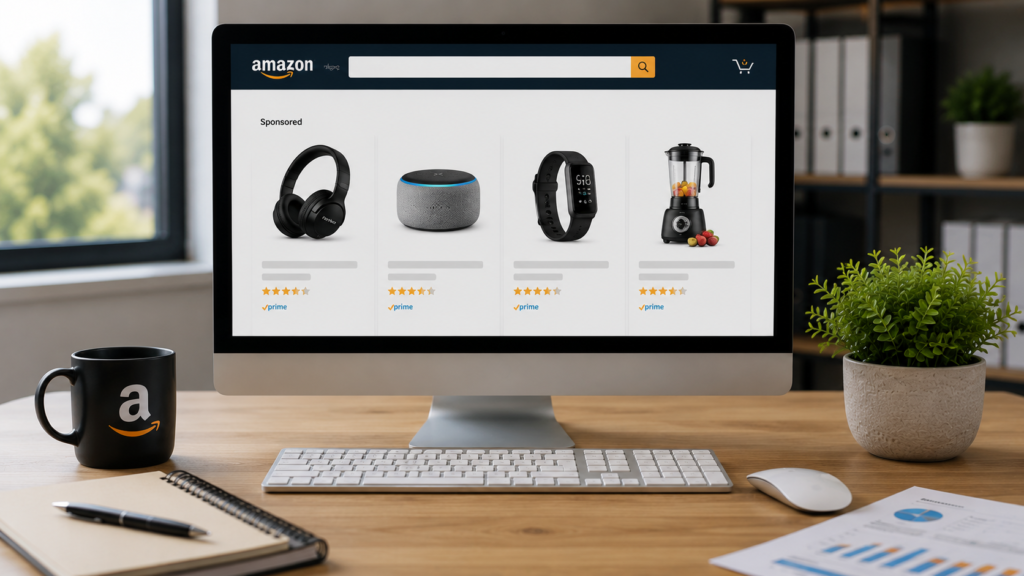
Amazon sponsored products are the most popular ad format available. They appear directly in search results and product pages. These ads look almost identical to organic listings. They are ideal for driving direct product sales quickly.
Sellers bid on keywords relevant to their products. When a shopper searches that keyword, your ad appears. You pay only when someone clicks on your ad. This makes it highly cost-efficient for most sellers.
Sponsored Products work well when combined with solid Amazon keyword research. Targeting the right keywords maximises your ad spend efficiency. Always monitor which keywords convert and which waste budget. Pause underperforming keywords regularly for better results.
Amazon Display Ads
Amazon display ads help you reach shoppers beyond search results. They appear on product pages, homepages, and third-party sites. These ads are great for brand awareness and retargeting. They keep your brand visible throughout the shopper’s journey.
Display ads use audience targeting rather than keyword targeting. You can target by interests, shopping behaviour, and demographics. This makes them powerful for reaching new customer segments. They complement sponsored ads inside a complete marketing funnel strategy.
Consider display ads when you want to retarget past visitors. They remind shoppers of products they viewed but did not buy. Pairing them with conversion rate optimisation services maximises sales. The combination of traffic and optimisation drives consistent growth.
Amazon DSP Advertising
Amazon DSP advertising stands for Demand-Side Platform advertising. It allows programmatic ad buying across Amazon and external sites. DSP gives advanced targeting capabilities beyond standard ad types. It is best suited for established brands with larger budgets.
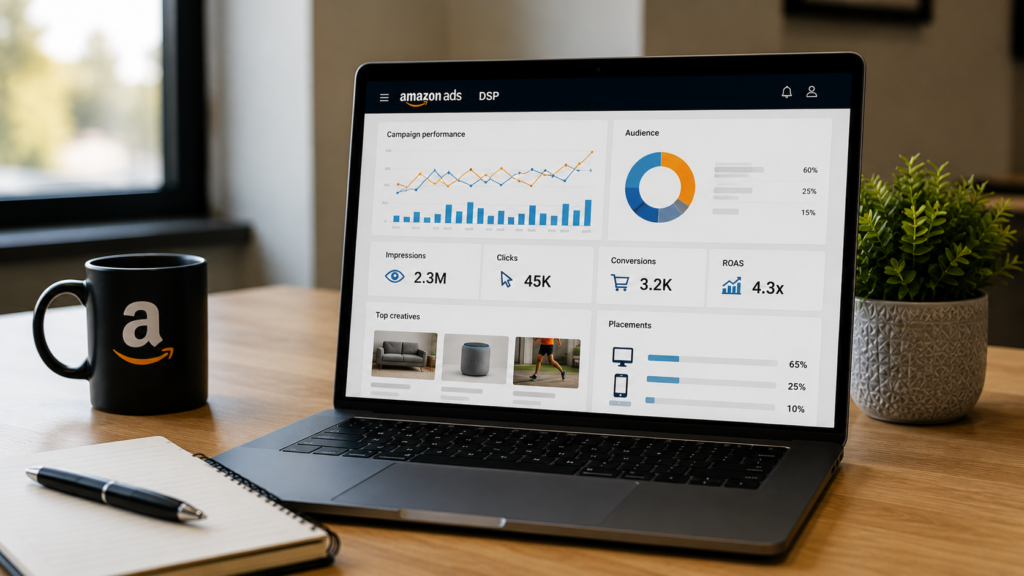
With DSP, you can reach audiences who have not visited Amazon yet. It uses Amazon’s first-party data for precise audience targeting. This makes it one of the most sophisticated ad tools available. It fits within a broader omnichannel marketing strategy framework.
DSP campaigns require a minimum budget commitment to get started. Amazon typically requires a managed service agreement for DSP. It is ideal for brands prioritising long-term audience building. Results compound over time with consistent DSP investment.
Sponsored Brands
Sponsored Brands ads appear at the top of search results prominently. They showcase your brand logo, a custom headline, and products. These ads are excellent for building brand recognition on Amazon. They are available to brand-registered sellers only.
You can link Sponsored Brand ads to your Amazon Store. This drives shoppers to a full branded shopping experience. Strong branding also supports your social media marketing efforts off-platform. Consistent brand identity builds long-term customer loyalty effectively.
Sponsored Display
Sponsored Display lets you retarget shoppers who viewed your products. Ads appear on Amazon and across the web automatically. This format is self-serve and easy to set up quickly. It is a simpler version of full DSP advertising for sellers.
These ads can also target competitors’ product detail pages. This lets you capture shoppers already interested in similar products. It is a smart tactic within any performance marketing approach. Use it to intercept potential buyers at the right moment.
Setting Up Your Amazon Advertising Account
Creating your amazon advertising account is straightforward and fast. Visit Amazon Advertising and log in with your seller credentials. You will then access the campaign manager dashboard immediately. From there, you can create and manage all your campaigns.
Your amazon ads account connects directly to your seller account. Ensure your product listings are fully optimised before advertising. Poor listings waste ad spend and reduce conversion rates significantly. Focus on strong titles, bullet points, images, and descriptions first.
Good ecommerce SEO combined with paid ads creates a powerful engine. Organic rankings reduce your long-term cost per acquisition consistently. Balance both strategies for sustainable, profitable growth on Amazon. Learn more about effective ecommerce SEO strategies to strengthen your listings.
Structure your amazon advertising account logically from the beginning. Group similar products into separate campaigns for better control. Use ad groups to organise keywords by theme and intent. Clean account structure makes optimisation far easier over time.
How Much Does Amazon Advertising Cost?
Amazon advertising operates on a cost-per-click bidding model. You set your maximum bid per keyword or product target. The actual cost depends on competition and your bid amount. Average CPC on Amazon ranges from $0.20 to $3.00 typically.
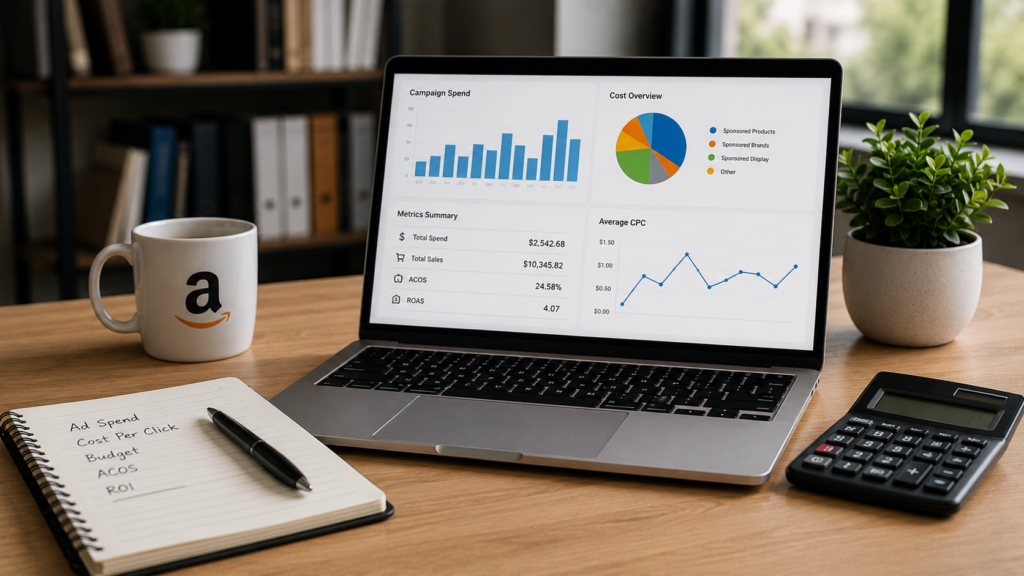
Competitive categories like electronics and supplements cost more per click. Niche categories with less competition cost significantly less. Start with a modest daily budget and scale what works. Use analytics and reporting dashboards to track every dollar spent.
Your Advertising Cost of Sales (ACoS) is the key metric. ACoS equals ad spend divided by ad-attributed sales revenue. A lower ACoS means your ads are more profitable overall. Aim for an ACoS below your product’s profit margin consistently.
According to Amazon Advertising’s official resources, budgets scale with goals. Small sellers often start with $10 to $50 per day budgets. Larger brands may spend thousands daily across multiple campaigns. The platform accommodates all budget sizes and business types.
Amazon Seller Advertising Best Practices
Mastering amazon seller advertising requires consistency and smart optimisation. Follow these proven best practices to maximise your return on investment.
Conduct Deep Keyword Research
Keyword research is the foundation of every successful ad campaign. Use tools designed for keyword research for SEO and Amazon ads. Identify high-volume, relevant keywords with manageable competition levels. Target a mix of broad, phrase, and exact match types strategically.
Understanding keyword search volume helps you prioritise your targeting efforts. High-volume keywords bring more traffic but cost more per click. Long-tail keywords often convert better at lower cost overall. Balance both types for the best campaign performance results.
Use automatic campaigns first to discover what shoppers search for. Then move winning search terms into manual campaigns for control. This data-driven approach improves efficiency over time dramatically. It is a core principle in data-driven marketing best practices.
Optimise Your Product Listings First
No ad campaign can fix a poorly optimised product listing. Your images, title, bullets, and description must be compelling. High-quality images are especially important for ad performance. Learn how to properly use alt text on images for better visibility.
A great listing improves your conversion rate dramatically and consistently. Higher conversion rates lower your effective cost per sale. Amazon rewards well-converting listings with better organic ranking too. Strong listings make every advertising dollar work much harder for you.
Use Negative Keywords Actively
Negative keywords prevent your ads from showing on irrelevant searches. They protect your budget from being wasted on unqualified traffic. Review your search term reports weekly to find irrelevant queries. Add them as negatives to sharpen your targeting over time.
This is one of the most underused tactics in amazon advertising campaigns. Even experienced sellers often neglect negative keyword management. It can significantly reduce wasted spend and improve ACoS. Make it a regular part of your campaign management routine.
Test, Analyse, and Iterate Continuously
Successful advertising requires continuous testing and optimisation every week. Test different ad copy, bid strategies, and targeting approaches regularly. Use AI-powered tools to identify patterns in your campaign data. Scale what works and pause what consistently underperforms quickly.
Review your campaigns at least once per week for best results. Adjust bids based on keyword performance and ACoS targets. Use placement reports to optimise top-of-search and product-page bids. Small, consistent optimisations compound into major improvements over months.
Consider working with specialists offering ecommerce PPC services for guidance. Experts can accelerate your learning curve and protect your budget. Professional management often pays for itself through improved campaign efficiency. It is especially valuable when scaling campaigns to higher budgets.
Leverage the Full Marketing Funnel
Amazon ads work best when mapped to the full buyer journey. Use Sponsored Products for bottom-funnel, purchase-ready shoppers. Use Sponsored Brands and Display for mid and top-funnel audiences. A full-funnel approach drives awareness, consideration, and conversion together.
Refer to a funnel audit checklist to identify gaps in your strategy. Many sellers focus only on bottom-funnel ads and miss growth. Top-funnel ads build the audience that bottom-funnel ads convert. Balance all stages for the most sustainable growth trajectory.
Measuring Amazon Advertising Performance
Tracking the right metrics is essential for ad campaign success. Beyond ACoS, monitor click-through rate, conversion rate, and impressions. These metrics reveal where your campaigns are strong or weak. Use them to guide your optimisation decisions every week.
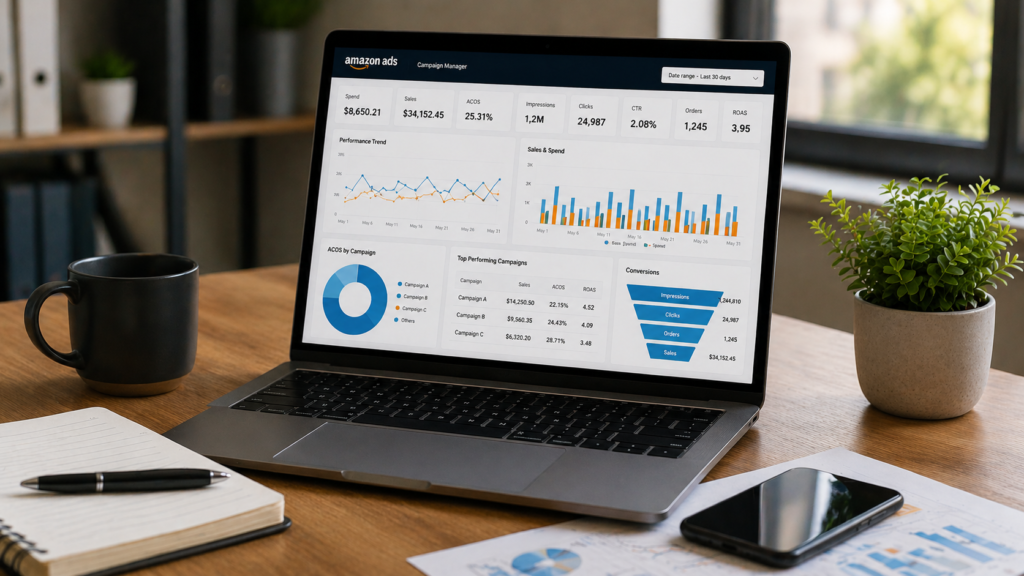
Total ACoS (TACoS) accounts for both ad-attributed and organic sales. It gives a more complete picture of your advertising efficiency. As organic ranking improves, TACoS naturally decreases over time. This is a healthy sign that your investment is compounding positively.
Connect your ad data with broader search engine marketing strategies for insight. Look at how ads impact organic ranking and overall brand visibility. Advertisers who integrate all channels see the strongest long-term results. Use every data point to drive smarter decisions consistently.
According to Statista’s Amazon advertising data, ad revenues grow yearly significantly. This signals increasing competition across most product categories on Amazon. Staying ahead requires smarter targeting and better creative assets always. Advertisers who adapt quickly will maintain their competitive advantage.
Amazon Advertising vs Other Platforms
The Amazon advertising differs from Facebook advertising in a key way. Amazon shoppers have much higher purchase intent than social media users. They are actively searching for products to buy right now. This makes Amazon ads extremely efficient for direct response goals.
Compared to Instagram advertising, Amazon ads target buyers not browsers. Instagram excels at brand discovery and lifestyle content marketing. Amazon excels at capturing demand that already exists among shoppers. Both platforms serve different but complementary roles in your strategy.
A complete social media advertising strategy should work alongside Amazon ads. Each platform has unique strengths and audience behaviours worth leveraging. Diversifying your ad spend reduces risk and expands your reach. Use each platform where it performs best for your brand.
For sellers managing online marketplace management, Amazon ads are central. They integrate directly with your listings and inventory data. No other platform offers this level of ecommerce-native integration. It makes Amazon the primary choice for most product sellers.
Common Amazon Advertising Mistakes to Avoid
Many sellers make avoidable mistakes when running Amazon ad campaigns. The most common is setting and forgetting campaigns without optimisation. Amazon’s algorithm rewards active campaign management and regular adjustments. Never leave campaigns running unmonitored for more than a week.
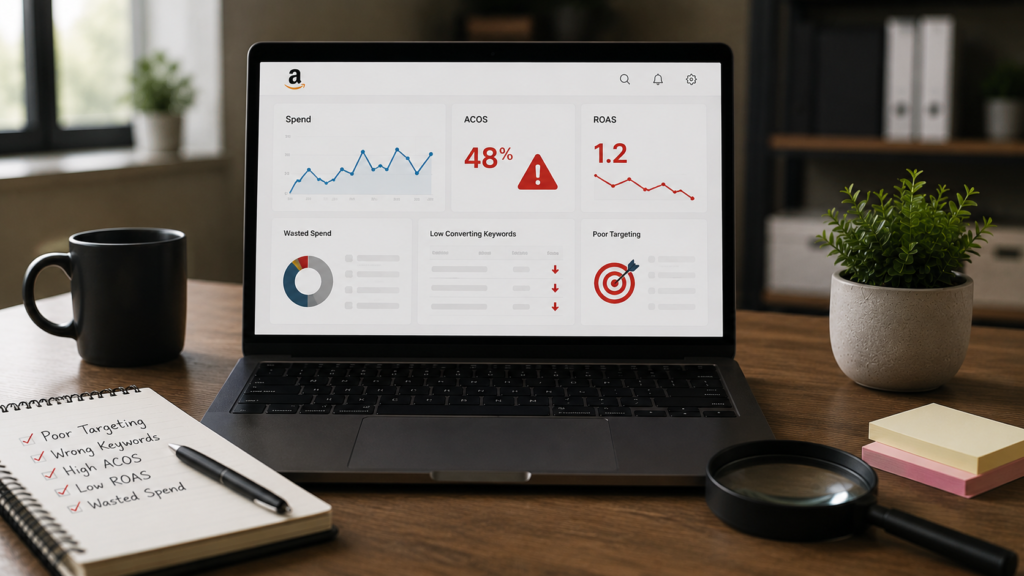
Another mistake is targeting too broadly in manual campaigns early on. Broad match keywords can drain your budget on irrelevant traffic fast. Start tighter with phrase and exact match types initially. Expand slowly as you gather more conversion data over time.
Ignoring your competitors is also a costly advertising mistake. Study what top competitors are doing in your category regularly. Use tools for keyword research to uncover competitor keyword strategies. Staying informed helps you adapt your strategy proactively and effectively.
Skipping AI automation tools is another missed opportunity for sellers. Automation helps manage bids, pause keywords, and scale campaigns efficiently. It saves hours of manual work while improving consistency and results. Embrace automation as a core part of your advertising workflow.
Frequently Asked Questions
Amazon advertising is a pay-per-click platform where sellers bid on keywords. Ads appear in search results and product pages. You only pay when a shopper clicks. It drives direct product sales effectively and efficiently for all seller sizes.
Costs vary based on competition and keywords targeted in your campaigns. Average cost-per-click ranges from $0.20 to $3.00 typically. You set daily budgets and maximum bids yourself. Even small budgets can generate meaningful results when managed properly and strategically.
The main types include Sponsored Products, Sponsored Brands, Sponsored Display, and Amazon DSP advertising. Each serves a different goal in your sales funnel. Sponsored Products are most popular for direct sales. Using a mix maximises both reach and conversion across all shopping stages.
Visit Amazon Advertising and sign in with your existing seller account credentials. Access the campaign manager dashboard to begin creating campaigns immediately. Ensure your product listings are fully optimised before launching any ads. Strong listings improve your ad performance and conversion rates significantly from day one.
A good ACoS depends on your product’s profit margin and overall business goals. Generally, ACoS below 30 percent is considered strong for most categories. Lower ACoS means higher profitability from your advertising spend. Always compare ACoS against your margins to determine true campaign profitability accurately.
Conclusion
Amazon advertising is essential for any serious ecommerce seller today. It connects your products directly with millions of ready-to-buy customers. Understanding ad types, costs, and best practices gives you a clear advantage. Start small, test consistently, and scale what delivers profitable results.
Combine your ad strategy with strong SEO services for maximum impact. Ads drive immediate traffic while SEO builds long-term organic growth. Together, they create a sustainable and scalable revenue engine for sellers. Take action today and put your Amazon advertising strategy to work.
Need expert support for your campaigns? Explore professional digital marketing services to accelerate your growth. From ad management to full-funnel strategy, specialists can help you scale. The right partner turns good campaigns into exceptional, consistent results.

About the author
Ujjwal Kumawat
I specialize in SEO, website development, Google Ads and online business growth strategies. Through my blogs, I share practical insights, marketing tips and proven strategies to help businesses improve their online visibility, generate more leads and grow faster in the digital space.