Is your Amazon listing invisible to buyers because you haven’t applied Amazon SEO optimization to make your great product discoverable?
Amazon SEO optimization is the step-by-step work of improving a listing’s title, bullets, description, images, backend search terms, price and reviews so it ranks and converts in Amazon search. This checklist walks through each element in the order to fix them. For how Amazon’s ranking works in general, read our Amazon SEO guide.
Sellers who invest in Amazon SEO consistently outsell those who do not. The platform rewards relevance, performance, and buyer satisfaction simultaneously.For brands building a complete digital marketing strategies framework, Amazon SEO is non-negotiable. It sits alongside website SEO and paid advertising in a complete growth strategy.
What Is Amazon SEO and How Does It Work?
Amazon SEO is the practice of optimising product listings for Amazon’s internal search algorithm. The algorithm evaluates keyword relevance, sales velocity, conversion rate, and customer reviews. Products ranking at the top of Amazon search receive the majority of clicks and purchases. Understanding this algorithm is the foundation of effective Amazon listing optimization services.

Amazon SEO is optimizing listings for Amazon’s search engine. If you are new to the topic, start with our Amazon SEO guide; this page covers the hands-on checklist.” Then go straight to the checklist. According to Jungle Scout’s Amazon ranking factors guide, sales performance is the single strongest ranking signal. High conversion rates signal to Amazon that your product satisfies buyer intent. This makes listing quality and keyword targeting directly connected to revenue.
Sellers using eCommerce SEO principles alongside Amazon-specific tactics outperform those relying on Amazon alone. Cross-channel keyword intelligence improves both Amazon and website performance simultaneously.
Amazon’s A9 Algorithm: The Ranking Engine
Amazon’s A9 algorithm determines product ranking in search results. It prioritises two core factors above all others. These are relevance and performance. Relevance measures how well your listing matches a buyer’s search query. Performance measures how often buyers click and purchase after finding your product.
The algorithm also considers these additional signals:
- Price competitiveness relative to similar products.
- Fulfilment method, with FBA products often receiving ranking preference.
- Listing completeness, including images, descriptions, and A Plus content.
- Review quantity and average star rating.
Understanding the algorithm helps sellers prioritise which elements to optimise first. Amazon keyword research specific to buyer search behaviour is the essential starting point.
Keyword Research for Amazon SEO Optimization
Effective keyword research is the foundation of Amazon search optimization. Amazon buyers use specific, attribute-rich search language. They search for “wireless earbuds noise cancelling under 2000” rather than just “earbuds.” Finding these specific phrases is critical.
Use these primary keyword research methods:
- Amazon search autocomplete reveals real queries from current buyers.
- Amazon Brand Analytics shows top search terms for your category.
- Third-party tools like Helium 10 and Jungle Scout provide search volume data. See our review of the best Amazon SEO tools
- Competitor ASIN reverse lookup reveals proven keyword territories.
Organise discovered keywords into three groups. Primary keywords belong in your title. Secondary keywords belong in bullet points. Supporting keywords belong in backend search fields. This structured approach maximises keyword coverage across your entire listing.
For brands also running Google Ads management campaigns, Amazon keyword data reveals buyer language applicable across channels.
Optimising Your Amazon Product Title
The product title carries the highest algorithmic weight in Amazon SEO optimization. It directly influences whether your listing appears for relevant searches. A well-optimised title includes the primary keyword near the beginning. It also includes key product attributes buyers care about most.
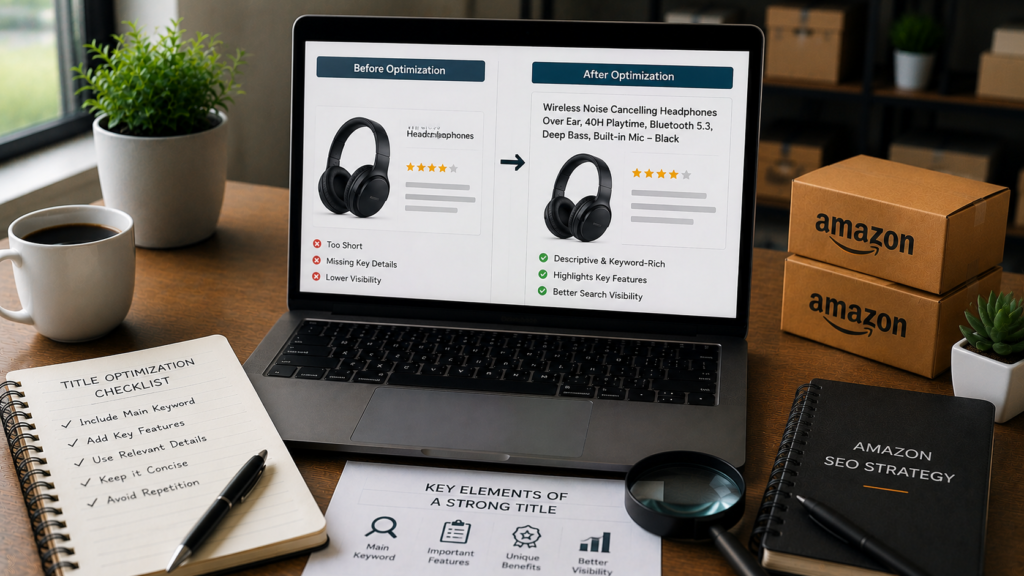
Follow these title best practices:
- Place your most important keyword in the first three to five words.
- Include product type, brand name, and key differentiator.
- Add relevant specifications like size, colour, or quantity.
- Keep the title readable and natural for human buyers.
- Stay within Amazon’s character limit for your category.
Avoid keyword stuffing that makes titles unreadable. Amazon may suppress listings with unnatural titles. Balance keyword optimisation with human readability at every point.
According to Amazon’s official listing quality guidelines, clear and informative titles improve conversion rates significantly. Higher conversion directly supports better organic ranking over time.
Bullet Points and Product Description Optimisation
Bullet points are the second most important content area after the title. They communicate value to buyers and carry secondary keyword signals. Each bullet should lead with a benefit rather than a feature. Buyers want to know what the product does for them specifically.
Write five bullet points for every listing. Each bullet should be under 200 characters for mobile readability. Begin each bullet with a capitalised keyword-rich benefit statement. Follow with a supporting explanation of two to three sentences.
The product description complements bullet points with additional context. Use it for storytelling, brand positioning, and keyword variation. Include long-tail keywords not covered in the title or bullets. For brand-registered sellers, A Plus content replaces the standard description. A Plus content significantly improves conversion rates through enhanced visuals.
Strong product descriptions connect to effective content writing services that balance persuasion with keyword placement. Every word should serve both the algorithm and the buyer simultaneously.
Amazon Listing Optimization Services: Images and Visual Content
Product images are critical for both conversion and SEO on Amazon. High-quality images directly affect click-through rate from search results. Better CTR signals buyer interest, which improves your ranking position. Poor images hurt conversion rates and suppress organic ranking.
Follow these image optimisation standards:
- Use a white background for your main product image.
- Include at least six images showing different angles and use cases.
- Add infographic images highlighting key product features.
- Include a lifestyle image showing the product in context.
- Show scale with a size comparison image where relevant.
Image alt text on your own website matters for Google image search. Our guide on alt text on image covers how to implement this correctly. On Amazon, image filenames and quality directly affect platform performance.
Video content is increasingly valuable on Amazon listings. Product videos improve session duration and conversion rates measurably.
Backend Search Terms and Amazon SEO
Backend search terms are hidden keyword fields in Amazon Seller Central. They are not visible to buyers but are indexed by Amazon’s algorithm. Use backend fields to include synonyms, alternate spellings, and supporting long-tail keywords. Do not repeat keywords already used in your title or bullets.
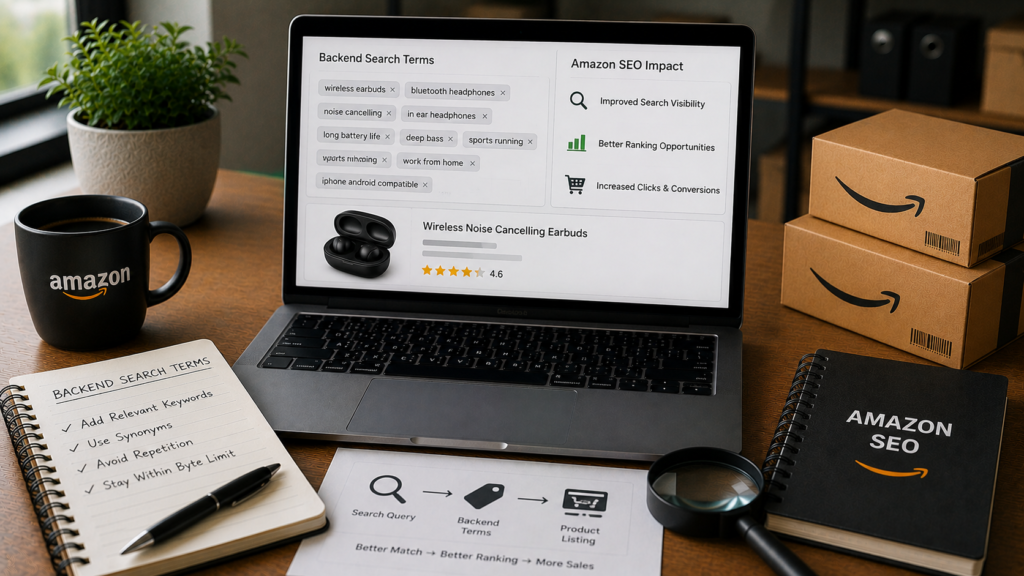
Follow these backend keyword rules:
- Stay within Amazon’s 249-byte limit for search terms.
- Separate keywords with spaces rather than commas.
- Include Spanish keywords if targeting bilingual markets.
- Add common misspellings that buyers actually use in searches.
- Do not include competitor brand names in backend terms.
Backend optimisation is one of the most overlooked elements in Amazon listing optimization services. Filling these fields completely maximises your listing’s indexation across a broader range of searches.
Amazon Pricing Strategy and Its SEO Impact
Price competitiveness directly affects Amazon SEO optimization results. Amazon’s algorithm considers price when determining which products to rank for purchase-intent queries. Overpriced products receive fewer clicks and lower conversion rates. Lower conversion rates negatively impact organic ranking position.
Monitor competitor pricing consistently. Use Amazon’s automated pricing tools to stay competitive. Winning the Buy Box requires competitive pricing alongside seller performance metrics. The Buy Box controls the majority of Amazon sales for any given product.
For brands running eCommerce PPC campaigns alongside organic Amazon SEO, pricing strategy affects advertising efficiency too. Lower prices improve both organic conversion and paid campaign return on ad spend.
Understanding performance marketing vs growth marketing helps brands balance short-term pricing tactics with long-term brand positioning on Amazon.
Reviews and Ratings in Amazon Search Optimization
Customer reviews are among the strongest Amazon ranking signals. Products with more reviews and higher average ratings consistently outrank competitors with fewer reviews. Amazon’s algorithm interprets positive reviews as evidence of product quality and buyer satisfaction.
Build a systematic review generation process. Follow up with buyers through Amazon’s Request a Review feature. Focus on product quality and accurate listing descriptions to reduce negative reviews. Respond professionally to all reviews, especially negative ones.
Our guide on responding to reviews with AI in mind covers how to handle buyer feedback at scale. Professional review management improves both seller reputation and Amazon SEO simultaneously.
Amazon Advertising and Its Role in SEO
Amazon Sponsored Products advertising supports organic Amazon SEO optimization in several ways. Running ads generates sales velocity data that signals product relevance to the algorithm. Higher sales velocity improves organic ranking over time. Ads and organic work in a self-reinforcing cycle when managed correctly.

Start with automatic campaigns to discover which keywords convert for your product. Then create manual campaigns targeting your best-performing discovered keywords. Use negative keywords to stop wasted spend on irrelevant queries. Maintain campaigns continuously rather than running them seasonally. For campaign structure and bids, see Amazon PPC management and our Amazon Ads account setup guide.
Online marketplace management professionals integrate paid and organic Amazon strategies into unified performance plans. This combined approach consistently outperforms managing each channel separately.
For brands running advertising alongside broader social media marketing campaigns, Amazon ad data reveals buyer language applicable across all paid channels.
Amazon SEO Agency vs Amazon SEO Consultant
Choosing between an Amazon SEO agency and an Amazon SEO consultant depends on your scale and budget. An Amazon SEO agency offers a full team with specialists in keyword research, listing optimisation, advertising, and analytics. An Amazon SEO consultant provides individual expertise and personalised attention for smaller seller accounts.
Both options deliver professional Amazon listing optimization services that solo sellers struggle to replicate. Agencies manage multiple clients and bring cross-account intelligence. Consultants offer deeper individual focus and often lower price points.
When evaluating an Amazon SEO service provider, look for demonstrated case studies. Ask for before and after ranking data from products in your category. Verify their understanding of Amazon’s current algorithm signals. Request transparency in reporting and campaign performance metrics.
For brands needing a full-service approach, our eCommerce SEO services integrate Amazon optimisation within a comprehensive eCommerce growth strategy.
Amazon SEO Service: What to Expect
A professional Amazon SEO service covers all aspects of listing performance. This includes keyword research, title and bullet point optimisation, image guidance, backend term implementation, and review strategy. Ongoing services also include ranking monitoring and continuous keyword refinement.
According to Helium 10’s Amazon SEO guide, consistent listing optimisation rather than one-time setup produces the best long-term results. Rankings on Amazon require continuous attention as competition intensifies.
For sellers expanding beyond Amazon to their own website, our eCommerce development service builds organic-ready storefronts that complement Amazon presence. Multi-channel strategy reduces platform dependency over time.
Tracking whether your current efforts are working connects to our guide on how to know if your SEO is working. Apply the same analytical rigour to Amazon ranking tracking as to website SEO. Read AI SEO for ecommerce for examples.
Measuring Amazon SEO Optimization Performance
Measuring Amazon SEO optimization results requires consistent tracking of specific metrics. Monitor organic keyword ranking positions weekly for your primary target keywords. Track conversion rate changes after listing updates to measure improvement. Review session data and unit session percentage in Seller Central analytics.

Connect Amazon data to your broader analytics and reporting dashboards for unified performance visibility. This allows comparison between Amazon organic performance and other channels. Understanding the complete picture improves resource allocation across your entire eCommerce strategy.
A data-driven marketing approach applies systematic measurement to every Amazon optimisation decision. Data confirms which changes improved performance and guides future optimisation priorities.
For brands with growing Amazon operations, our AI SEO services apply machine learning to keyword and listing optimisation at scale. AI-powered approaches accelerate the identification of ranking opportunities across large product catalogues.
Multi-Channel Strategy for Amazon Sellers
Amazon SEO optimization performs best within a multi-channel growth strategy. Brands with strong social media presence drive external traffic to Amazon listings. External traffic signals buyer demand to Amazon’s algorithm. This can significantly boost organic ranking beyond what listing optimisation alone achieves. Sellers outside the US can start with Amazon advertising in India.
Build a marketing funnel that captures buyers on social platforms and directs them to Amazon. Use Instagram advertising and Facebook advertising to reach buyers before they search Amazon. Create awareness that converts into Amazon searches for your brand and product.
For international expansion, our international SEO strategy guide covers how to apply similar principles across Amazon’s global marketplaces. Each Amazon marketplace has unique competitive dynamics requiring market-specific keyword research.
Frequently Asked Questions
Amazon SEO optimization improves product listing visibility in Amazon search results. Better rankings drive more clicks, higher conversions, and increased sales. It is the most impactful organic growth strategy for Amazon sellers.
An Amazon SEO agency conducts keyword research, optimises product listings, manages advertising campaigns, and monitors ranking performance. They provide full-service Amazon search optimization expertise that solo sellers struggle to replicate independently.
Most sellers see measurable ranking improvements within four to eight weeks of optimising their listings. Sales velocity and review accumulation accelerate results. Consistent ongoing optimisation produces compounding improvements rather than one-time gains.
Amazon SEO optimises product listings for Amazon’s internal A9 algorithm using keyword placement, conversion rate, and sales velocity signals. Website SEO optimises web pages for Google using content, backlinks, and technical performance factors.
Yes. Ads and organic Amazon SEO work together. Ads generate sales velocity that improves organic ranking. Strong organic rankings reduce your dependence on advertising spend. Both strategies reinforce each other for maximum marketplace visibility.
Conclusion
Amazon SEO optimization is the most important investment any Amazon seller can make in their business. It determines whether your products are discovered or ignored by the millions of buyers searching the platform daily. Effective Amazon search optimization combines keyword research, title and content optimisation, image quality, pricing strategy, review generation, and advertising support.
Whether you work with an Amazon SEO agency, hire an Amazon SEO consultant, or invest in professional Amazon listing optimization services, the principles remain the same. Relevance to buyer intent and strong sales performance drive rankings upward. Start with thorough keyword research. Optimise every element of your listing systematically. Monitor results and refine continuously.
Explore our complete services overview to see how we help brands build winning Amazon and eCommerce strategies. For dedicated Amazon and eCommerce support, our online marketplace management team delivers results across every major platform.

About the author
Ujjwal Kumawat
I specialize in SEO, website development, Google Ads and online business growth strategies. Through my blogs, I share practical insights, marketing tips and proven strategies to help businesses improve their online visibility, generate more leads and grow faster in the digital space.