Need a blogger sitemap generator that actually works?
Every platform handles sitemaps a little differently. Getting it wrong can slow your indexing.
Quick answer: A blogger sitemap generator builds a file listing your blog posts. Blogger, Shopify, WordPress, and Next.js each need a slightly different setup. This guide covers all four clearly.
Introduction
A blogger sitemap generator solves a real technical gap. Blogger does not create a standard file automatically. This guide shows you exactly how to fix that.
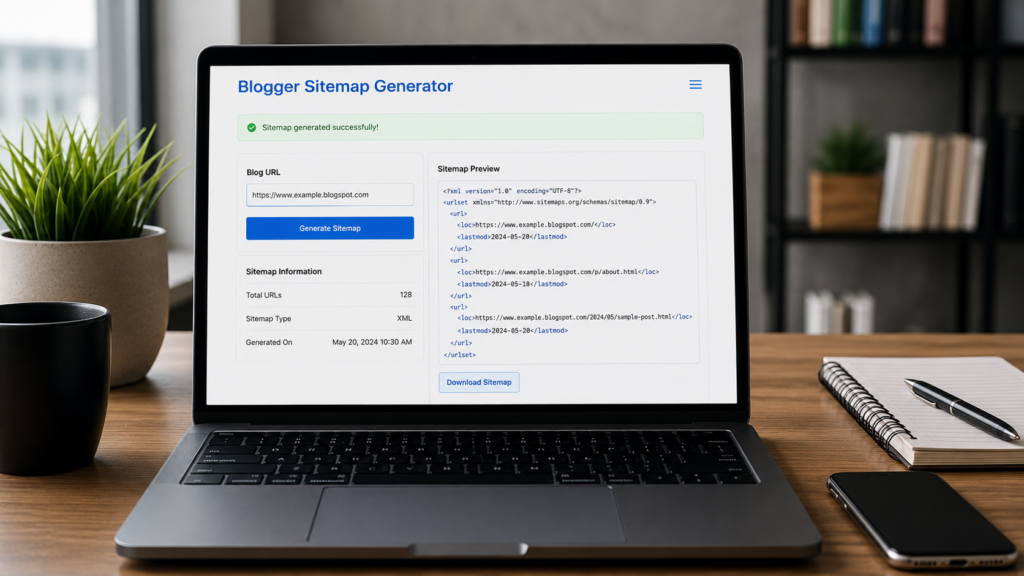
We also cover sitemap shopify, wordpress, and nextjs setups. Each platform follows its own specific process. You will learn every step clearly here.
You will see how to create sitemap blogger style quickly. We also explain the best sitemap plugin wordpress options. Every method stays simple and beginner friendly.
Strong technical habits also connect to wider technical seo audit checklist work. Clean sitemaps support your entire keyword research strategy too.
New bloggers and growing stores both face this task. Every platform handles the process a little differently. This guide keeps each method simple and practical.
What Is a Blogger Sitemap Generator
A blogger sitemap generator creates a file for search engines. It lists your blog posts in a readable format. This helps Google find and crawl content faster.
Blogger does not offer a true XML sitemap. Instead, it relies on feed based URLs. These feeds work similarly but have real limits.
Why Blogger Needs Extra Setup
The default Blogger feed only shows recent posts. Older posts can stay hidden from crawlers. This is where a generator tool becomes useful.
A proper blogger sitemap generator builds multiple feed URLs. Each URL covers a different range of posts. Together, they cover your entire blog.
Sites managing their crawl budget should understand this limitation clearly. Missing older posts wastes valuable crawler attention. Fixing this early helps your whole blog.
Blogger relies on Atom feed URLs instead of true XML files. These feeds use start index and result limit parameters. Google still reads them the same way as a sitemap. This format is confirmed in official Google Search Central sitemap guidance.
Blogger Sitemap Setup Step by Step
Setting up a blogger sitemap takes just a few steps. You do not need advanced technical skills. Follow this simple process carefully.
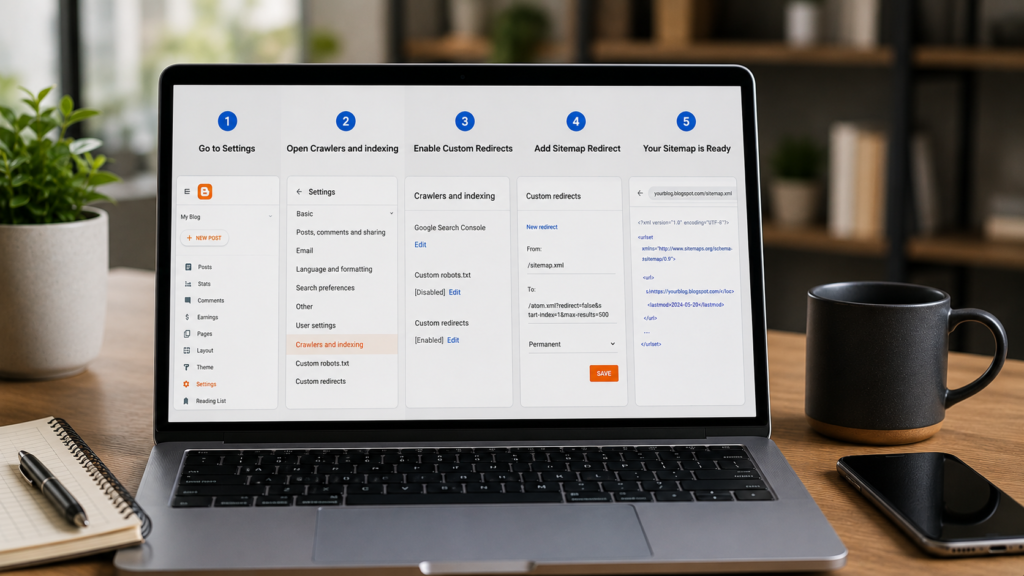
Here is how to create sitemap blogger style quickly.
- Find your blog url and total post count.
- Use a blogger sitemap generator tool online.
- Copy the generated feed based sitemap lines.
- Paste them into your custom robots settings.
- Submit the main sitemap inside Search Console.
This process pairs well with a full technical seo audit checklist review. Clean structure supports the entire submission process.
Submitting Your Blogger Sitemap
Open Google Search Console for your blog. Find the sitemaps section on the left. Enter your main feed based sitemap URL.
Click submit and wait a few days. Check back to confirm successful processing. Errors usually point to a formatting mistake.
Pairing this step with a content audit guide helps further. Weak or thin posts can be improved before resubmission.
Sitemap Shopify Explained
Sitemap shopify setup requires almost no manual work. Shopify automatically creates a sitemap for every store. It updates whenever you add new content.
You can find it at your store’s root address. New products, pages, and blog posts appear automatically. This makes Shopify one of the easiest platforms.
Confirming Your Shopify Sitemap Works
Visit your store’s sitemap address directly in a browser. Confirm your key pages appear inside the file. Submit this URL through Google Search Console too.
Stores focused on ecommerce seo should still monitor this file regularly. Automatic does not always mean perfect. Occasional manual checks catch rare issues early.
Shopify’s own help documentation confirms this automatic behavior clearly. According to Shopify Help Center, sitemap files update automatically as products and pages change. Store owners rarely need manual intervention here.
Sitemap Plugin WordPress Options
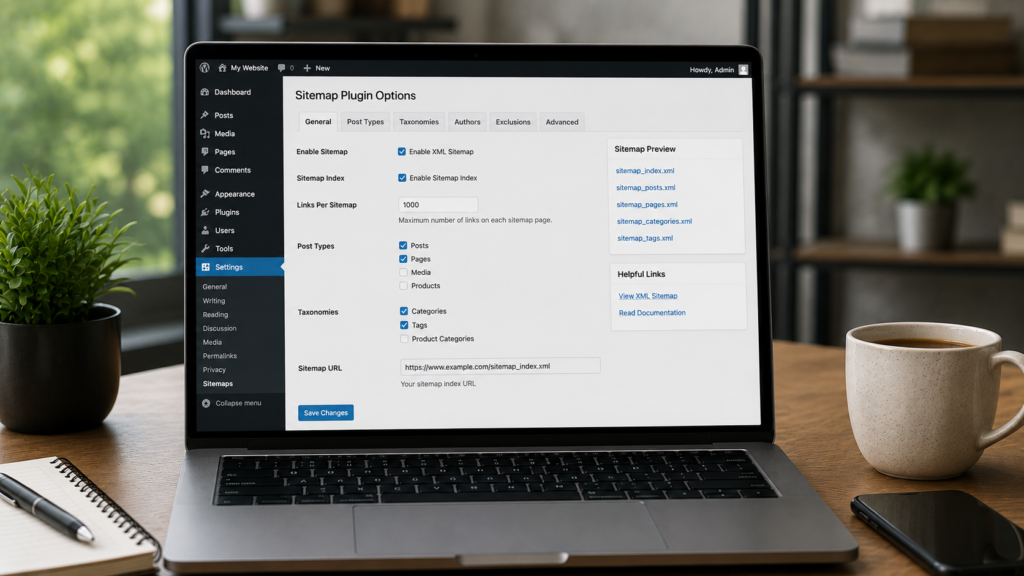
WordPress offers several reliable sitemap paths. Since version five point five, it includes a built in option. Many site owners use a plugin instead.
Built In WordPress Sitemaps
The built in feature works without any setup. It appears automatically at your sitemap address. This suits simple blogs without complex needs.
Popular Sitemap Plugin WordPress Choices
Yoast SEO remains a widely used sitemap plugin wordpress option. It generates and updates sitemaps automatically. Rank Math offers similar features with more control.
Both plugins support image and video sitemaps too. They also handle canonical and indexing settings well. Clean canonical tags work smoothly alongside either plugin.
Sites running seo automation tools can integrate these plugins easily. This keeps sitemap updates fully hands off. Content teams save real time this way.
Yoast’s own documentation explains this default behavior clearly. According to Yoast SEO, the plugin generates a sitemap index automatically once activated. No manual file creation is ever required.
Sitemap Nextjs Setup
Sitemap nextjs setup requires a small amount of coding. Developers can build a sitemap file directly. The framework supports this through a simple function.
Manual Sitemap Files in Next.js
Small projects can use a single sitemap file. It exports a list of page URLs. This works well for simple, static sites.
Dynamic Sitemap Nextjs Generation
Larger, dynamic sites need a different approach. A function can fetch pages from a database. This keeps the sitemap current automatically.
Developers managing large sites often use dedicated packages instead. These packages handle splitting and formatting automatically. This reduces manual coding work significantly.
Popular packages also generate a matching robots file. This keeps both signals synchronized during every build. Teams avoid mismatched settings this way.
Sites focused on javascript seo should test their sitemap output carefully. Rendering issues can hide pages from crawlers. Regular checks catch this problem early.
The official Next.js documentation explains this file convention in detail. Developers can export a function returning a list of URLs. This approach works for both static and dynamic routes.
Choosing the Right Sitemap Generator for Blogger
Choosing the right blogger sitemap generator depends on blog size. Small blogs need a simple, one time tool. Growing blogs benefit from more flexible options.
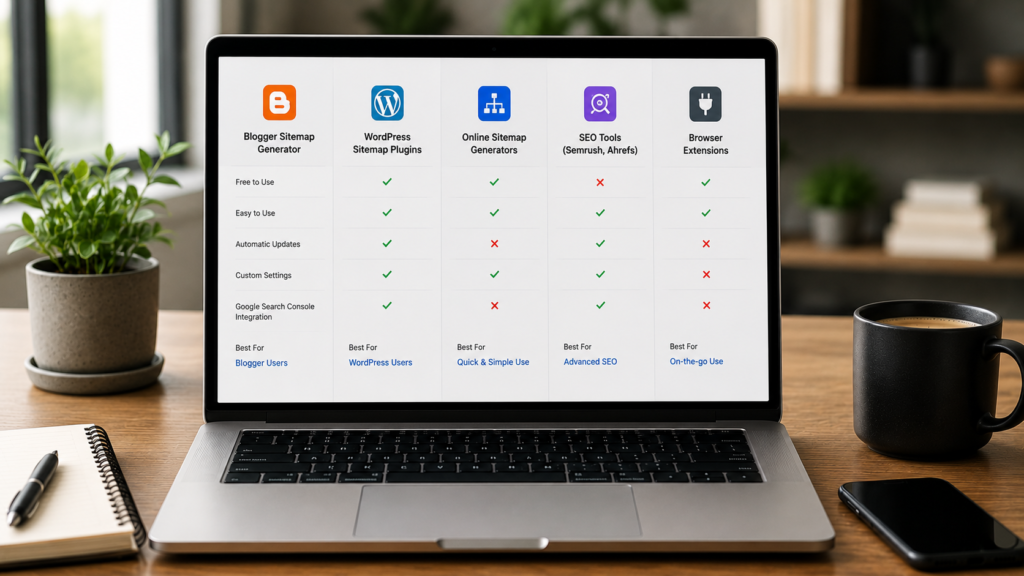
Features Worth Comparing
Look for support for large post counts specifically. Confirm the tool handles custom domains correctly. Check for clear, simple submission instructions too.
Automatic updates save real ongoing effort. Manual tools require repeated resubmission work instead. Weigh this against how often you publish.
Support for custom domains matters just as much. Many bloggers move away from the default blogspot address. A good tool should handle both formats cleanly.
Common Sitemap Mistakes to Avoid
Even experienced site owners make mistakes here. Below are frequent issues worth avoiding.
- Submitting only the default limited Blogger feed.
- Forgetting to update Shopify page settings correctly.
- Running two conflicting WordPress sitemap plugins together.
- Skipping validation before deploying a Next.js sitemap.
- Ignoring errors shown inside Search Console.
Fixing these issues often improves indexing speed. New posts can appear in results much faster.
Set a recurring reminder to review your sitemap monthly. Platforms change and content grows constantly over time. A regular review keeps this file accurate and useful.
Sitemap Generators and Related SEO Factors
A sitemap generator rarely works alone on a website. It connects closely with structure and internal links. A backlink audit guide often reveals pages missing from sitemaps.
Strong sitemaps also support domain authority growth over time. Well indexed pages earn more visibility and traffic. This visibility often leads to more natural backlinks.
Schema and Mobile Considerations
Adding schema markup alongside a clean sitemap helps further. Structured data adds extra context for each page. This can improve how results appear in search.
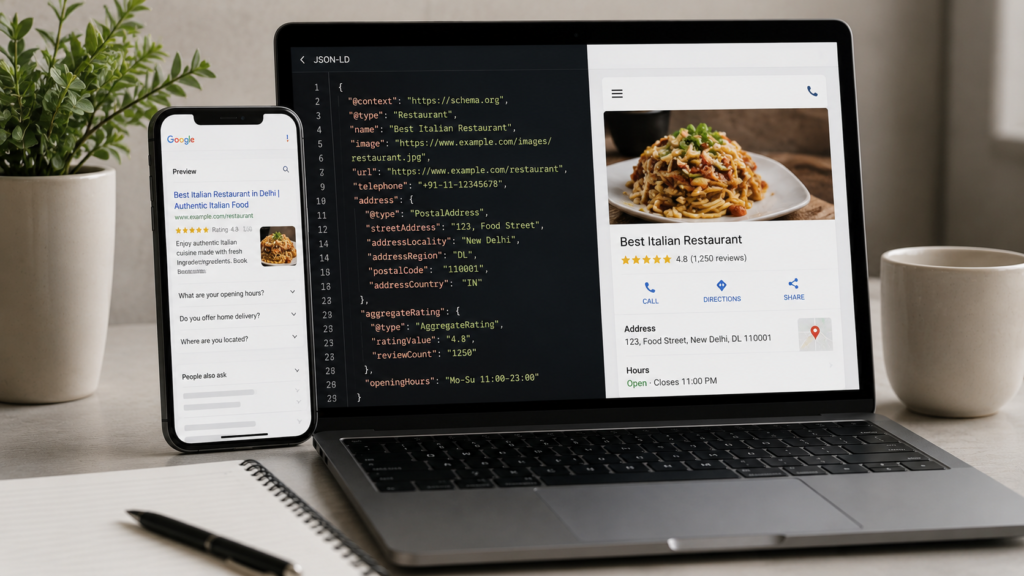
Google now indexes most sites using mobile signals first. Confirm your sitemap reflects this priority clearly. This connects directly to mobile first indexing rules.
According to Google Search Central, a sitemap helps Google discover pages it might otherwise miss. This matters most for large or newly launched sites.
Teams that prefer expert support can turn to professional SEO services. These teams often pair sitemap audits with full technical seo reviews.
Sitemap Generators for Larger Sites
Large blogs and stores face bigger sitemap challenges. Thousands of pages need organized, split files. Manual tools become impractical at this scale.
Teams managing enterprise seo programs often build automated monitoring first. Automated alerts flag sudden sitemap errors quickly. This helps teams react before rankings suffer.
Franchise brands face a similar challenge too. A franchise seo approach often needs many location pages listed. A reliable sitemap generator keeps this process organized.
Media sites with large archives face this challenge constantly. Years of old posts need proper, ongoing organization. Splitting files by content type keeps things manageable.
Sitemap Generator for Blogger and Local Business Blogs
Local business blogs often run on Blogger too. Each location page still needs proper crawling. A blogger sitemap generator handles this the same way.
Businesses using local seo services should confirm every blog post gets indexed. A missing post often means missing local traffic. Regular checks prevent this common oversight.
Agencies handling local seo audit work often check sitemap setup first. It remains one of the fastest technical checks available. Small fixes here can produce noticeable results quickly.
Migrating Between Platforms and Sitemaps
Many site owners eventually migrate between platforms. Moving from Blogger to WordPress happens often. Sitemap setup changes completely during this switch.
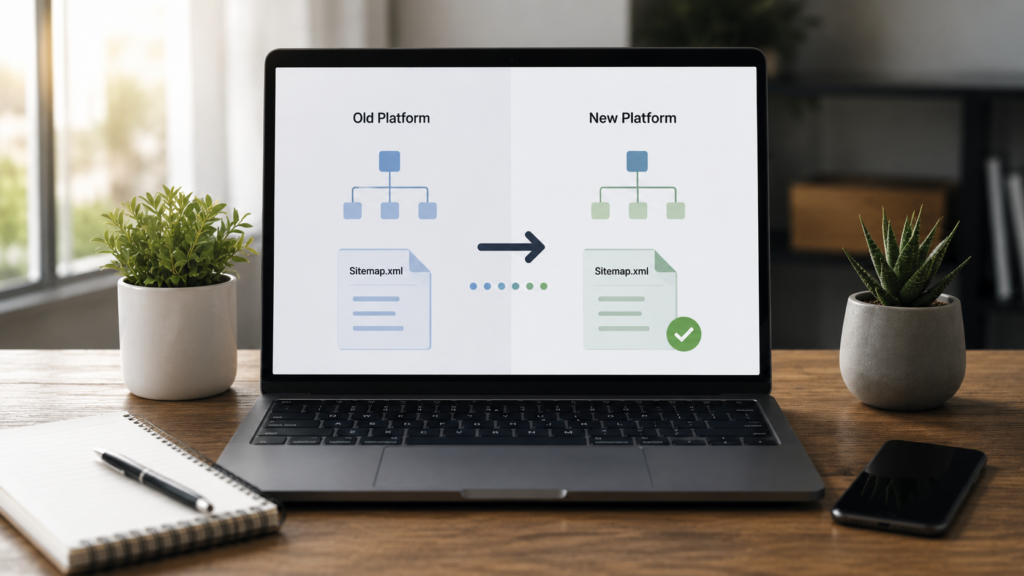
What Happens During a Platform Migration
Old feed based URLs stop working after migration. New sitemap files must replace them quickly. Redirects should point old URLs to new locations.
Submitting a fresh sitemap speeds up this transition. Search Console should reflect the new file promptly. Removing the old sitemap prevents confusing duplicate signals.
Sites planning a move should also review their content audit guide first. This helps decide which old posts deserve fresh URLs. Thin or outdated content can be trimmed during the process.
Testing Your New Sitemap After Migration
Never assume a migration went smoothly without checking. Testing takes only a short time. It protects your rankings from unexpected drops.
Compare your new sitemap against your old post list. Confirm every important page made the transition. Fix any missing entries before traffic notices.
Google Search Console remains the best tool for this check. It shows real indexing trends after any major change. Reviewing this data regularly helps you catch problems early.
Old backlinks pointing to Blogger URLs still matter after migration. Setting up proper redirects preserves this earned authority. Skipping this step can waste years of accumulated link value.
Sitemap Generators and Ecommerce Growth
Growing Shopify stores eventually add many new pages. Product variants and collections multiply quickly over time. A clean sitemap keeps this growth manageable.
Sellers running amazon advertising campaigns should still maintain their own site sitemap separately. Marketplace platforms handle their own indexing rules. Your Shopify store still needs its own file.
WordPress and Ecommerce Plugins Together
WordPress stores using WooCommerce follow similar sitemap rules. The same plugins that handle blog sitemaps also cover products. Yoast and Rank Math both support this integration.
Confirm your product pages appear inside the sitemap correctly. Out of stock items sometimes get excluded automatically. This behavior can usually be adjusted in plugin settings.
Frequently Asked Questions
A blogger sitemap generator builds feed based sitemap URLs for Blogspot blogs. It helps search engines discover older posts beyond the default limit. Blogger lacks a true built in XML sitemap file.
Sitemap shopify setup is fully automatic for every store. Shopify creates and updates the file whenever content changes. No manual configuration or plugin installation is required for most Shopify store owners.
Yoast SEO and Rank Math are both reliable sitemap plugin wordpress choices. Yoast offers simplicity, while Rank Math offers more control. Either option works well for most WordPress sites and blogs.
Sitemap nextjs setup requires basic coding knowledge for custom builds. Small sites can use a simple exported function. Larger or dynamic sites often benefit from a dedicated sitemap package instead.
Update your blogger sitemap whenever you cross a major post milestone. Regular checks every few months work well for most blogs. Automatic platforms like Shopify and WordPress handle this without manual effort.
Conclusion
Creating a sitemap looks different on every platform. Blogger needs extra setup using feed based URLs. Shopify, WordPress, and Next.js each offer their own path. Understanding these differences saves real time and effort.
Combine these habits with wider efforts. Strengthen your keyword research for seo plan regularly. Explore reliable ai seo tools where they fit your workflow. Keep reviewing how your seo is working over time. Together, these steps build a stronger, more discoverable website.

About the author
Ujjwal Kumawat
I specialize in SEO, website development, Google Ads and online business growth strategies. Through my blogs, I share practical insights, marketing tips and proven strategies to help businesses improve their online visibility, generate more leads and grow faster in the digital space.