What belongs on your GEO checklist before you hit publish?
A GEO checklist ensures content is structured for AI citation before publishing. Google AI Overviews now appear on roughly 32 percent of all searches. This guide covers a complete GEO optimization checklist for 2026. We cover technical access, content structure, schema, and authority signals.
You will also get a free GEO checklist summary at the end. For brands building digital marketing strategies, this checklist now protects visibility across both search engines and AI answers.
What Is a GEO Checklist
This is the direct answer most readers want immediately here. A GEO checklist is a repeatable framework for AI citation readiness. It covers crawlability, structure, schema, and authority signals together.
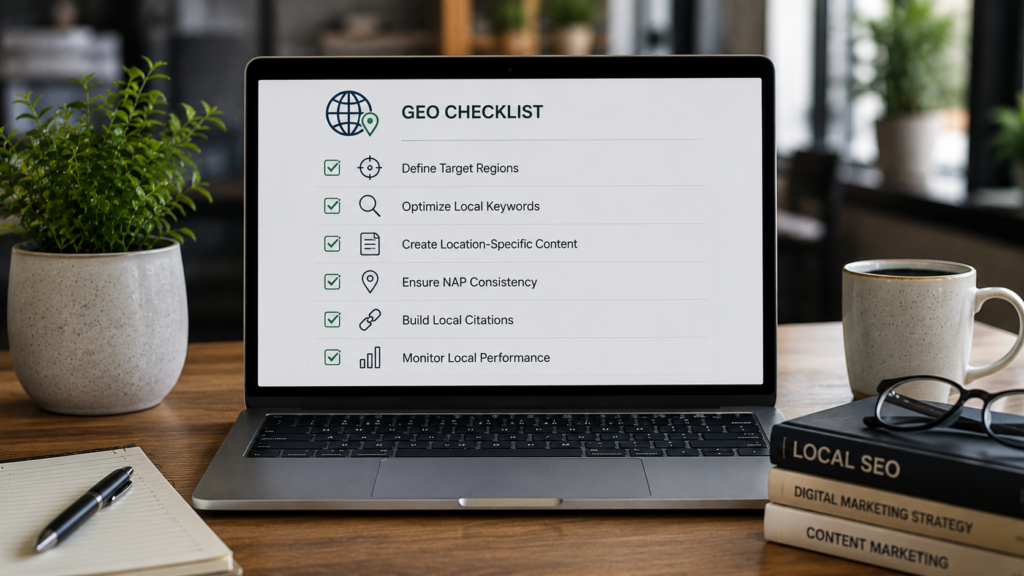
According to Onely’s ultimate GEO checklist guide, a GEO checklist assesses whether AI systems can find, read, and accurately cite your site. It covers technical crawlability, content extractability, and entity clarity together.
Understanding what is generative engine optimisation provides the broader context this checklist builds directly upon.
Why This GEO Checklist Is Urgent in 2026
The data behind this urgency is significant and worth understanding clearly.
According to Onely’s urgency research, AI Overview triggered queries grew from 1.5 percent to roughly 32 percent within twelve months. That represents a twenty times increase in just one year.
According to the same source, AI search visits grew 42.8 percent year over year while Google traffic grew only 2.4 percent. Ahrefs also found AI Overviews reduce click through rates by 58 percent for top ranking pages.
Our how to know if your SEO is working guide explains why this shift now demands new measurement approaches entirely.
Part One: Technical GEO Checklist Items
Technical access forms the foundation of any working GEO audit checklist.
According to LLMrefs’s 2026 GEO guide, verify AI crawlers are not blocked inside your robots.txt file first. Cloudflare recently changed its default settings to block AI bots automatically.
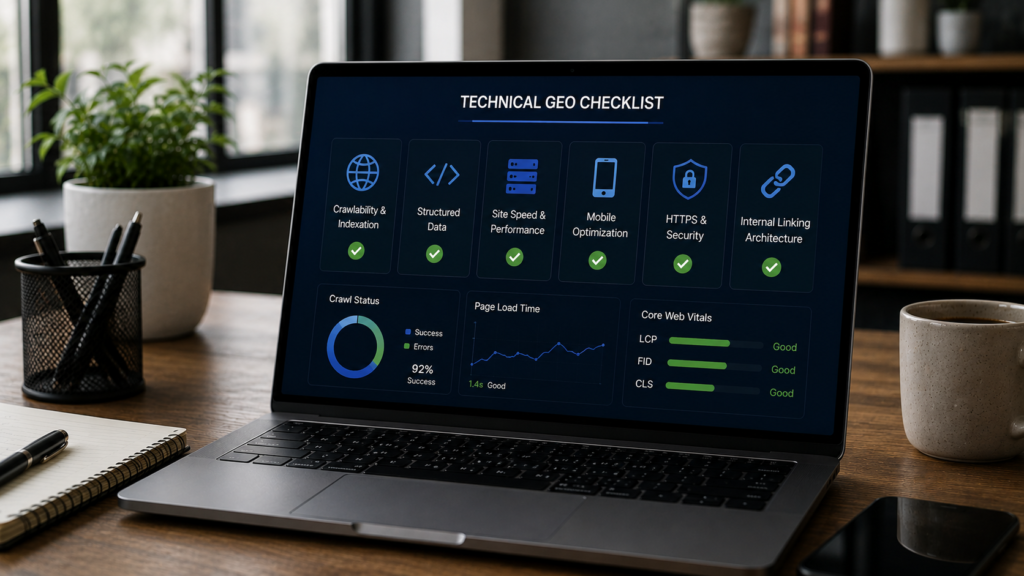
Check your server logs for the ChatGPT User agent specifically. Ensure important content renders server side, not hidden behind JavaScript. Our JavaScript SEO guide explains this rendering requirement in technical detail.
According to Onely’s technical audit checklist, also audit your site architecture, internal linking, and topical hierarchy together. Our technical SEO audit checklist covers these foundational elements thoroughly.
Confirm content is not locked behind logins, paywalls, or interactive elements. Consider creating an llms.txt file to help AI systems understand your structure. Review mobile first indexing readiness and canonical tags implementation as part of this technical pass.
Part Two: Content Structure GEO Checklist Items
Structure determines whether AI systems can extract your answers cleanly.
According to CXL research cited by Onely, 55 percent of AI Overview citations came from the first 30 percent of page content. Burying your best answer in paragraph eight hurts citation chances significantly.
Open your top five pages and check where the core answer sits. If buried, that becomes your highest priority content fix immediately.
According to Search Engine Land’s 2026 GEO guide, AI engines break pages into individual passages for evaluation. Every section needs to stand on its own clearly.
Start each section with a direct answer, then expand with context afterward. Add brief summary statements under key headings so they stand alone. Our how to identify the right content length guide explains balancing this brevity with genuine depth.
According to OptimizeGEO’s step by step guide, format headings as actual questions your audience genuinely asks. This creates direct alignment between user prompts and your content structure.
Part Three: Citation and Authority GEO Checklist Items
Authority signals separate brands AI engines trust from brands they ignore.
According to the foundational ACM KDD 2024 study cited by Onely, adding statistics, quotations, and source citations improved visibility by up to 40 percent. Keyword stuffing alone showed minimal effectiveness by comparison.

Back up key claims with statistics or measurable outcomes consistently. Avoid hedging language such as might, could, or some people say. Our backlink audit guide helps strengthen the external citation signals this checklist requires.
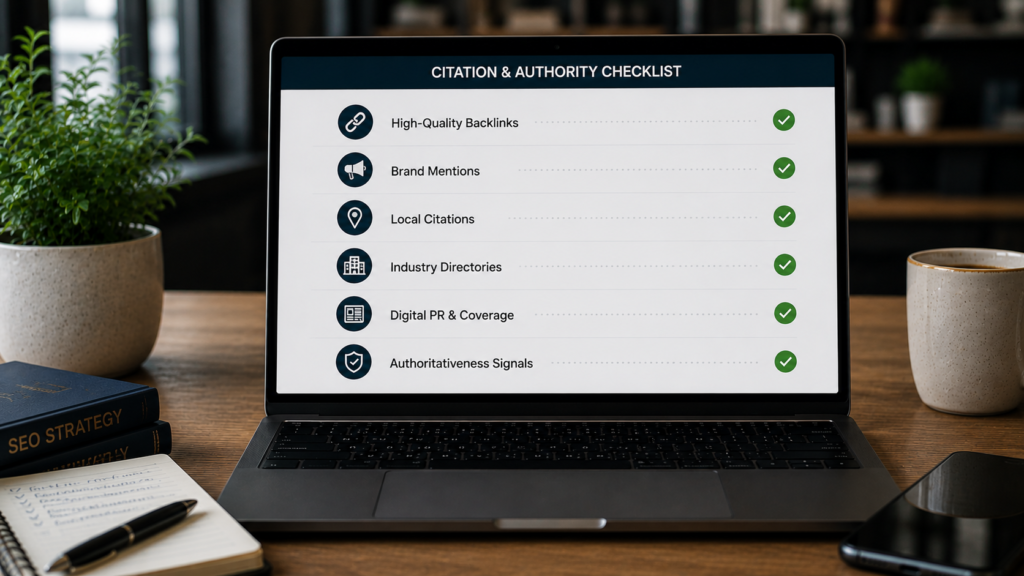
According to Firebrand’s GEO best practices guide, public relations is one of GEO’s most powerful allies for this exact reason. LLMs heavily weigh third party sources and expert commentary when selecting citations.
Earn citations through expert comments, guest articles, or original research data. Our content writing services team builds this authority focused content into every client project.
Part Four: Schema Markup GEO Checklist Items
Schema markup remains essential despite some recent confusion about its actual impact.
According to Onely’s schema audit findings, a 2026 audit of 5,000 sites found 71 percent deployed schema, but only 22 percent passed validation cleanly. That means 78 percent had implementation errors undermining their efforts.
Validate every schema type using Google’s Rich Results Test consistently. Check that schema data matches what is actually visible on the page. Mismatches degrade trust signals for AI systems significantly.
According to the same research, correctly implemented structured data correlated with a 21.6 percent lift in citation likelihood. Our schema markup complete guide covers correct implementation for every relevant schema type.
Part Five: Freshness and Update GEO Checklist Items
AI systems weigh content recency more heavily than many marketers realize.
According to Search Engine Land’s freshness research, a guide published in 2024 with no updates loses ground to fresher 2026 content. Refresh cornerstone content regularly with updated data and insights.
According to To The Web’s GEO checklist guide, review high value pages every 90 days, especially those with pricing or statistical claims. Include clear publish and revision dates visibly on every page.
Our content audit guide helps identify which existing pages need this freshness pass most urgently.
GEO SEO Checklist 2026: Where SEO and GEO Overlap
Understanding where traditional SEO supports GEO prevents wasted duplicate effort.
According to Enrich Labs’s complete 2026 GEO guide, GEO is not a replacement for SEO but an additional layer instead. Google’s E-E-A-T framework applies equally to both disciplines simultaneously.
This GEO SEO checklist therefore shares foundations with traditional optimization work. Our SEO services team integrates both disciplines into one unified content workflow. Review our how to perform an SEO audit guide for the traditional foundation this checklist extends.
GEO Content Checklist for Ecommerce Pages
Ecommerce pages need platform specific GEO content checklist items applied carefully.
According to 201 Creative’s 2026 GEO audit checklist, a retailer that rewrote category pages with a one paragraph summary and pros and cons list began appearing in AI Overviews within six weeks. Adding matching Product structured data supported this improvement.
Our eCommerce SEO service applies this exact structured approach to product and category pages. Pair this with eCommerce PPC campaigns to validate which questions buyers actually ask most.
GEO Ranking Checklist Items for Local Businesses
Local businesses should adapt this GEO ranking checklist to their specific service area.
Service pages should answer common location based questions directly and clearly. Our local SEO services and local SEO strategies guides cover foundational local visibility steps. Review how does Google My Business improve local SEO rankings for the local equivalent of this authority work.
Sector specific guides like local SEO for restaurants and local SEO for dentists show practical application clearly.
Measuring Results From Your GEO Checklist
Measurement remains the biggest gap in most GEO strategies according to research reviewed.
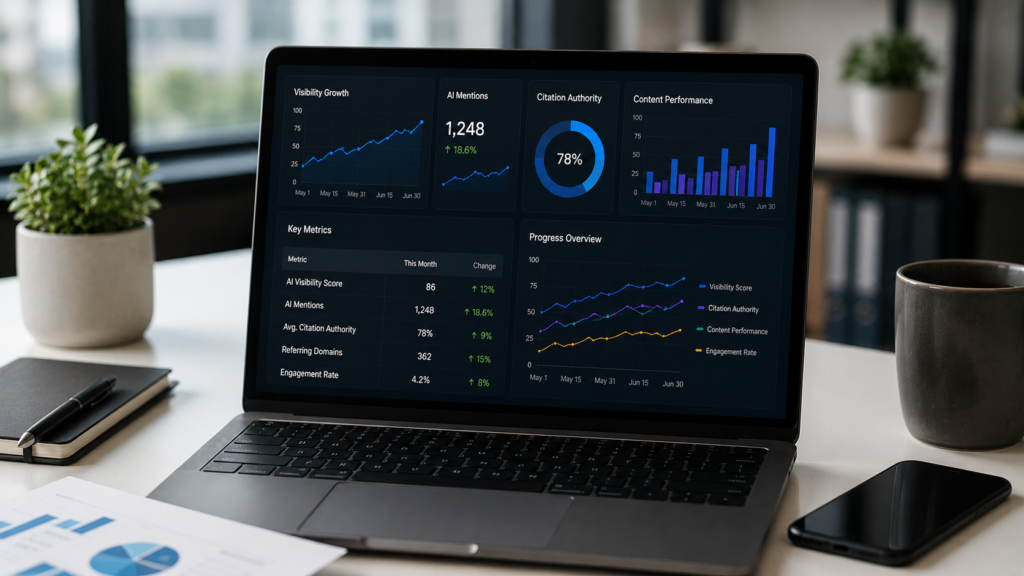
According to To The Web’s measurement guidance, track AI visibility in both Google Search Console and Google Analytics together. Configure GA4 to show large language model referral traffic by source.
According to seoTuners’s best practices guide, track trends over three to twelve months since AI index updates take time. A page updated today might not appear in AI answers for several weeks.
Our analytics and reporting dashboards guide explains building this tracking properly. Pair this with best AI SEO tools for ongoing citation monitoring across platforms.
Free GEO Checklist Summary
Use this condensed free GEO checklist as a quick reference before publishing.
Technical readiness. Confirm AI crawlers are not blocked and content renders server side.
Answer first structure. Place your core answer within the first third of the page.
Question based headings. Phrase H2 and H3 headings as real questions people ask.
Fact density. Add statistics, quotations, and citations throughout every published page.
Schema validation. Implement and validate structured data using Google’s Rich Results Test.
Freshness signals. Include visible publish and update dates on every page.
Authority building. Earn third party mentions through digital PR and expert commentary.
Citation tracking. Monitor AI referral traffic and citation frequency monthly without exception.
Our enterprise SEO clients apply this exact checklist across every new content piece consistently.
Common Mistakes That Break Your GEO Checklist
Avoid these frequent mistakes when applying your GEO optimization checklist.

According to 201 Creative’s mistakes list, hiding key facts in images or accordions blocks AI extraction entirely. Overusing nosnippet tags also removes pages from snippet driven features.
Do not treat this as a one time project rather than ongoing work. Our SEO automation guide explains building sustainable, repeatable optimization workflows instead consistently.
Frequently Asked Questions
It ensures content is structured for AI citation before publishing. It covers technical access and structure.
Review cornerstone content every 90 days at minimum. High value pages need more frequent review.
No, correct implementation only correlates with a citation lift. Mismatched or broken schema hurts trust signals.
Placing your core answer within the first third of content. Most citations come from that section.
Yes, apply the same structure with added Product schema. Summarize buying decisions in short paragraphs clearly.
Conclusion
A complete GEO checklist combines technical access, clear structure, fact density, and validated schema together. Front load your answers within the first third of every page consistently. Format headings as real questions your audience actually asks regularly. Refresh cornerstone content every 90 days to maintain AI citation eligibility.
Build genuine authority through digital PR, original research, and expert commentary over time. Track citation frequency across every major AI platform using proper analytics setup. Treat this checklist as a living, repeatable process rather than a one time task.
Pair this approach with strong digital marketing strategies for the best possible results. Explore our complete services overview to see how we help brands build content that earns citations across every platform that matters.

About the author
Ujjwal Kumawat
I specialize in SEO, website development, Google Ads and online business growth strategies. Through my blogs, I share practical insights, marketing tips and proven strategies to help businesses improve their online visibility, generate more leads and grow faster in the digital space.