What is what is GEO and why is everyone suddenly talking about it?
Search behaviour is changing faster than at any point since Google launched. Millions now ask ChatGPT, Gemini, and Perplexity questions directly instead of clicking through search results. Generative Engine Optimization explained simply means making your content visible inside these AI generated answers.
This guide breaks down GEO meaning in SEO, how it differs from traditional ranking strategies, and why ignoring it risks losing visibility in the fastest growing discovery channel online.
What Is GEO?
GEO stands for Generative Engine Optimization. It is the practice of structuring content so AI systems cite it directly in generated answers. This includes ChatGPT, Google AI Overviews, Perplexity, and Gemini specifically.
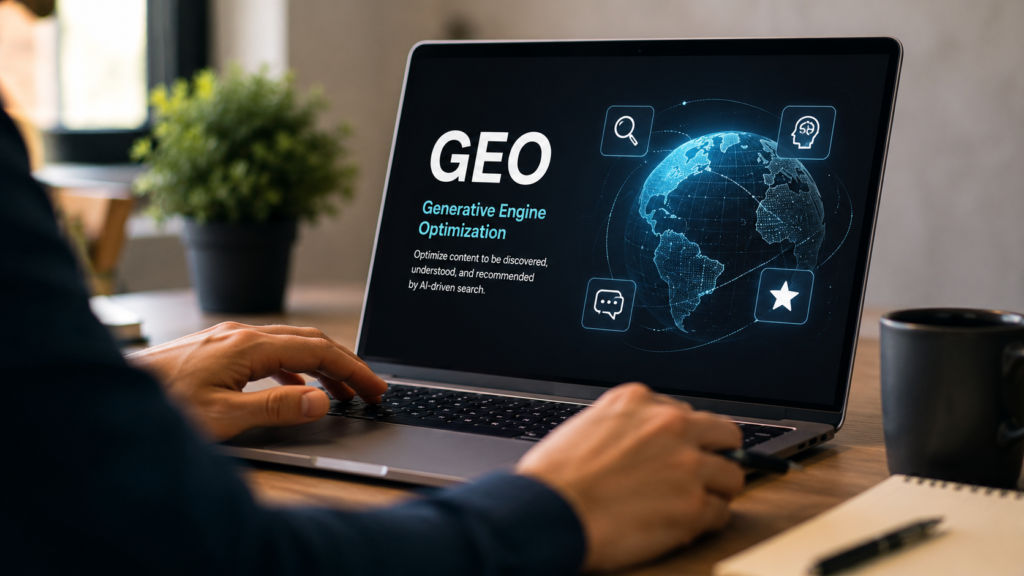
What is GEO differs fundamentally from ranking for clicks. Traditional SEO competes for position in a list of links. GEO competes for inclusion inside the actual AI generated response itself, often without any click occurring at all.
For businesses building digital marketing strategies, understanding GEO has become essential rather than optional. AI Overviews now reach billions of monthly users, and ignoring this shift risks invisibility in an increasingly important discovery channel.
GEO Meaning in SEO Explained Simply
The Core Concept
GEO meaning in SEO centres on one key shift. Instead of optimising purely for ranking position, you optimise for citation worthiness. AI engines scan available content, then synthesise an answer pulling from sources they consider trustworthy and relevant.
This means your content needs explicit, extractable answers near the top of each section. AI systems frequently cite clear definition statements and structured data over vague, narrative heavy prose that requires interpretation before extraction becomes possible.
Generative Engine Optimization Explained Through Example
Imagine someone asks ChatGPT which ecommerce platform suits small businesses best. Generative engine optimization explained through this example means your content about ecommerce platforms needs clear, citable statements the AI can pull directly into its synthesised response confidently.
Traditional SEO would focus on ranking your comparison article in position three. GEO focuses on ensuring the AI actually quotes your specific recommendation, statistic, or expert opinion when generating its answer to that exact query.
GEO Full Form SEO and Origins
Where the Term Came From
The GEO full form SEO discipline traces back to a 2023 Princeton University research paper. Researchers first defined the concept academically before marketing practitioners adopted and expanded the terminology across the wider industry.
According to Wikipedia’s overview of generative engine optimization, no single consensus definition existed across practitioners as of early 2026, though the core concept of AI citation optimisation remained broadly consistent across different sources.
Google’s Official Recognition
Google released official documentation in 2026 specifically addressing generative AI optimisation. This documentation confirmed that optimising for AI search experiences remains fundamentally connected to traditional SEO principles, not a completely separate discipline requiring entirely different foundational work.
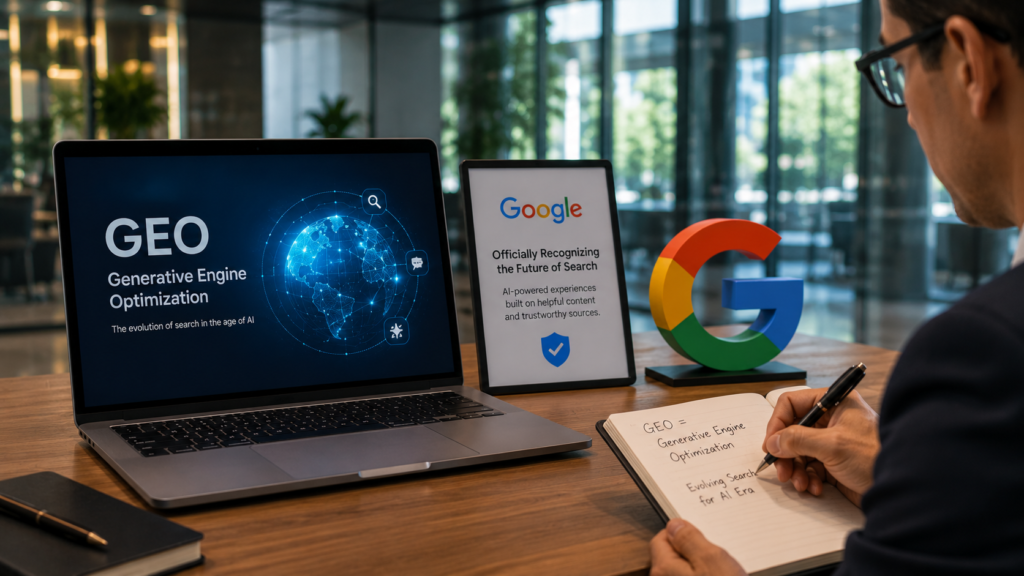
How to know if your seo is working increasingly requires tracking AI citation visibility alongside traditional ranking metrics. Both signals now matter for understanding genuine search visibility comprehensively across every discovery channel available.
What Does GEO Mean in Marketing Terms?
Beyond Technical SEO
What does GEO mean in marketing extends beyond technical optimisation into brand strategy broadly. Being cited by AI systems builds brand authority even when users never click through to your actual website afterward.
According to WordStream’s GEO research, AI answers reduce click volume significantly, meaning visibility now happens through brand mention and citation rather than traffic alone in many search scenarios.
Connecting GEO to Broader Strategy
AI marketing strategy frameworks increasingly incorporate GEO as a core pillar alongside paid advertising and organic content. Brands appearing consistently in AI answers build the kind of trust and recognition that influences buyers even before traditional conversion touchpoints occur.
This connects directly to content audit processes. Reviewing existing content for citation worthiness, factual clarity, and structured answers should now be a standard part of any comprehensive content strategy review.
GEO vs Traditional SEO: Key Differences
Different Success Metrics
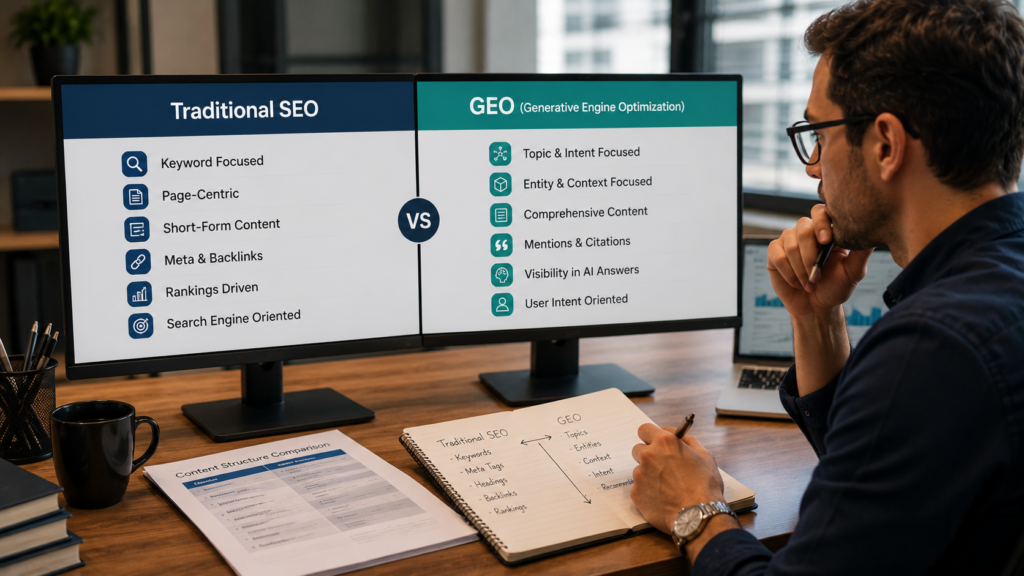
GEO vs traditional SEO requires fundamentally different success measurement. Traditional SEO tracks rankings, click through rate, and organic sessions. GEO tracks citation frequency, brand mention accuracy, and presence within AI generated responses specifically.
Keyword research still matters for both disciplines, but GEO requires deeper focus on question based queries and comprehensive topic coverage that satisfies an AI’s need for complete, accurate synthesis material.
Different Content Structure Requirements
GEO rewards content with explicit definitions, structured comparisons, and clear data points presented in scannable formats. Schema markup and clear heading structures help AI systems locate and extract relevant sections more reliably than unstructured narrative content.
Tables and comparison formats also perform notably well for GEO purposes. Structured data is easier for AI systems to parse accurately, which is why comparison articles and pricing breakdowns often see strong citation rates compared to purely descriptive prose covering the same underlying information.
Technical seo for website performance remains equally important for both disciplines. AI crawlers still need to access and parse your content efficiently, making crawlability and site speed foundational requirements regardless of optimisation target.
Complementary, Not Competing Disciplines
According to Enrich Labs’s GEO guide, brands excelling at GEO typically already have strong traditional SEO foundations. The disciplines overlap substantially rather than requiring entirely separate strategic approaches built from scratch.
Why GEO Matters Right Now
The Scale of AI Search Adoption
AI powered search tools now process billions of queries monthly across platforms like ChatGPT, Perplexity, and Google AI Overviews. This adoption scale means ignoring GEO risks missing an enormous and rapidly growing share of total search volume entirely.
Local seo ranking factors and GEO are beginning to intersect as AI systems increasingly answer local queries directly. Businesses optimising only for traditional Local Pack visibility may miss emerging AI driven discovery opportunities in their specific market.
Early Mover Advantage
Competition for AI citations remains relatively low compared to traditional SEO competition currently. Businesses implementing structured, citation worthy content now capture disproportionate visibility share before the space becomes as competitive as traditional search rankings have become.
Ecommerce seo businesses particularly benefit from early GEO adoption. Product comparison and buying guide content optimised for AI citation captures research stage buyers before they reach traditional product pages through conventional search clicks.
A Beginner’s Guide to GEO Implementation
Step One: Add Clear Definitions
A beginner’s guide to GEO starts with adding explicit definition statements near the top of relevant content sections. AI systems frequently extract these clear, standalone statements when answering definitional queries directly.
Step Two: Structure Content for Extraction
Use descriptive headings matching common question patterns. Break complex topics into clearly labelled sections. This structure helps AI systems locate and extract relevant information accurately rather than requiring deep interpretation of dense paragraphs.

Step Three: Build Comprehensive FAQ Sections
FAQ sections with direct question and answer pairs are highly extractable by AI systems. They match natural query patterns closely, making them among the most citation friendly content formats available for any topic or industry vertical.
Step Four: Add Statistics and Expert Quotes
Include specific data points, statistics, and attributed expert quotes throughout your content. AI systems favour citing specific, verifiable facts over generic claims. Content writing services focused on data rich content perform notably better for citation purposes.
Step Five: Maintain and Update Content Regularly
AI engines prefer recent, actively maintained sources over stale content. Display update dates clearly and refresh content periodically. Content audit processes should now include citation freshness as a standard evaluation criterion alongside traditional ranking performance metrics.
How to Measure GEO Performance
Tracking AI Citation Visibility
Measuring GEO success requires different tools than traditional rank tracking. Manually testing your key topics within ChatGPT, Perplexity, and Google AI Overviews reveals whether your content currently appears in generated responses for relevant queries.
Analytics reporting dashboards increasingly need to incorporate AI referral traffic identification. Server log analysis and updated GA4 configurations can identify sessions originating from AI platforms, distinguishing this traffic from traditional organic search sources.
Connecting GEO to Business Outcomes
Data-driven marketing principles apply directly here. Track whether AI referred sessions convert differently than traditional organic traffic. Early data suggests AI search visitors often convert at notably higher rates than standard organic visitors across several industries currently.

For businesses wanting professional implementation support, our AI SEO services combine traditional optimisation with emerging GEO best practices to ensure visibility across every search surface your buyers actually use.
Frequently Asked Questions
GEO stands for Generative Engine Optimization, the practice of structuring content so AI systems like ChatGPT and Google AI Overviews cite it directly. Regular SEO targets ranking positions in search results, while GEO targets inclusion in AI generated answers.
In marketing, GEO means building brand authority and recognition through AI citations, even without website clicks. Being referenced by AI systems when users ask relevant questions builds trust and visibility that influences buyer decisions before traditional conversion touchpoints occur.
No. GEO complements traditional SEO rather than replacing it entirely. The strongest content strategies combine both disciplines simultaneously, since AI engines reward many of the same quality, structure, and authority signals that traditional search algorithms have valued.
Beginners should add clear definition statements, structure content with descriptive headings, build comprehensive FAQ sections, include verifiable statistics, and update content regularly. These foundational steps make existing content more extractable and citable by AI search systems immediately.
GEO matters now because AI search adoption is growing rapidly while competition for citations remains relatively low. Early adopters capture disproportionate visibility before the space becomes as competitive as traditional search, creating a genuine first mover advantage currently available.
Conclusion
GEO represents a genuine shift in how visibility works online, not just another marketing buzzword to dismiss. Understanding what is GEO, how it complements traditional SEO, and why citation worthiness now matters alongside ranking position is essential for any serious digital strategy moving forward.
Start by structuring existing content for extraction, adding clear definitions, and building citation friendly FAQ sections. Measure both traditional rankings and AI citation visibility together. The businesses moving fastest on this shift are not abandoning their existing SEO foundations, but building on them with the additional structure and clarity that AI systems specifically reward.
For businesses ready to build a complete strategy combining SEO and GEO, explore our AI SEO services or read our digital marketing strategies guide to see how AI search fits your growth plan.

About the author
Ujjwal Kumawat
I specialize in SEO, website development, Google Ads and online business growth strategies. Through my blogs, I share practical insights, marketing tips and proven strategies to help businesses improve their online visibility, generate more leads and grow faster in the digital space.