What is indexing and why does it matter?
Every page needs to enter Google’s index first. Without it, no page can rank.
Quick answer: It is the process of storing a page in Google’s database. Google must index a page before it can appear in results. Crawling comes first, then indexing follows.
Introduction
It decides whether your page can be found. Many site owners confuse crawling and indexing. Both steps matter, but they work differently. This guide explains what that means in plain terms. You will learn the full indexing meaning step by step. We also cover how this page works in practice.
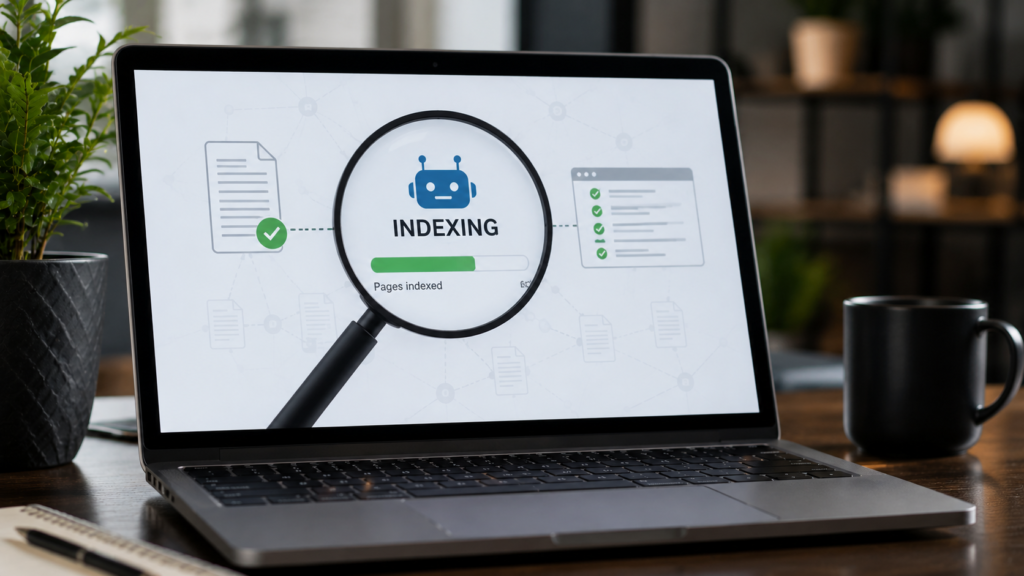
You will see how indexing with Google actually happens. We also explain indexing format and common file types. Every step stays clear and easy to follow. Strong technical habits also connect to wider technical seo audit checklist work. Clean indexing supports your entire keyword research strategy too.
New sites and large platforms both face this challenge. Every growing website benefits from clean, reliable indexing habits. This guide keeps every step simple and practical.
What Indexing Actually Means
Indexing meaning starts with a simple idea. Google stores your page in a huge database. This database is called the search index. Once indexed, a page can appear in results. Before that point, it stays completely invisible.
Users cannot find a page that is not indexed. Indexing happens after crawling, not before it. Googlebot must visit a page first. Only then can that page get indexed.
Crawling Versus Indexing
Crawling and indexing are two separate steps. It means Google visits and reads a page. Indexing means Google stores that page permanently. A page can be crawled but never indexed. Low quality or duplicate content often gets skipped. This wastes both crawl and indexing resources.
Sites managing their crawl budget should understand this difference clearly. Fixing crawl issues alone will not guarantee indexing. Content quality still plays the deciding role. Many site owners assume crawling equals success automatically. This assumption often leads to confusion later. Understanding both steps separately helps you troubleshoot faster.
Indexing Page by Page
Every indexing page follows a similar journey. Google discovers the URL first through links. It then decides whether crawling makes sense. After crawling, Google evaluates the page content. It checks for quality, uniqueness, and relevance. Strong pages move forward into the index.
Weak or thin pages often get rejected here. Google may mark them as not indexed. This status appears clearly inside Search Console.
Why Some Pages Never Get Indexed
Duplicate content is a common indexing blocker. Google avoids storing near identical pages twice. Clean canonical tags help solve this problem directly. Thin content also struggles to get indexed. Pages with very little unique text often get skipped. Adding real value usually fixes this issue.

Blocked pages never reach the index either. A noindex tag or robots rule prevents storage. Always check these settings before troubleshooting further.
Indexing With Google Explained
Indexing with Google follows a clear internal process. Google’s systems process page content and signals. This includes text, images, and structured data.
Google also considers mobile rendering during this step. Most sites now get indexed using mobile signals first. This connects directly to mobile first indexing rules.
The Role of Search Console
Search Console shows your real indexing status. The URL inspection tool checks any single page. It reveals whether a page is indexed or not. The coverage report shows site wide trends instead. It groups pages by their indexing status. Errors and warnings appear clearly in this view.
Sites running a full technical seo audit checklist should review this report often. It catches indexing problems before they grow larger.
Indexing Format and File Types
Indexing format refers to how content gets processed. Google reads HTML, structured data, and rendered scripts. Clean, simple formats tend to index faster.
Heavy JavaScript can slow this process down. Google must render scripts before reading content fully. Sites focused on javascript seo should test this carefully.
Sitemaps and Indexing Signals
A clean sitemap supports faster indexing overall. It tells Google exactly which pages exist. This reduces guesswork during the discovery stage. Submitting a sitemap through Search Console helps directly. Google can process listed pages more efficiently. This works well alongside a full content audit guide.
Keeping your sitemap current matters just as much. Removing old, outdated URLs prevents wasted attention. This keeps Google focused on pages worth indexing.
How to Check and Improve Indexing
Checking your indexing status is easier than expected. Start with the URL inspection tool directly. Enter any page URL to see its status.
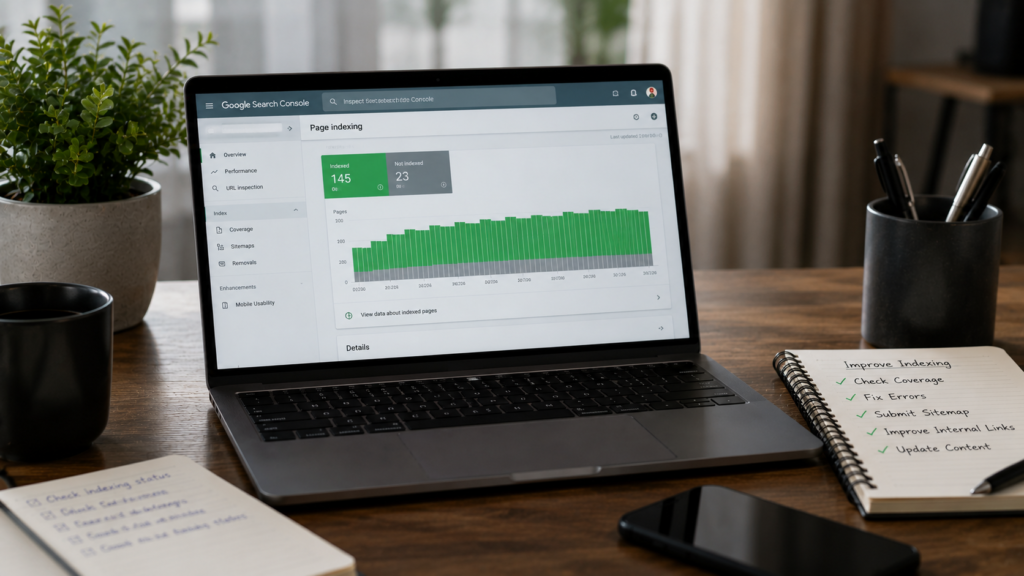
Here is a simple step by step method.
- Open Search Console and select your property.
- Use URL inspection on key pages.
- Check the coverage report for wider trends.
- Fix flagged errors and warnings quickly.
- Resubmit your sitemap after major changes.
This process pairs well with a full backlink audit guide review. Strong, well linked pages often index more reliably.
Common Indexing Mistakes to Avoid
Even experienced site owners make mistakes here. Below are frequent issues worth fixing quickly.
- Leaving noindex tags on important pages.
- Blocking key sections inside robots rules.
- Publishing thin or duplicate content often.
- Forgetting to update the sitemap regularly.
- Ignoring coverage errors inside Search Console.
Fixing these issues often speeds up indexing noticeably. New pages can appear in results much faster. Set a recurring reminder to review your coverage report. Sites grow and change constantly over time. A regular review keeps your indexing status healthy.
Indexing and Related SEO Factors
Indexing rarely works alone on a website. It connects closely with structure and site speed. A site speed optimization review often reveals slow, poorly indexed pages.
Strong indexing also supports domain authority growth over time. Well indexed pages earn more visibility and traffic. This visibility often leads to more natural backlinks.
Schema and Structured Signals
Adding schema markup can support faster indexing too. Clear structured data helps Google understand pages quickly. This can indirectly support the entire indexing process. According to Google Search Central, indexing depends on both content quality and technical accessibility together. Pages must be crawlable and genuinely useful to users.

Moz has explained that indexing issues often trace back to blocked resources. This point appears in guidance from Moz. Search Engine Journal has reported that thin content remains a leading indexing blocker. This finding appears in analysis from Search Engine Journal.
Semrush has noted that sitemap errors commonly delay indexing significantly. This point appears in research from Semrush. Teams that prefer expert support can turn to professional SEO services. These teams often pair indexing audits with full technical seo reviews.
Indexing for Large and Enterprise Sites
Large sites face bigger indexing challenges naturally. Thousands of pages compete for limited resources. Manual review becomes difficult at this scale. Teams managing enterprise seo programs often build monitoring systems first. Automated alerts flag sudden indexing drops quickly. This helps teams react before rankings suffer.
Franchise brands face a related challenge too. A franchise seo approach often creates many similar location pages. Each page still needs unique content to get indexed. Media sites with large archives face this challenge constantly. Years of old articles need proper, ongoing organization. Strong internal linking keeps these older pages from being forgotten.
Testing Indexing Before Big Launches
Never launch a major update without a check. Testing takes only a short time. It protects new pages from indexing delays. Review your coverage report before any big migration. Confirm important pages still show as indexed. Fix any new errors before traffic arrives.
Google Search Console remains the best starting point here. It shows real indexing trends over recent months. Reviewing this data regularly helps you catch problems early. Compare your results against similar competitor sites too. Notice how quickly their new pages get indexed. This gives useful context without copying anyone directly.
Indexing and AI Powered Search
AI search features now shape more results pages. Indexing still forms the foundation underneath these features. A page must be indexed before AI can use it. Pages built around geo generative engine optimization should still respect basic indexing rules. Strong fundamentals support newer search formats well. A page missing from the index helps nobody.
Sites tracking performance through analytics reporting dashboards can spot indexing gaps fast. Sudden traffic drops often trace back to indexing problems. Fixing this gap is often a quick, valuable win. Treat indexing as an ongoing habit, not a one time task. Regular checks protect your visibility over the long term. Consistency here compounds into stronger results eventually.
Indexing for Different Website Types
Different websites face different indexing challenges. Ecommerce stores struggle with product volume. News sites struggle with fast publishing speed.

Indexing for Ecommerce Stores
Product catalogs often generate huge numbers of pages. Out of stock or duplicate variants often get skipped. Clean canonical tags prevent much of this waste.
Stores managing amazon seo listings should still watch their own site indexing. Marketplace platforms handle their own separate indexing rules. Your own website still needs regular monitoring.
Seasonal products create another common challenge here. Pages that vanish and reappear often confuse crawlers. Keeping consistent URLs year round helps avoid this problem.
Indexing for Local and Service Businesses
Local businesses often run several location pages. Each page needs unique, indexable content. Thin, duplicate location pages often get rejected.
Businesses using local seo services should confirm every page gets indexed properly. A missing page often means missing local traffic. Regular checks prevent this common oversight.
Agencies handling local seo audit work often check indexing status first. It remains one of the fastest technical checks available. Small fixes here can produce noticeable results quickly.
Indexing Timelines and What to Expect
Indexing does not happen instantly for most sites. New pages can take days or weeks. Established, trusted sites often see faster results.
Submitting a sitemap can speed up this process. Strong internal linking also helps pages get discovered. Orphan pages without links often wait much longer.
Index structures are built to allow fast retrieval. This shapes how modern search engines process content. The Wikipedia entry on search engine indexing covers this in more depth.
Speeding Up Indexing for New Pages
Share new pages through your existing channels. Internal links from strong pages help discovery. Social shares can also draw crawler attention faster. Requesting indexing manually inside Search Console helps too. This does not guarantee immediate results. It simply signals priority to Google’s systems.
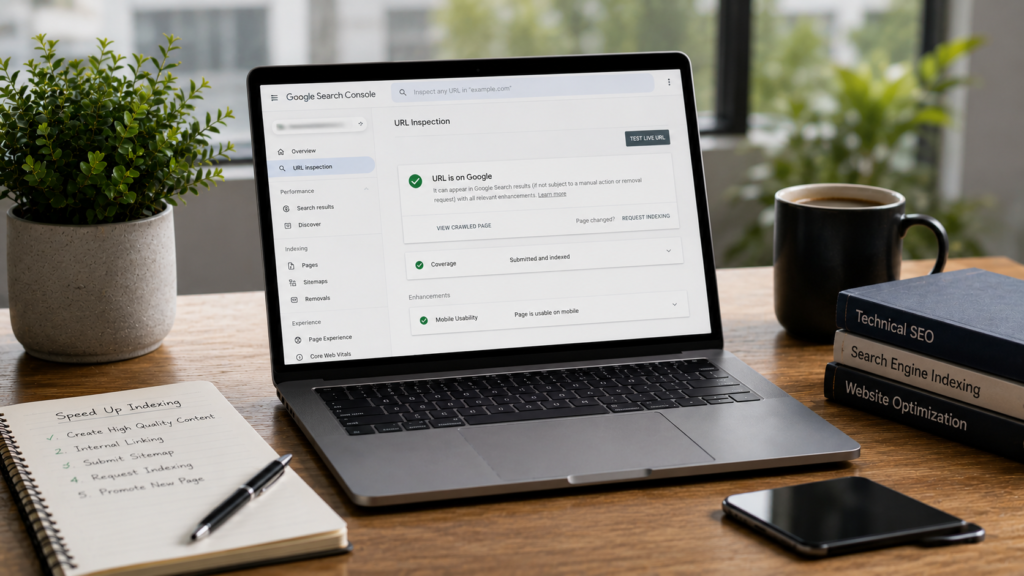
Sites running seo automation tools can streamline this process further. Automated alerts flag new pages that need submission. This keeps larger content teams organized and efficient. Patience still matters throughout this entire process. Even optimized sites see some natural delay. Consistent publishing and linking habits help over time.
Frequently Asked Questions
Indexing is the process where Google stores your page. Once indexed, a page can appear in search results. Without indexing, a page stays completely invisible to search engine users everywhere.
A page must first get discovered, then crawled. Google then evaluates the content for quality and relevance. Only after passing this review does the page get indexed and become eligible to rank.
Common reasons include duplicate content, thin pages, or blocked access. A noindex tag or robots rule can also block indexing. Fixing these issues usually resolves the problem within a few weeks.
Use the URL inspection tool inside Search Console. Enter your page URL and check its current status. The coverage report also shows wider, site level indexing trends across your entire website.
Conclusion
Indexing may sound technical at first glance. Yet it decides whether your content gets found. Small, steady fixes can produce real, lasting results. Consistent monitoring keeps your entire site healthy over time.
Combine these habits with wider efforts. Strengthen your keyword research for seo plan regularly. Explore reliable ai seo tools where they fit your workflow. Keep reviewing how your seo is working over time. Together, these steps build a stronger, more visible website.

About the author
Ujjwal Kumawat
I specialize in SEO, website development, Google Ads and online business growth strategies. Through my blogs, I share practical insights, marketing tips and proven strategies to help businesses improve their online visibility, generate more leads and grow faster in the digital space.