Can you really trust an AI SEO checker to give you accurate audit results?
Website owners increasingly rely on automated tools to evaluate their SEO health. These tools promise instant scores, prioritised fixes, and competitor comparisons within seconds. But accuracy varies significantly between platforms and use cases.
This guide examines how reliable an AI SEO checker actually is, where it excels, where it falls short, and which tools deserve your trust in 2026.
What Is an AI SEO Checker?
An AI SEO checker analyses a website and scores its search optimisation health. It evaluates technical factors, content quality, and keyword usage automatically. Results typically include a numerical score alongside specific improvement recommendations.
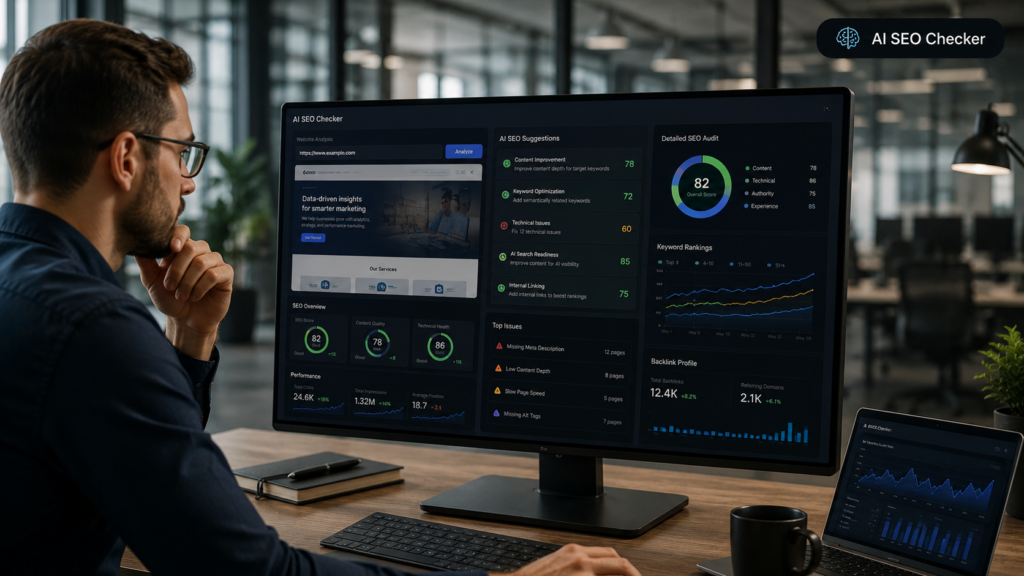
AI SEO checker tools use machine learning to compare your site against ranking factor patterns observed across millions of pages. This pattern matching approach differs from rule based legacy tools that simply check predefined technical boxes without contextual analysis.
For businesses managing digital marketing strategies, these checkers offer fast diagnostic value. Understanding their actual accuracy limitations prevents over reliance on automated scores alone for critical strategic decisions.
How Accurate Is an AI SEO Score Checker?
What These Tools Get Right
An AI SEO score checker reliably identifies clear technical issues. Missing meta descriptions, broken links, slow page speed, and missing alt text are objectively verifiable problems these tools catch consistently and accurately every time.
Technical seo audit checks involving crawlability, indexability, and core web vitals scores tend to be highly accurate. These are measurable, binary conditions where AI pattern matching performs reliably without significant interpretation ambiguity involved.
Where Accuracy Becomes Questionable
Content quality scoring is far less reliable than technical scoring. AI checkers cannot truly judge whether content demonstrates genuine expertise or simply mimics patterns of expert content superficially. This is where AI SEO content checker accuracy drops significantly compared to technical evaluation.
According to Moz’s SEO scoring accuracy research, different checkers often produce wildly different scores for the same page. This inconsistency reveals that scoring methodologies vary significantly between platforms, making any single score less authoritative than it initially appears.
Ranking prediction accuracy is also limited. No AI SEO audit checker can perfectly predict how Google’s actual algorithm will rank a page. They estimate based on visible patterns, but Google considers hundreds of additional signals these tools cannot directly observe or measure.
Free AI SEO Checker Tools Worth Testing
Google PageSpeed Insights
Google’s own PageSpeed Insights remains the most authoritative free AI SEO checker for performance specifically. Since it comes directly from Google, its core web vitals data is inherently accurate rather than estimated by a third party.
Google Search Console
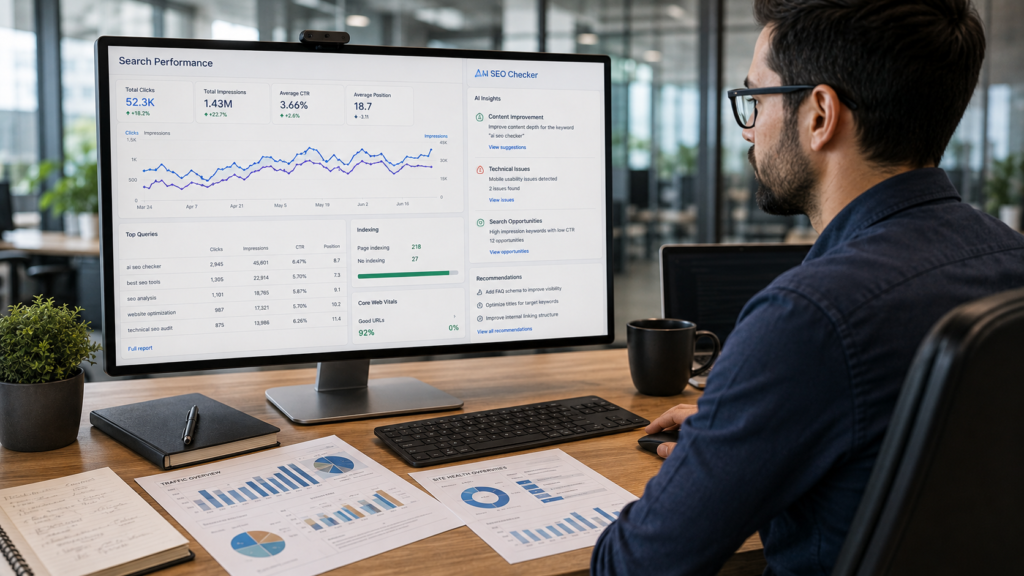
Search Console provides genuinely accurate data because it reflects your actual indexing and ranking status directly from Google’s systems. This makes it more reliable than any third party estimation tool for understanding how to know if your seo is working.
Ubersuggest Free Audit
Ubersuggest offers a free site audit with AI generated recommendations covering technical and on page factors. While less comprehensive than paid alternatives, it provides a reasonable starting point for smaller websites testing AI SEO checker tool online options before paid investment.
According to Neil Patel’s free SEO audit tools guide, combining several free checkers provides reasonable coverage for businesses not yet ready to invest in premium auditing platforms.
AI SEO Content Checker Versus Technical Checkers
Why the Distinction Matters
Technical checkers evaluate measurable, objective factors like page speed, mobile responsiveness, and canonical tags. These produce highly accurate results because the underlying conditions are binary and verifiable through direct code inspection.
Content checkers attempt to evaluate subjective quality factors like depth, originality, and topical relevance. An AI SEO content checker estimates these qualities through pattern matching against top ranking pages, which introduces more interpretation and potential inaccuracy into the scoring process.
Using Both Types Together
The most reliable audit approach combines technical checkers for objective issues with content checkers for directional guidance only. Never treat a content score as a definitive verdict on quality. Use it as one input among several factors influencing your overall content strategy decisions.
Content audit processes benefit from this dual approach significantly. Technical scores tell you what to fix immediately. Content scores tell you where to focus deeper, more nuanced human review and editorial judgment afterward.
AI SEO Audit Checker Limitations to Understand
Context Blindness
AI checkers lack awareness of your specific business context, industry nuances, and target audience expectations. A website AI SEO checker might flag content as too short, even when brevity perfectly serves a specific audience’s actual needs and search intent.
This context gap also affects how checkers evaluate niche industries differently from general consumer websites. A specialised B2B software page may score poorly on generic readability metrics despite serving its technical audience perfectly well, simply because the tool was calibrated against broader, more general content patterns.
Inability to Judge Genuine Expertise
Google’s E-E-A-T framework rewards genuine experience and expertise. AI checkers cannot verify whether content reflects real expertise or simply mimics expert sounding language patterns convincingly without underlying substance or accuracy behind the claims made.

This limitation particularly affects seo for hospitals and other regulated industries, where accuracy and genuine credentials matter enormously for both compliance and reader trust regardless of how well content scores technically.
Snapshot Limitations
Most checkers analyse your site at a single point in time. They miss historical context, seasonal patterns, and recent algorithm updates that might affect interpretation. Backlink audit tools specifically struggle with this limitation since link value often depends on context AI cannot fully capture in a single snapshot evaluation.
Best Website AI SEO Checker Tools in 2026
Semrush Site Audit
Semrush’s site audit tool combines AI pattern recognition with a comprehensive technical checklist covering hundreds of potential issues. Its prioritisation feature ranks problems by likely impact, helping teams focus limited resources on the highest value fixes first.
Ahrefs Site Audit
Ahrefs offers similarly comprehensive technical auditing with strong backlink audit integration. Its health score provides a useful directional indicator, though users should treat the specific number as relative rather than absolute across different website categories.
Surfer SEO Content Score
For content specific evaluation, Surfer SEO’s scoring system compares your draft against actual top ranking competitors for your target keyword. This makes its AI SEO content checker functionality more grounded in real competitive data than generic quality estimates.
Screaming Frog
Screaming Frog remains the gold standard for pure technical crawling accuracy. While it requires more manual interpretation than AI driven platforms, its underlying data accuracy for technical seo for website performance issues is exceptionally reliable and trusted industry wide.
How to Verify AI SEO Checker Results Manually
Cross Reference Multiple Tools
Never rely on a single checker’s verdict completely. Run your site through two or three different tools and compare results. Consistent findings across multiple platforms indicate genuine issues worth prioritising immediately for remediation and improvement work.
Check Against Google’s Own Data
Always verify findings against Google Search Console directly. If a third party tool flags an indexing issue that Search Console does not confirm, investigate further before taking action. Google’s own data is the ultimate authority on your actual indexing status.
Apply Human Judgment to Content Scores
For AI SEO content checker results specifically, always apply human editorial judgment alongside the score. Ask whether the content genuinely serves your audience well, regardless of what the numerical score suggests about technical optimisation completeness or keyword density patterns.

Keyword research for seo data should inform your interpretation too. A low content score might simply mean the tool expects keywords your actual audience never searches for in your specific market or industry context.
When to Trust Automated Scores Versus Human Review
High Confidence Areas
Trust automated scores fully for technical issues like broken links, missing meta tags, slow loading speeds, and mobile-first indexing compliance problems. These are objectively verifiable and rarely produce false positives across reputable checking tools available currently.
Lower Confidence Areas Requiring Human Review
Apply significant skepticism to content quality scores, ranking predictions, and competitive positioning estimates. These involve interpretation that AI handles imperfectly. How to perform seo audit processes should always pair automated scanning with experienced human strategic review before finalising recommendations.
According to Search Engine Journal’s audit tools accuracy analysis, the strongest audits combine multiple automated tools with experienced practitioner judgment rather than relying entirely on any single automated score.
For businesses wanting professional verification, our seo services combine the efficiency of AI checking tools with experienced strategic interpretation that automated scores alone cannot provide reliably or consistently.
Frequently Asked Questions
AI SEO checkers are highly accurate for technical issues like broken links, missing meta tags, and page speed problems. These are objectively measurable conditions where pattern matching performs reliably, making technical scores generally trustworthy across most reputable checking platforms.
Free checkers like Google PageSpeed Insights and Search Console are highly accurate since they come directly from Google. Free third party tools offer reasonable but less comprehensive coverage than paid platforms, which typically include deeper analysis and prioritisation features.
Different tools use different scoring methodologies, weighting factors differently. This explains why the same website receives varying scores across platforms. Treat scores as directional indicators rather than absolute truths, and focus on specific actionable recommendations instead.
AI SEO content checkers estimate quality through pattern matching against top ranking pages, but cannot truly judge genuine expertise or accuracy. Use these scores as directional guidance only, always combined with human editorial review for final content quality decisions.
Yes. Cross referencing two or three different checkers reveals which issues are consistently flagged versus tool specific anomalies. Consistent findings across multiple platforms indicate genuine priorities worth addressing immediately, while inconsistent results suggest less urgent or unreliable flags.
Conclusion
An AI SEO checker delivers genuinely accurate results for technical, measurable issues like speed, indexability, and structural problems. Accuracy drops considerably for subjective content quality and ranking prediction estimates that require genuine human judgment and contextual understanding.
Use automated checkers as efficient first pass diagnostic tools. Always verify findings against Google’s own data and apply experienced human review before making significant content or technical decisions. Build a habit of running quarterly checks rather than treating any single audit as permanently definitive, since both your website and search algorithms continue evolving over time.
For businesses wanting professional auditing support, explore our AI SEO services or read our how to perform seo audit guide to build a complete, balanced auditing approach.

About the author
Ujjwal Kumawat
I specialize in SEO, website development, Google Ads and online business growth strategies. Through my blogs, I share practical insights, marketing tips and proven strategies to help businesses improve their online visibility, generate more leads and grow faster in the digital space.