Are you using the right keyword search tool to find terms that actually drive organic traffic?
Most marketers default to one or two familiar platforms without ever evaluating whether better options exist for their specific research needs. A keyword search tool that works brilliantly for one situation produces mediocre results in another.
This guide covers every major free and freemium keyword search tool available in 2026, when to use each, and how to combine them into a complete research workflow that finds high value opportunities without requiring expensive subscriptions for every task.
What Is a Keyword Search Tool?
A keyword search tool is any software or platform that reveals what terms people type into search engines when looking for information, products, or services. These tools provide search volume, competition level, and related keyword suggestions that guide content and advertising strategy.

The best keyword search tool for your situation depends on what you are optimising for, which platform matters most, and how much budget you can allocate. Understanding what each tool does best prevents mismatched expectations and wasted research time.
For businesses building digital marketing strategies, keyword research remains foundational regardless of which channel you prioritise. Paid search, organic content, local seo strategies, and social media marketing strategy all benefit from knowing exactly what language your buyers actually use.
Why Free Keyword Search Tools Still Deliver Real Value
The Case for Starting Free
Paid platforms like Ahrefs and Semrush provide enormous depth, but free tools remain genuinely useful across specific research scenarios. Free keyword search tools work particularly well for small businesses testing new content areas before committing content production budget.
Free Keyword Search Tools also provide starting points that paid platforms then validate and expand. Beginning with Google Autocomplete and Google Search Console data costs nothing and often reveals the most important targeting opportunities without any subscription required.
Where Free Tools Fall Short
Free tools typically impose daily search limits, return less precise volume data, and lack the competitive intelligence features paid platforms provide. For businesses investing heavily in SEO, these limitations eventually justify paid platform investment as research volume and complexity grow.
Understanding keyword search volume accurately requires either paid Keyword Search Tools or Google Keyword Planner’s exact match volume data available to active advertising accounts. Free volume estimates from third party tools are directional rather than precise, meaning they guide decisions but should not be treated as definitive.
Google Keyword Search Planner Explained
The Most Authoritative Free Data Source
Google keyword search planner remains the most authoritative free keyword volume source because it draws directly from Google’s advertising database. No third party estimation is involved. The data reflects actual search behaviour on Google’s network rather than modelled approximations.
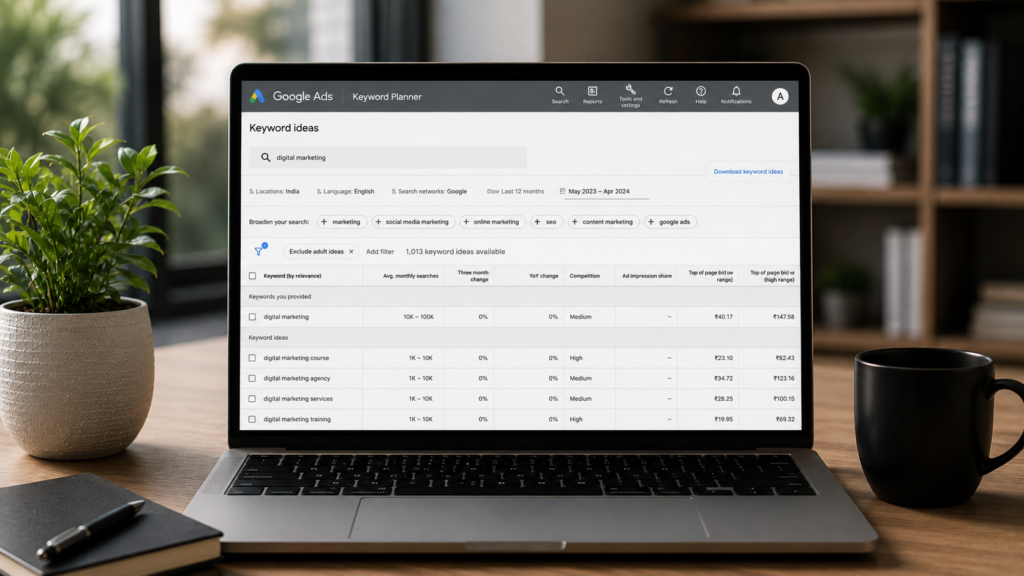
Access requires a Google Ads account, which is free to create. You do not need active campaigns to access the keyword planner. Monthly search volume ranges are shown more precisely when the account has spent on advertising, but even without spending, the tool provides directional data valuable for content planning.
How to Use Google Keyword Planner Effectively
Enter seed keywords related to your topic and Google generates related keyword suggestions with volume ranges. Filter results by location to see regional demand data relevant to local seo keyword research rather than national estimates that may not reflect local market realities.
Keyword Planner works best when combined with Google Search Console data. Console shows which queries already generate impressions for your site, while Keyword Planner reveals additional terms worth targeting that your existing pages do not yet address. Together they provide both current and opportunity keyword intelligence.
Limitations to Understand
Keyword Planner groups similar keywords into ranges rather than showing exact monthly figures without active ad spend. Very low volume terms often get lumped together under a single range, making it difficult to distinguish genuine zero volume keywords from those with modest but real search demand.
According to Google’s official Keyword Planner documentation, the tool is primarily designed for advertising campaign planning rather than pure SEO research, which explains some of these data presentation limitations for organic researchers.
Ahrefs Keyword Research Free Options
Ahrefs Free Keyword Generator
The Ahrefs keyword research capabilities extend to free users through the Ahrefs Free Keyword Generator tool. Available without any account registration, it provides keyword suggestions with keyword difficulty scores for up to ten results per seed term without daily search limits.
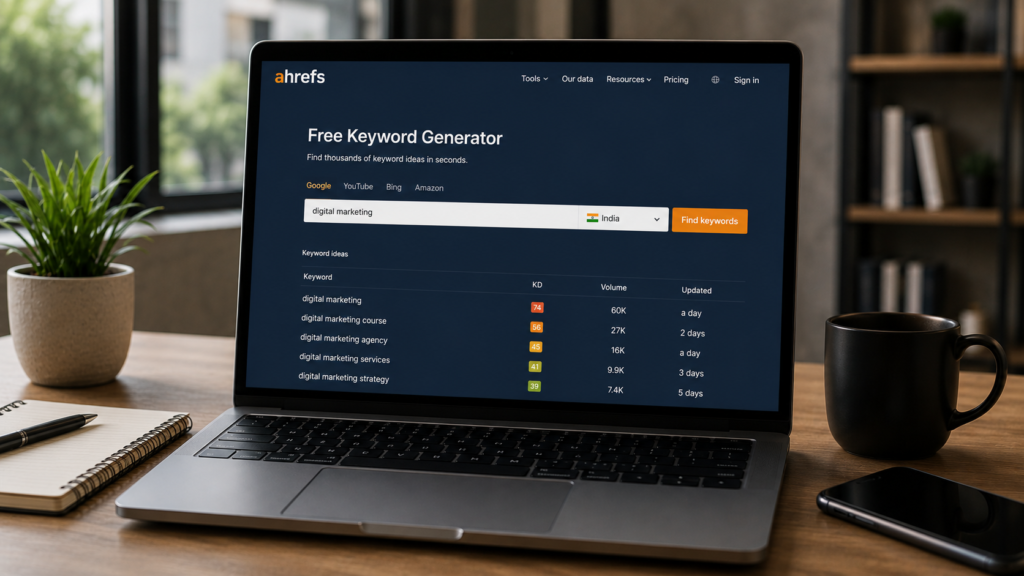
The free generator covers Google, YouTube, Bing, and Amazon keyword data separately, making it genuinely useful for multi-platform research. Amazon keyword research and YouTube keyword research suggestions from Ahrefs are particularly valuable since these platforms have distinct find behaviour patterns that Google specific tools miss entirely.
Ahrefs Webmaster Tools
Ahrefs Webmaster Tools provides free access to crawl data, backlink information, and keyword rankings for your own verified website. This differs from the Keyword Generator by showing performance data for existing content rather than suggesting new opportunities.
For businesses wanting keyword research for seo at the page level, Ahrefs Webmaster Tools reveals which keywords each existing page already ranks for and identifies quick-win opportunities where pages sit in positions four through fifteen. According to Ahrefs’s own guide to free keyword tools, combining their free generator with webmaster tools provides meaningful research capability without any paid subscription.
Semrush Keyword Search Free Features
Free Daily Searches and Data Access
Semrush keyword search functionality is available within its free tier, providing ten free searches per day. Each search returns keyword volume, keyword difficulty, cost per click estimates, and competitive density data alongside related keyword suggestions.
Ten searches is a genuine constraint for intensive research but sufficient for focused, topic specific investigation. Prioritise your most important target keywords for Semrush free searches, then use Google Keyword Planner and other free tools to expand the list further without depleting your daily allocation.
Semrush Keyword Magic Tool
The Keyword Magic Tool within Semrush free tier generates extensive keyword lists from any seed term, organised by topic cluster. This clustering feature helps identify related keyword groups that should be addressed within the same content piece versus those deserving separate dedicated pages.
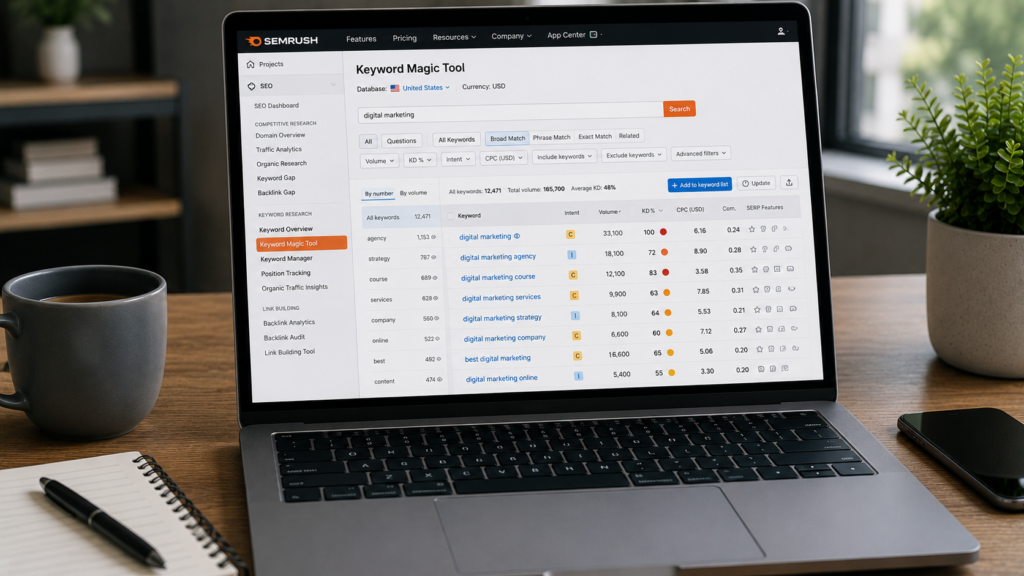
For businesses researching ecommerce seo keyword opportunities, Semrush’s keyword filtering by search intent helps distinguish buyers actively searching to purchase from researchers still evaluating options. This intent differentiation improves content targeting precision significantly compared to volume only research approaches.
Best Free Keyword Search Tools for Specific Use Cases
Google Search Console for Existing Websites
For websites with existing traffic, Google Search Console provides the most accurate keyword data available at no cost. It shows actual query data for your specific domain rather than market-wide estimates, making it uniquely reliable for identifying current ranking opportunities and content gaps.
Filter Search Console data by page, device, and country to reveal exactly which keywords drive current visibility. Pages ranking between positions four and fifteen for valuable terms represent priority optimisation targets that often produce measurable traffic increases with relatively modest content improvements.
AnswerThePublic for Question-Based Research
AnswerThePublic generates question-format keyword variations from seed terms, revealing how people phrase their actual search queries conversationally. This format is particularly valuable for blog content, FAQ sections, and content targeting voice search and AI search citations simultaneously.
Free daily searches are limited, but the tool consistently surfaces question variants that volume tools often miss entirely. For keyword research for blogging specifically, question-based keywords represent some of the highest-opportunity targets since they match informational search intent precisely.
Ubersuggest Free Tier
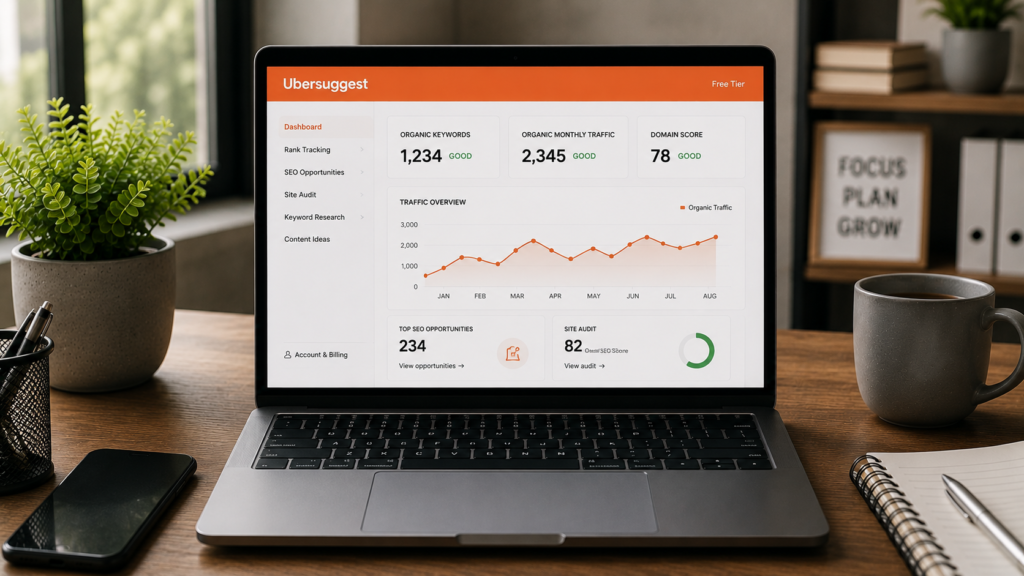
Ubersuggest provides keyword suggestions, volume estimates, and basic competitive analysis within daily search limits. Its interface is more beginner friendly than Ahrefs or Semrush, making it a practical starting point for businesses new to keyword research for seo who find more complex platforms overwhelming initially.
Keywords Everywhere Browser Extension
The Keywords Everywhere extension overlays keyword volume and related term data directly onto Google search results pages as you browse. A free tier shows related keywords and searches without volume data. Paid credits unlock volume and cost per click data at low per-credit rates.
For businesses conducting ongoing research as part of daily browsing rather than scheduled research sessions, this overlay approach fits naturally into existing workflows without requiring separate Keyword Search Tools sessions.
Keyword Search Volume Tool Free Options
What Volume Tells You and What It Misses
A keyword search volume tool free option reveals how many monthly searches a term receives on average. High volume indicates strong demand. But volume alone tells you nothing about competition level, buyer intent, or whether you can realistically rank for the term given your current domain authority.
Always evaluate volume alongside keyword difficulty and intent. A three hundred monthly search term with low difficulty and high buyer intent often delivers more business value than a ten thousand monthly search term with extreme competition and purely informational intent.
Combining Multiple Free Volume Sources
Cross referencing volume estimates across multiple free Keyword Search Tools produces more reliable directional data than relying on any single source. When Google Keyword Planner, Ubersuggest, and Keywords Everywhere all show similarly sized volume ranges for a keyword, you can proceed with reasonable confidence in the relative demand signal.
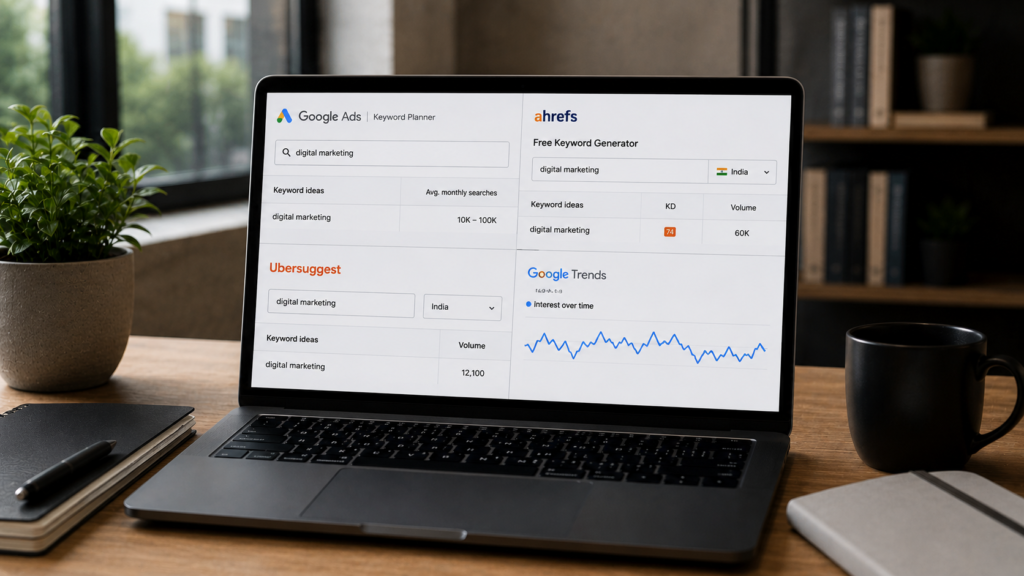
Significant disagreements between tools typically indicate low volume terms where estimation models differ meaningfully from actual search behaviour patterns. Treat these disagreements as signals to invest more careful attention before committing content production resources to those specific keywords.
Keyword Research for Local SEO
How Local Keyword Research Differs
Keyword research for local seo adds geographic specificity to standard keyword research methodology. Local keywords combine service or product terms with city names, neighbourhood references, and proximity phrases that general keyword tools sometimes handle less precisely than local specific research requires.
The best keyword search tool for local research often means combining Google Keyword Planner with geographic filtering alongside Google Search Console data and manual Google Autocomplete investigation in your specific target market. This combination reveals local query patterns more accurately than national volume estimates alone.
Tools Supporting Local Keyword Research
BrightLocal provides local specific rank tracking and citation tools with some keyword research capability relevant to local seo ranking factors. Semrush’s location filtering within its keyword tool helps isolate local volume data. Local seo tools specifically designed for this research type consistently outperform general keyword platforms for hyper-local query discovery.
For healthcare businesses, local seo for doctors and local seo for dentists research requires additional attention to specialty-specific query patterns that general keyword tools surface less comprehensively than category-focused research approaches.
Building a Multi-Tool Keyword Research Workflow
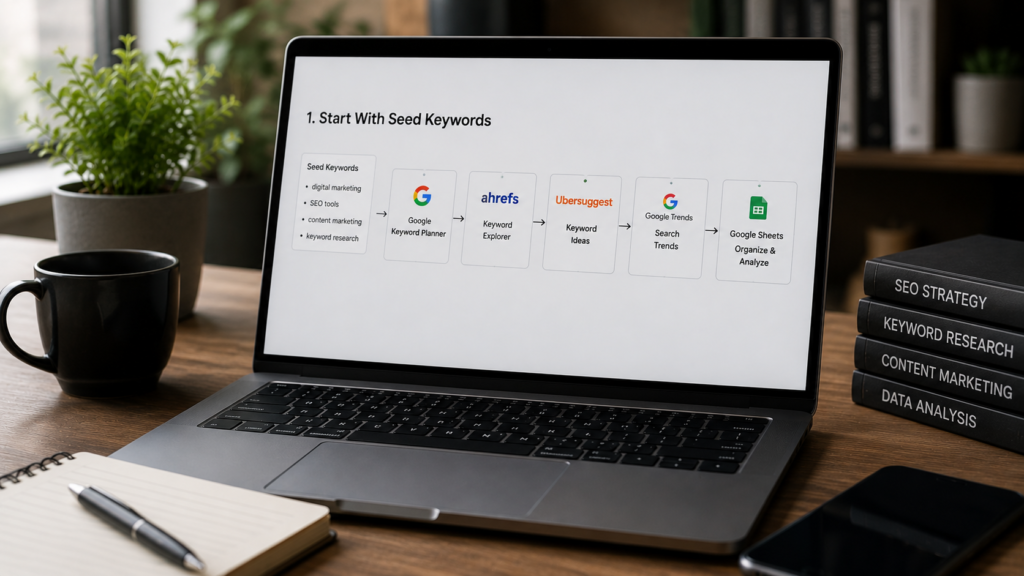
Step One: Start With Seed Keywords
Define your core topic areas and list the five to ten seed terms that most directly describe your products or services. These seeds feed into every tool you use, so specificity at this stage prevents vague, high volume terms from dominating your final list inappropriately.
Step Two: Expand Through Multiple Tools
Run each seed term through Google Keyword Planner for volume direction, Ahrefs Free Generator for difficulty and related suggestions, and AnswerThePublic for question variants. Record all results in a central spreadsheet before filtering, preventing duplication and ensuring no valuable variant gets missed.
Step Three: Filter by Intent and Difficulty
Remove terms mismatched to your content objectives or current authority level. Map remaining keywords to appropriate pages, distinguishing terms that suit existing pages from those requiring new content. This mapping prevents keyword cannibalisation and creates a clear implementation roadmap.
Step Four: Validate Through Search Console
After implementing targeted content, monitor Search Console for which new keywords begin generating impressions. Real impression data validates or challenges your tool-based estimates, informing subsequent research rounds with genuine performance evidence.
For businesses wanting professional support building this complete research workflow, our seo services combine the best available tools with strategic implementation expertise. As Moz’s keyword research guide explains, systematic multi-tool workflows consistently outperform single-tool approaches by capturing opportunities any individual platform misses. According to Semrush’s keyword research guide, combining volume, difficulty, and intent analysis together produces better targeting decisions than evaluating any single metric alone throughout the research process.
Frequently Asked Questions
Google Keyword Planner is the best free keyword search tool for beginners because it draws directly from Google’s data, requires no paid subscription, and provides reliable volume ranges alongside related keyword suggestions without any complicated learning curve involved.
Ahrefs keyword research free tools including the Free Keyword Generator and Webmaster Tools provide meaningful data but impose limits that prevent comprehensive research at scale. They are excellent supplements to free Google tools but do not fully replace paid Ahrefs subscriptions for serious SEO work.
Create a free Google Ads account without adding payment details or creating actual campaigns. Access the keyword planner through the Tools menu. You will see volume ranges rather than precise figures, but these ranges provide sufficient directional guidance for most content research needs.
Keyword difficulty is typically the most actionable metric in Semrush keyword search results because it directly influences your realistic chance of ranking. High volume keywords with extreme difficulty are impractical targets for most websites, while lower difficulty terms often provide faster, more achievable ranking results.
Free keyword search volume tool data is directional rather than precise. Google Keyword Planner provides the most authoritative free estimates since it draws from actual Google data. Third party free tools model estimates that are useful for comparison but less reliable for absolute volume figures.
Conclusion
The right keyword search tool combination depends on your specific research needs, budget, and target platforms. No single free tool covers everything, but combining Google Keyword Planner, Ahrefs Free Generator, Google Search Console, and AnswerThePublic creates a comprehensive free research workflow for most situations.
Start with your audience’s actual language, validate demand through multiple tools, and filter by intent before committing content production resources to any keyword target. Track performance through Search Console to build an evidence base that improves every subsequent research round.
For businesses wanting professional keyword research alongside full strategy implementation, explore our complete seo services or read our keyword research guide to build your complete research foundation step by step.

About the author
Ujjwal Kumawat
I specialize in SEO, website development, Google Ads and online business growth strategies. Through my blogs, I share practical insights, marketing tips and proven strategies to help businesses improve their online visibility, generate more leads and grow faster in the digital space.