Do you actually know how to do local seo correctly, or are you missing the steps that matter most?
Knowing how to do local seo is the most valuable digital marketing skill for any business serving a geographic area. Local seo helps businesses appear in Google’s Map Pack, Google Maps, and locally relevant organic results. It connects buyers with ready purchase intent to the businesses nearest them.
In 2026, local search has become even more competitive as more Indian businesses move online. Without structured local seo strategies, businesses leave significant revenue on the table every single day. For any business building digital marketing strategies, local seo is the most direct path to high-intent customer acquisition available.
What Is Local SEO and Why Does It Matter?
Local seo is the practice of optimising your online presence to rank prominently in location-based search results. When users search for services or products “near me” or in a specific city, Google displays local results first. These results appear in the Map Pack at the top of the search results page. Businesses in the Map Pack capture the majority of clicks, calls, and foot traffic from that search.
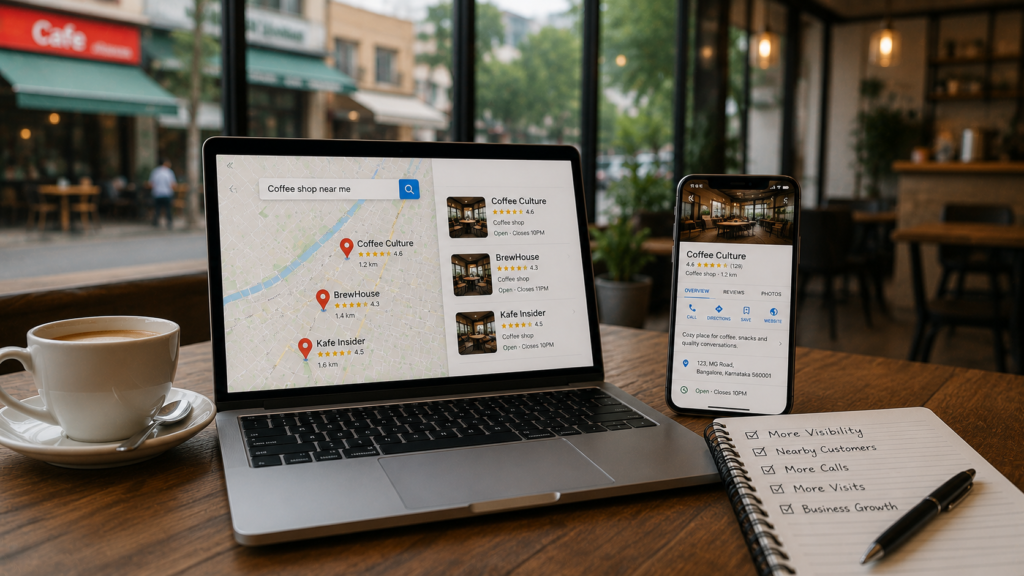
The local seo google rankings are determined by three core signals. Relevance measures how well your business matches a query. Distance measures your proximity to the searcher. Prominence measures how trusted and well-known your business is across the web.
According to Think With Google’s research on local search, 76 percent of people who search locally visit a business within one day. This conversion rate makes local seo one of the highest-returning digital investments for physical businesses.
Step 1: Conduct a Local SEO Audit
Before implementing any local seo strategies, you need to understand your current position. A local seo audit reveals exactly where your business stands and what needs improvement.
Check these elements in your local seo audit:
- Review your Google Business Profile completeness and accuracy.
- Check NAP (Name, Address, Phone) consistency across all online directories.
- Audit your website for location-specific pages and local keyword usage.
- Review your current review count and average star rating on Google.
- Analyse your local keyword rankings for primary service and city combinations.
- Check competitor Google Business Profiles for comparison benchmarking.
Our complete guide on how to perform an SEO audit covers the full audit methodology applicable to local seo assessment. Running a technical SEO audit checklist alongside your local audit reveals technical issues suppressing your overall search visibility.
Step 2: Optimise Your Google Business Profile
Google Business Profile (GBP) is the single most important local seo ranking factor in 2026. An incomplete or inaccurate GBP actively suppresses your local rankings. A complete, regularly updated GBP consistently outranks competitors who leave their profiles unmaintained.
Complete every section of your GBP accurately:
- Business name exactly as it appears on your signage and other materials.
- Primary and secondary business categories that best describe your services.
- Accurate address with proper formatting consistent across all platforms.
- Local phone number rather than a toll-free or tracking number.
- Website URL pointing to your homepage or a relevant location page.
- Business hours including any special holiday hours.
- Business description incorporating your primary local keywords naturally.
- Services and products sections with descriptions and pricing where applicable.
- High-quality photos of your business exterior, interior, team, and products.
Post updates to your GBP at least twice weekly. Share offers, events, announcements, and service highlights. Google rewards active profiles with better local search visibility.
Responding to all customer reviews professionally is equally important. Our guide on responding to reviews with AI in mind covers how to manage this efficiently at scale. Review response rate is a documented local seo ranking factor.
Step 3: Build Consistent Local SEO Citations
Local seo citations are online mentions of your business Name, Address, and Phone number (NAP). They appear on business directories, social platforms, and review sites. Citation consistency signals trust to Google’s local algorithm. Inconsistent NAP information across platforms confuses the algorithm and suppresses rankings.
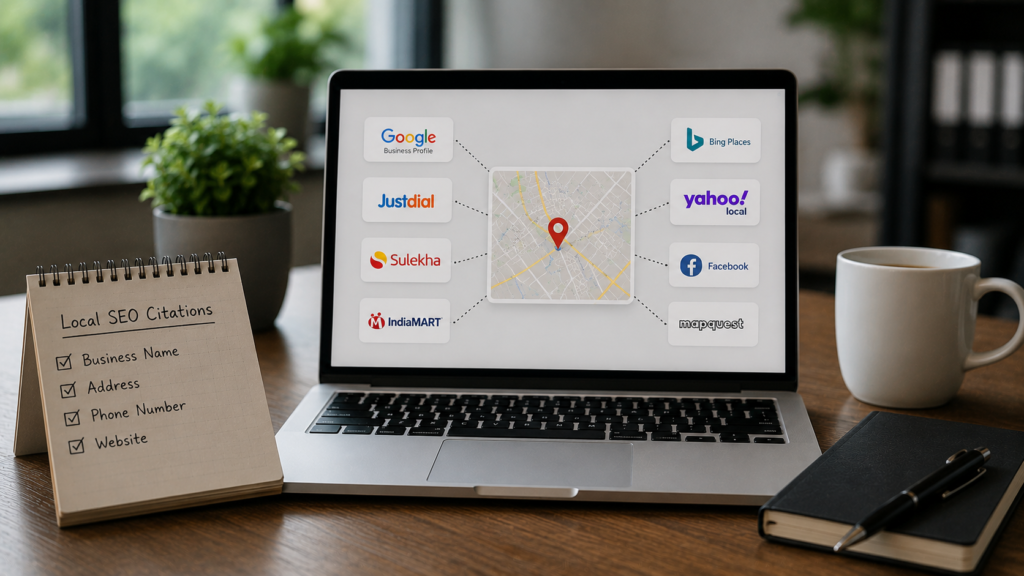
Start with these essential citation sources for Indian businesses:
- Google Business Profile is the foundation and primary citation source.
- JustDial is one of India’s most trusted local business directories.
- Sulekha connects buyers with service providers across Indian cities.
- IndiaMart serves B2B businesses looking for manufacturers and suppliers.
- Yellow Pages India provides a traditional directory listing with online authority.
- Facebook Business Page carries local citation signals through your business profile.
- Bing Places for Business creates your local presence on Microsoft’s search network.
- Apple Maps Connect ensures visibility for iOS users searching locally.
Audit all existing citations using dedicated local seo tools and tips platforms like BrightLocal or Whitespark. Identify and correct every inconsistency you find. Submit your business to relevant directories you are not yet listed on.
Step 4: Local SEO Keyword Research
Local seo keyword research differs from standard keyword research. Local keywords combine service terms with geographic modifiers. Examples include “dentist in Jaipur,” “web designer in Delhi,” and “plumber near Connaught Place.”
Follow this local seo keyword research process:
- List every service or product your business offers.
- List every geographic area you serve including cities, neighbourhoods, and districts.
- Combine service terms with geographic modifiers systematically.
- Use keyword research tools to validate which combinations receive monthly search volume.
- Check keyword search volume data to prioritise which location-service combinations are worth targeting.
- Analyse what keywords your top local competitors are ranking for in their pages.
- Target long-tail variations like “best affordable dentist in South Jaipur” alongside head terms.
Understanding keyword research for SEO principles helps you apply the same systematic approach to local keyword discovery.
Step 5: Optimise Your Website for Local SEO
Your website must send clear local relevance signals to Google. Website optimisation is a critical component of effective local seo strategies that most businesses underinvest in.
Create Location-Specific Pages
Create a dedicated page for every city or neighbourhood you serve. Each page should target a specific local keyword combination. Include the city name naturally in the page title, H1 heading, first paragraph, and throughout the content. Embed a Google Map showing your business location on each location page.
For businesses serving multiple areas, our multi-location SEO guide covers the complete architecture for managing location pages without duplicate content issues.
Add Schema Markup
LocalBusiness schema markup communicates your business details directly to Google. It reinforces your NAP information, business category, opening hours, and geographic service area. Our schema markup complete guide covers LocalBusiness schema implementation in detail.
Optimise Title Tags and Meta Descriptions
Include your primary local keyword in every location page’s title tag. Format titles like “Plumber in Jaipur | Professional Plumbing Services | [Business Name].” Meta descriptions should also include the local keyword and a compelling reason to click.
Include Local Keywords in Content Naturally
Write content on location pages that naturally references your city and surrounding areas. Mention local landmarks, neighbourhoods, and community references where relevant. This geographic contextualisation strengthens your local relevance signals.
Display your complete address and local phone number in the footer of every website page. This sitewide NAP presence reinforces your local authority signals across all pages.
Step 6: Build Local Backlinks
Local seo ranking factors include the quality and quantity of backlinks from locally relevant websites. Local backlinks from Indian directories, news sites, community blogs, and business associations build local domain authority specifically.
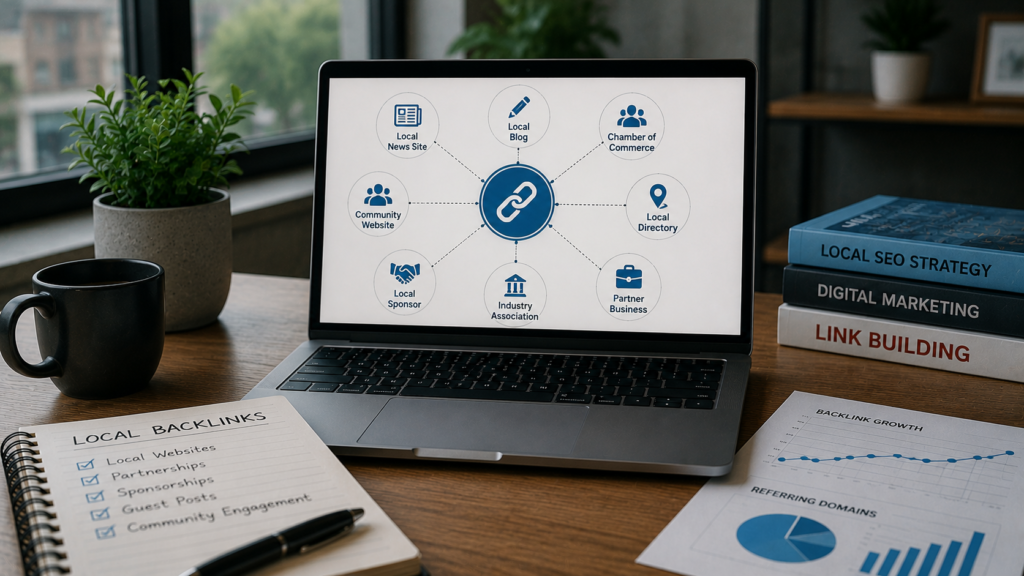
Target these local backlink sources:
- Local chambers of commerce and business associations in your service area.
- Local news websites and city-specific blogs relevant to your industry.
- Sponsorship opportunities at local events and community organisations.
- Guest posts on locally relevant business blogs and industry publications.
- Partnership pages from complementary local businesses with overlapping audiences.
Our backlink audit guide helps you evaluate your current local backlink profile and identify the most valuable opportunities for your specific market.
Step 7: Generate and Manage Customer Reviews
Customer reviews are among the strongest local seo ranking factors in 2026. Businesses with more positive reviews consistently outrank competitors with fewer reviews. Reviews also directly influence whether searchers click on your business listing from Map Pack results.
Develop a systematic review generation process:
- Ask every satisfied customer for a Google review immediately after a positive interaction.
- Send follow-up email or WhatsApp requests to customers who did not leave reviews in person.
- Make leaving a review easy by sharing a direct Google review link.
- Respond to every review within 24 hours, both positive and negative.
- Never incentivise or purchase fake reviews. Google’s spam detection removes artificial reviews.
Our local SEO services include dedicated review management as a core component of our local seo strategy implementation.
Step 8: Optimise for Mobile and Page Speed
The majority of local searches happen on mobile devices. Google’s mobile-first indexing means your mobile site determines your local rankings. A website that performs poorly on mobile actively suppresses Map Pack and organic local positions.
Ensure these mobile optimisation elements are in place:
- Responsive design that adapts to all screen sizes seamlessly.
- Page loading speed under three seconds on mobile connections.
- Tap targets large enough for easy interaction on touch screens.
- No horizontal scrolling required on any page.
- Readable font sizes without requiring zoom on mobile screens.
Core Web Vitals scores directly affect local search performance. Our site speed optimisation guide covers every technical improvement that affects mobile loading performance and local rankings.
According to Statista’s research on mobile web traffic, India has among the highest mobile internet usage rates globally. Mobile-first local seo optimisation is non-negotiable for any Indian business in 2026.
Step 9: Use Local SEO Tools and Tips for Ongoing Management
Using the right local seo tools and tips platforms makes ongoing management more efficient and data-driven. These tools help you track rankings, monitor citations, manage reviews, and identify optimisation opportunities.
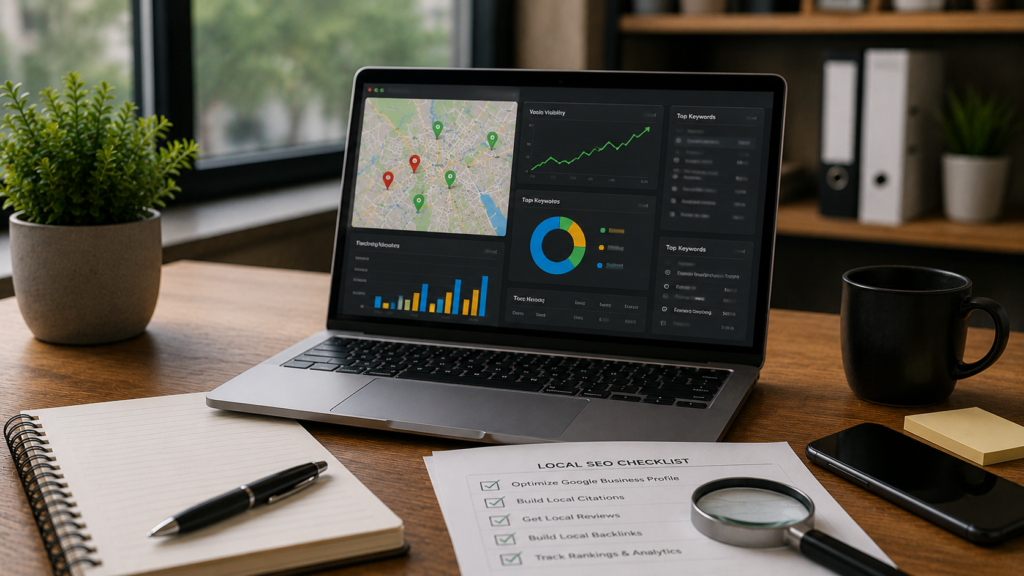
Essential local seo tools and tips resources include:
- Google Business Profile Insights provides GBP-specific performance data.
- Google Search Console tracks organic keyword rankings and page performance.
- Google Analytics 4 shows website traffic from local organic search visits.
- BrightLocal provides comprehensive local ranking tracking and citation auditing.
- Moz Local manages citation consistency across directories automatically.
- Whitespark identifies local link building opportunities and tracks citations.
Connecting your local seo data to analytics and reporting dashboards gives your team unified visibility across all digital marketing channels simultaneously.
Knowing how to know if your SEO is working helps you validate that your local seo efforts are translating into measurable business outcomes.
Step 10: Track Local SEO Ranking Factors and Refine
Understanding local seo ranking factors helps you prioritise which optimisation activities have the most impact. According to Moz’s annual local search ranking factors survey, Google Business Profile signals remain the most influential ranking factor for local search.
Track these key local seo ranking factors monthly:
- Google Business Profile completeness and posting activity.
- Review count growth and average star rating changes.
- Citation consistency across your primary directory submissions.
- Local keyword ranking positions for your primary service and city combinations.
- Website traffic from organic local search sources in Google Analytics.
- Phone calls, direction requests, and website clicks from your GBP Insights.
Refine your strategy based on what the data reveals about your specific market. Markets in tier-one Indian cities require more aggressive citation building and review generation. Markets in tier-two cities offer faster results with less competition.
Local SEO Audit: How to Monitor Your Progress
A regular local seo audit keeps your optimisation current as your business, competition, and Google’s algorithm evolve. Conduct a comprehensive local seo audit quarterly.
Check these areas in your quarterly local seo audit:
- Verify all GBP information is still accurate and complete.
- Review and correct any new NAP inconsistencies across directories.
- Audit new competitor GBP profiles and local keyword rankings.
- Review your website’s location pages for outdated information.
- Check for new review platform appearances requiring profile management.
- Assess whether your local keyword rankings have improved, declined, or held stable.
For businesses serving multiple locations, our geo-targeted SEO guide covers how to implement and audit local seo across multiple geographic markets systematically.
Integrating Local SEO with Broader Marketing
How to do local seo effectively means integrating it with your complete digital marketing strategy. Social media marketing builds brand awareness that increases branded local searches. Branded search volume is a local seo google signal.
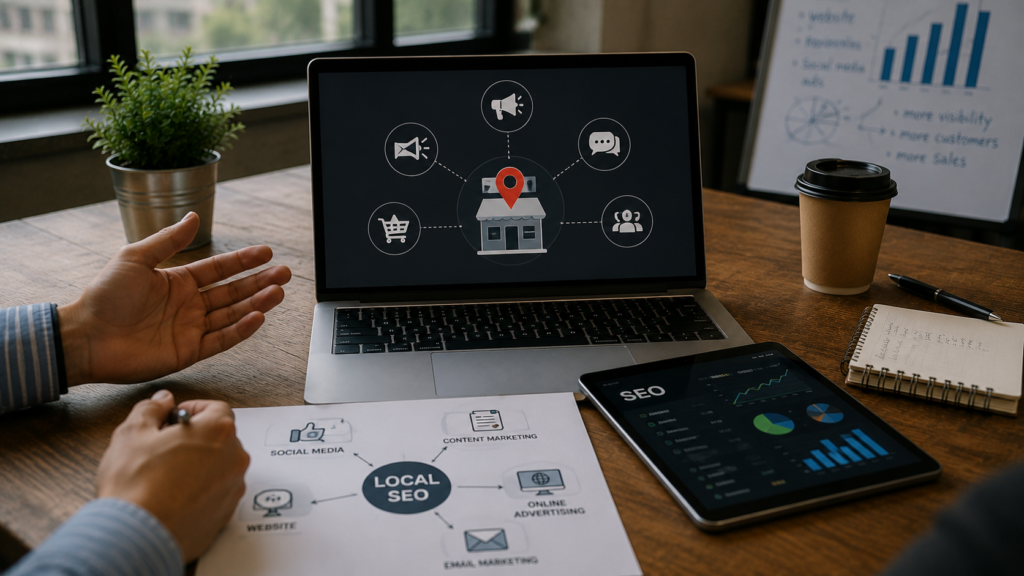
Instagram advertising and Facebook advertising targeting local geographic audiences drive awareness that converts to local organic search demand. WhatsApp marketing campaigns sharing your Google review link with satisfied customers generates review volume that directly improves local rankings.
Understanding your marketing funnel ensures local seo is positioned correctly as a top-of-funnel awareness and mid-funnel consideration strategy. Local search captures buyers who are ready to act immediately.
According to BrightLocal’s 2024 consumer review research, 98 percent of consumers read reviews for local businesses. Reviews are not optional for local seo success in 2026.
For businesses with healthcare services, our SEO for hospitals guide applies these local seo principles specifically to medical and healthcare providers in India.
Frequently Asked Questions
The first step is conducting a local seo audit. Review your Google Business Profile, NAP consistency, current local keyword rankings, and competitor positions. This baseline data reveals exactly where to focus optimisation efforts first.
Google Business Profile signals, review count and quality, citation consistency, local keyword relevance, mobile performance, and website authority are the most important local seo ranking factors. GBP optimisation and reviews have the fastest measurable impact.
Most businesses see measurable local seo improvements within one to three months of consistent optimisation. Google Business Profile improvements often appear fastest. Competitive Map Pack rankings typically require three to six months.
A website significantly strengthens your local seo google performance but is not strictly required. A well-optimised Google Business Profile alone can generate local leads. Adding a mobile-optimised website with location pages dramatically improves competitive ranking positions.
Conduct a comprehensive local seo audit quarterly. Check your GBP accuracy, review new citation inconsistencies, assess keyword ranking changes, and benchmark against competitors. Monthly monitoring of key metrics between audits catches issues before they compound.
Conclusion
Learning how to do local seo correctly in 2026 requires systematic execution across all the steps in this guide. Google Business Profile optimisation, citation consistency, local keyword targeting, review generation, mobile performance, and regular local seo audits all work together to create a dominant local search presence.
No single element delivers results in isolation. The compounding effect of executing all local seo strategies consistently over time produces the sustainable local rankings that convert to reliable customer enquiries, foot traffic, and revenue growth.
Start with your Google Business Profile and citation audit. Implement location-specific content on your website. Build a review generation process. Then monitor local seo ranking factors monthly and refine based on what the data reveals.
For professional support implementing these local seo strategies for your business, explore our local SEO services or review our full services overview.
According to Search Engine Journal’s local SEO guide, businesses that consistently apply structured local seo strategies grow local search visibility faster than competitors who optimise sporadically.

About the author
Ujjwal Kumawat
I specialize in SEO, website development, Google Ads and online business growth strategies. Through my blogs, I share practical insights, marketing tips and proven strategies to help businesses improve their online visibility, generate more leads and grow faster in the digital space.