Which page authority checker tool gives you the most accurate results for evaluating individual page strength?
Page Authority is a metric marketers reference constantly but often confuse with Domain Authority, misapply to the wrong optimisation decisions, or check using tools that return different values without explanation.
Understanding exactly what Page Authority measures, how to check it accurately, and how it genuinely differs from Domain Authority sharpens competitive analysis and improves targeting decisions significantly. This guide covers the complete picture from definition through to practical usage across different SEO workflows.
What Is Page Authority?
Page Authority is a score developed by Moz that predicts how likely a specific individual page is to rank in search engine results. Like Domain Authority, it scores on a logarithmic scale from one to one hundred. The score is calculated primarily from the quality and quantity of backlinks pointing directly to that specific page.
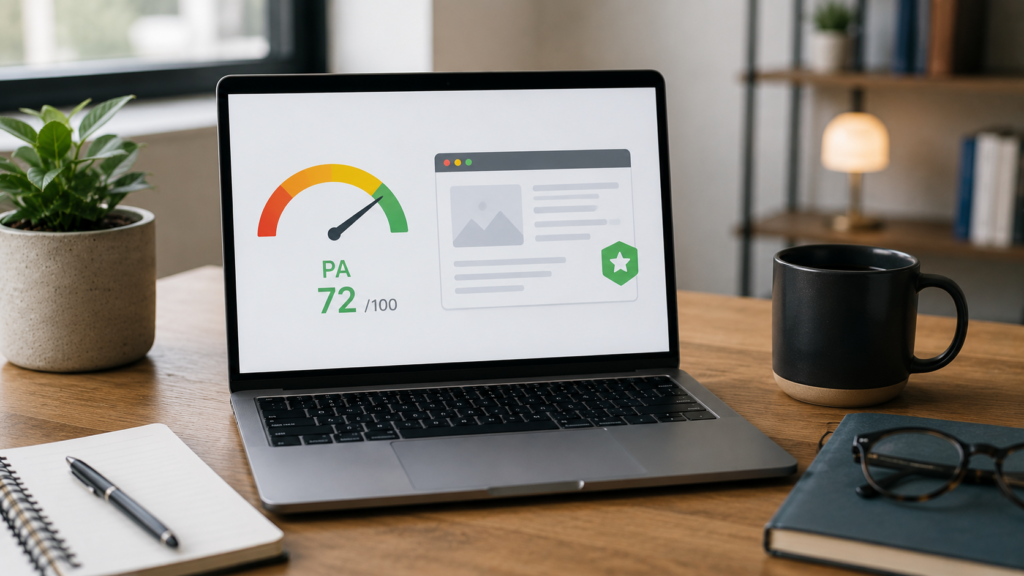
Page authority checker tools help you evaluate the relative ranking potential of individual pages rather than entire domains. This page-level granularity matters because two pages on the same website can have dramatically different Page Authority scores depending on how many external links each has attracted directly.
For businesses building digital marketing strategies, understanding Page Authority helps identify which specific pages have the most competitive ranking potential for their target keywords rather than relying on domain-wide authority estimates alone.
How to Use a Page Authority Checker Effectively
Checking Your Own Pages
A page authority checker reveals which specific pages on your site have the strongest individual link profiles and therefore the highest predicted ranking potential. Pages with higher PA scores are better positioned to compete for competitive keyword targets than lower PA pages covering the same topics.
Run your most important commercial and content pages through a checker regularly to understand your current positioning. Pages stuck in positions four through fifteen for valuable keywords often benefit from additional external backlinks pointing directly to those specific pages rather than to the homepage alone.
Checking Competitor Pages
Checking competitor page authority before targeting a keyword reveals how much page-level authority you need to match or exceed to rank competitively. A competitor ranking for your target keyword with PA 45 signals that your competing page needs to reach similar authority levels to displace them in search results reliably.
Keyword research for seo should always include PA checks for top-ranking competitor pages before committing content creation resources to any keyword. Gaps between your current page authority and competitor authority for a target keyword indicate how much link building the specific page needs before it can compete effectively.
Website Page Authority Checker Tools Compared
Moz Link Explorer
Moz’s Link Explorer is the original and most commonly used website page authority checker. Enter any URL and get the PA score for that specific page alongside the domain’s overall Domain Authority score. Free users receive a limited number of monthly checks. Moz Pro subscribers access unlimited checks with more detailed link data.
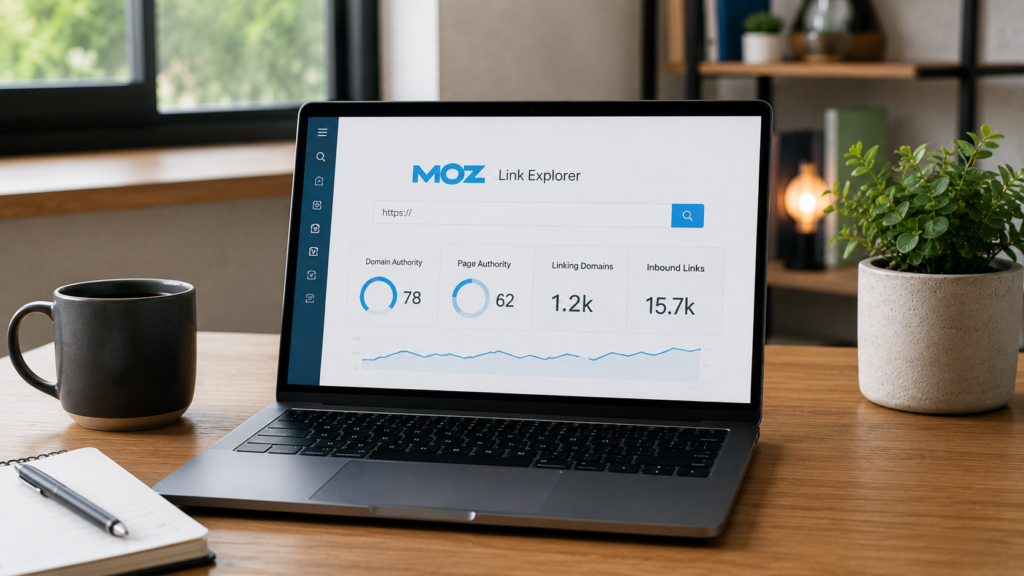
The free MozBar browser extension shows PA and DA scores directly within Google search results pages as you browse. This overlay approach allows real-time page authority checking during organic research sessions without switching between tools or entering URLs manually into a separate checker interface.
Ahrefs URL Rating
Ahrefs uses URL Rating as its equivalent to Page Authority. URL Rating evaluates the strength of a specific page’s backlink profile on a scale from zero to one hundred. The calculation methodology differs from Moz’s but serves the same fundamental purpose of evaluating individual page link strength.
According to Ahrefs’s URL Rating documentation, their metric correlates strongly with Google rankings at the page level in their own research, making it a useful competitive comparison tool despite using a different index and calculation than Moz’s Page Authority specifically.
Semrush Authority Score at Page Level
Semrush provides its Authority Score at both domain and URL level. Checking individual page authority within Semrush reveals the backlink profile quality for that specific URL alongside toxic link analysis that might be suppressing the page’s competitive potential in search results.
For comprehensive competitive analysis, backlink audit workflows benefit from cross-referencing PA values from both Moz and Ahrefs for the same competitor pages. When both tools show similar relative authority levels, confidence in the competitive assessment is substantially higher than when tools show significant disagreements between their scores.
Domain Authority vs Page Authority: The Key Differences
What Each Metric Measures
Domain authority vs page authority represents a fundamental scope difference in what each metric evaluates. Domain Authority measures the overall link strength of an entire domain or subdomain, considering all pages and all external links collectively. Page Authority measures the link strength of one specific individual URL on that domain.
A website can have high Domain Authority because of strong links across many pages while individual product or blog pages have low Page Authority because few external links point directly to those specific URLs. Conversely, a single page can sometimes accumulate high PA independently through specific coverage or citations that other pages on the same domain do not attract.
When to Use Each Metric
Use Domain Authority for broad competitive assessments of whether a site generally has the authority to compete in your space. Use Page Authority for specific keyword targeting decisions where you need to understand whether a particular page can outrank a specific competitor URL rather than evaluating sites generally.

Keyword research for seo decisions benefit most from Page Authority checks precisely because Google ranks individual pages rather than entire domains for any given query. The domain’s authority provides context but the page’s authority better predicts that specific page’s competitive position for its target keyword.
Domain Authority and Page Authority Check Together
Combining Both Metrics for Competitive Intelligence
A domain authority and page authority check performed together reveals whether a competitor’s ranking is driven primarily by overall domain strength or by page-specific link accumulation. Understanding this distinction improves your response strategy significantly.
When a competitor page ranks with high DA but low PA, their ranking relies primarily on domain-wide authority passing through internal links to that specific page. Creating a higher-quality page and earning similar page-level backlinks can displace them because they lack page-specific authority protecting that position independently.
When a competitor page ranks with both high DA and high PA, displacing them requires building both domain-level authority through broader link acquisition and page-level authority through links pointing specifically to your competing page. This dual requirement signals a longer, more resource-intensive competitive timeline.
The Relationship Between Domain and Page Authority
According to Moz’s Page Authority documentation, PA and DA are calculated independently but naturally correlate because pages on high DA domains also often receive stronger internal link equity from their domain’s accumulated external authority.
This correlation means that improving Domain Authority through broader link acquisition indirectly benefits Page Authority across your site’s pages. However, pages also benefit significantly from targeted external links pointing directly to them, making direct page-level link building a complementary strategy rather than a substitute for domain-level authority building.
What Scores Mean for Competitive Keyword Targeting
Reading Scores as Relative Signals
Page Authority scores are most meaningful as relative comparisons rather than absolute targets. A PA 35 page competing against PA 20 and 25 pages has a meaningful competitive advantage. The same PA 35 page competing against PA 55 and 60 pages faces a substantial disadvantage regardless of content quality.

How to know if your seo is working for individual pages means tracking PA trend alongside ranking position movement. Pages gaining PA over time while climbing in rankings confirm that link building efforts are translating into competitive improvements as expected for those specific keyword targets.
Avoiding Common Interpretation Mistakes
Never treat PA as a substitute for content quality evaluation. Pages with very high PA can still rank below lower PA pages if the lower PA content significantly better satisfies searcher intent. Moz explicitly notes that PA predicts ranking likelihood but cannot account for content relevance or user satisfaction signals that Google also weighs heavily.
Keyword search volume evaluation combined with competitor PA checking gives a more complete competitive picture than either metric alone. High volume keywords dominated by high PA competitor pages require more investment than lower volume keywords where competitor pages show modest PA scores you can realistically match or exceed.
How to Improve Page Authority for Specific Pages
Targeting Links Directly to Individual Pages
The most direct way to increase Page Authority is earning external backlinks that link specifically to that page’s URL rather than to your homepage or other pages. While homepage links improve Domain Authority broadly, page-specific links concentrate authority where you need it for specific keyword competition.
Backlink audit tools can show you which external pages currently link to your competitors’ highest-ranking pages. These sources already understand and value content on your topic, making them warmer prospects for earning similar links to your own competing content through targeted outreach.
Internal Linking to Distribute Domain Authority
Strong internal linking from your highest-authority pages toward lower-authority pages you want to strengthen distributes some domain-level authority toward those specific pages. Technical seo for website performance includes ensuring your link architecture efficiently passes authority throughout your site rather than concentrating it only in directly linked entry pages.
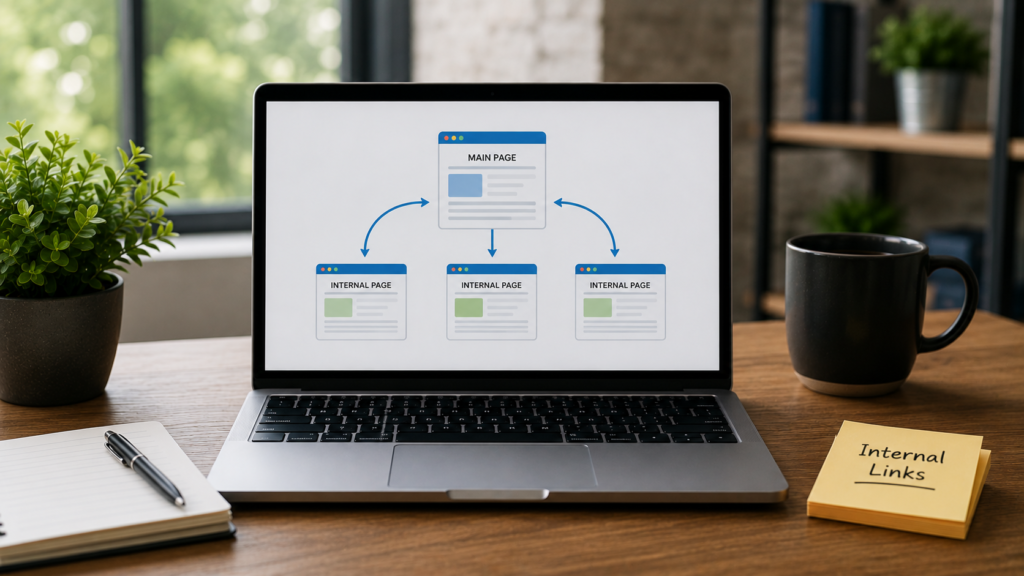
Create topical content clusters where a high-authority pillar page links to multiple related topic pages that all link back to the pillar. This hub and spoke internal linking model concentrates external link authority on the pillar while distributing it toward supporting pages that individually need more targeted authority for their own competitive keywords.
Recovering Lost Page Authority From Broken Links
Every broken link pointing to one of your pages represents lost PA potential that could be recovered. When external sites link to URLs you have changed or deleted, that link equity disappears unless you implement redirect rules or contact the linking site to update the URL to your current active page.
Content audit processes should identify both broken inbound links worth recovering through redirects and opportunities to reclaim links from sites that have linked to outdated or deleted versions of your content specifically. These recovery efforts improve PA without requiring any new outreach or content creation investment.
Using Page Authority for Competitor Content Analysis
Identifying Which Competitor Pages Deserve Priority Attention
Not all competitor pages warrant equal attention when building your content and link strategy. Competitor pages with high PA on topics central to your business represent higher priority competitive threats than those with low PA covering peripheral topics you also address.
Content audit reviews should compare your existing page PA scores against direct competitor pages covering the same keyword targets. Significant authority gaps on high-priority keywords reveal where targeted link building will produce the most meaningful competitive improvement per resource invested.
Finding Content Opportunities in Low-PA Competitive Pages
When competitors rank for valuable keywords but their ranking pages show unexpectedly low PA, a content opportunity exists that your resources can realistically capture. Create superior content, build direct page-level links, and leverage your existing domain authority advantage to displace low-PA competitor pages efficiently.
Ecommerce seo specifically benefits from this analysis at the category and product page level. Category pages from competitors with high DA but unexpectedly low PA for specific product searches represent realistic displacement opportunities that product-specific link building can capture within reasonable timeframes.

According to Semrush’s page-level authority research, content that directly earns external links shows significantly stronger sustained ranking positions than equivalent content relying entirely on internal link equity from high-DA domains without page-specific link acquisition supporting the individual URL.
As Search Engine Land’s page authority guide confirms, combining PA analysis with content quality assessment and user intent matching produces the most complete picture for predicting which pages will achieve and sustain competitive positions for valuable keyword targets.
Frequently Asked Questions
A page authority checker evaluates how strong a specific individual page’s backlink profile is on a predictive score from one to one hundred. Use it to compare your page’s ranking potential against specific competitor pages targeting the same keywords before investing in content or link building.
A website page authority checker evaluates one specific URL’s link strength while domain authority checks the entire website’s overall link strength collectively. Page authority better predicts whether a specific page can rank for its target keyword than the broader domain authority score provides.
Domain authority reflects the whole website’s link strength. Page authority reflects a single page’s link strength. Use domain authority for broad competitive research. Use page authority for specific keyword targeting decisions where you need to evaluate whether a particular page can outrank a specific competitor.
Use Moz Link Explorer, Moz Bar, or Semrush to run both checks simultaneously. Enter any URL to see its Page Authority alongside the parent domain’s Domain Authority in the same report. This combined view reveals whether a competitor’s ranking is driven by domain or page level strength specifically.
Install the free Moz Bar browser extension to see Page Authority scores overlaid directly on Google search results as you browse. Moz’s free Link Explorer also provides limited monthly PA checks without a paid subscription, giving you genuine page authority data at no cost.
Conclusion
Using a page authority checker correctly distinguishes between domain-wide competitive strength and page-specific ranking potential for your exact keyword targets. Running regular website page authority checker assessments on both your own pages and competitor pages sharpens every content and link building decision you make.
Remember that domain authority vs page authority serve different strategic purposes. Use both together for the most complete competitive analysis. And focus your link building on earning backlinks that point directly to the specific pages where competitive authority gaps matter most for your keyword targets.
For businesses wanting professional support connecting page-level authority analysis to a complete SEO programme, explore our seo services or read our backlink audit guide to start evaluating and strengthening your page authority profile today.

About the author
Ujjwal Kumawat
I specialize in SEO, website development, Google Ads and online business growth strategies. Through my blogs, I share practical insights, marketing tips and proven strategies to help businesses improve their online visibility, generate more leads and grow faster in the digital space.