What is social media marketing and why does every business need it today?
Social media marketing has become the primary way brands connect with buyers online. It combines content creation, paid advertising, community engagement, and analytics into one connected discipline. Whether you run a small business or a global brand, understanding social media marketing meaning, benefits, types, and platforms is essential for sustainable growth.
This guide explains everything you need to know, from foundational definitions through to practical examples businesses use to grow revenue every single day.
What Is Social Media Marketing?
Social media marketing is the use of social platforms to promote products, build brand awareness, and drive measurable business results. It includes organic content, paid advertising, influencer partnerships, and community engagement across platforms like Facebook, Instagram, LinkedIn, and TikTok.
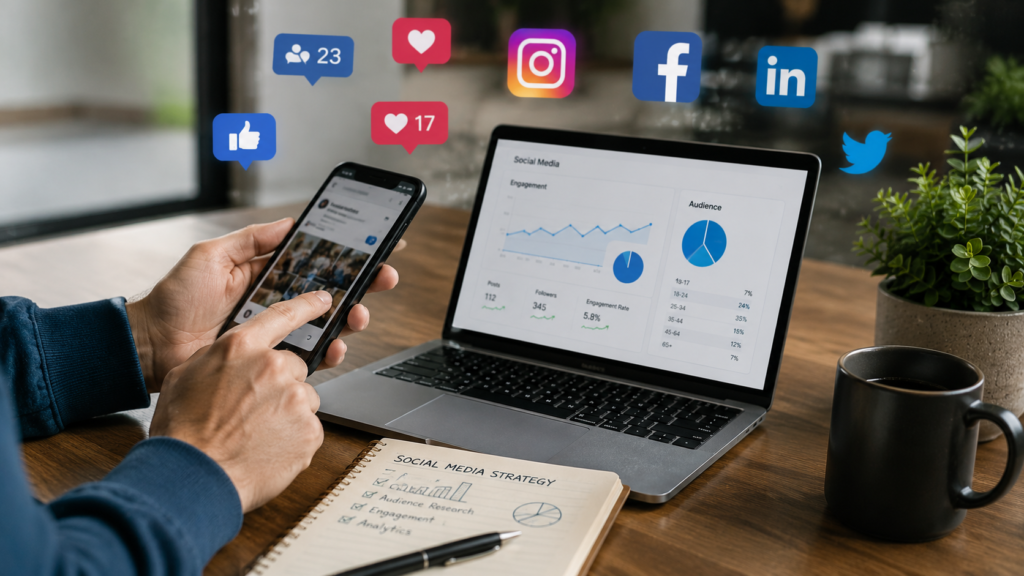
A social media marketing strategy is not just posting content randomly. It is a structured approach connecting content to specific business goals. These goals include brand awareness, lead generation, customer service, and direct sales.
For businesses building digital marketing strategies, social platforms now sit alongside SEO, email, and paid search as core acquisition channels. Ignoring social media means missing where most buyers now discover and research brands daily.
Social Media Marketing Meaning Explained Simply
Breaking Down the Definition
The social media marketing meaning becomes clearer when broken into its two component parts. Social media refers to the platforms themselves. Marketing refers to the strategic activity of promoting a business through those platforms.
Together, social media and marketing form a discipline that uses content, conversation, and paid promotion to achieve business outcomes. This differs from simply having a social media presence. Presence alone does not guarantee results.
A social media marketing approach requires planning, consistency, and measurement. A social media marketing plan typically includes audience research, content calendars, paid campaign structures, and performance tracking working together as one integrated system.
Why Social Media and Marketing Work Together
Social platforms provide direct access to billions of active users daily. Marketing provides the strategic framework that converts that access into business value. Neither works effectively alone.
Without marketing strategy, social media activity becomes random posting without purpose. Without social media platforms, marketing loses access to where modern buyers spend significant daily attention. The combination creates compounding value over time.
Performance marketing vs growth marketing approaches both rely on social platforms differently. Performance marketing uses paid social ads for immediate conversions. Growth marketing uses organic social content to build long-term brand equity and audience trust.
Social Media Marketing Benefits for Businesses
Brand Awareness and Visibility
The most immediate social media marketing benefits include expanded brand visibility. Businesses reach new audiences who may never encounter their website through search alone. Each share, like, and comment extends organic reach further.
Consistent posting builds brand recognition over time. Buyers who repeatedly see your content develop familiarity before ever making a purchase. This familiarity reduces resistance during the actual buying decision later.
Customer Engagement and Loyalty
Social platforms allow direct, real-time conversation with customers. This builds loyalty that one-way advertising cannot replicate. Responding to comments and messages shows buyers that real people stand behind your brand.
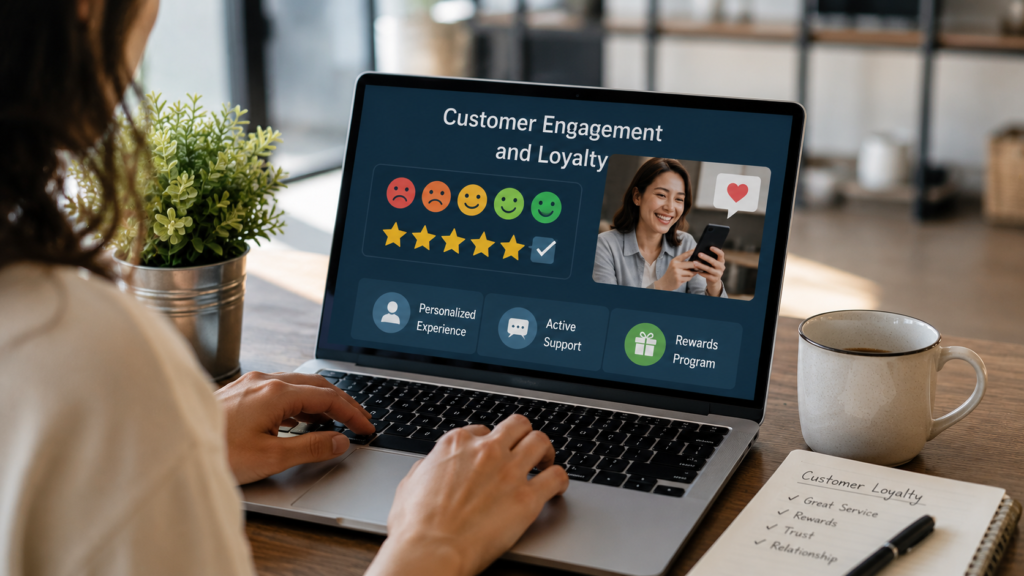
Responding to reviews with AI assistance helps brands maintain fast response times at scale. Quick, thoughtful responses turn casual followers into loyal advocates who refer new customers organically.
Lead Generation and Sales
Social platforms now include native shopping features, lead forms, and direct messaging tools. These features let buyers complete actions without ever leaving the platform. This reduces friction throughout the entire buyer journey significantly.
Facebook advertising and Instagram advertising campaigns drive measurable lead and sales volume directly. According to <a href=”https://www.hubspot.com/marketing-statistics” target=”_blank” rel=”noopener noreferrer”>HubSpot’s marketing statistics</a>, businesses using social media for lead generation report higher conversion rates than those relying solely on traditional advertising channels.
Cost Effective Reach
Compared to traditional advertising, social media marketing offers exceptional cost efficiency. Organic content costs only time and creative effort. Even paid campaigns typically cost less per impression than television, print, or radio advertising.
This affordability makes social media marketing for small business particularly valuable. Small businesses can compete for attention against larger competitors without matching their advertising budgets directly.
Social Media Marketing Types Explained
Organic Content Marketing
Organic social media marketing types include unpaid posts, Stories, Reels, and community engagement. This builds long-term brand presence without direct advertising spend. It requires consistent creative effort and patience for compounding results.
Paid Social Advertising
Paid social advertising includes sponsored posts, display ads, and promoted content. These ads target specific audiences based on demographics, interests, and behaviours. Social media advertising generates faster, more measurable results than organic content alone.
Influencer Marketing
Influencer partnerships involve paying or providing products to creators who promote your brand to their established audience. This type leverages existing trust between the influencer and their followers. It works particularly well for consumer products and lifestyle brands.

Social Media Management and Automation
Ongoing social media management covers scheduling, monitoring, and community engagement across platforms continuously. Social media automation tools handle repetitive tasks like scheduling and basic response triggers, freeing teams for strategic work instead.
Affiliate and Referral Marketing
Some brands use social media to power affiliate programmes where creators earn commission for driving sales. This type aligns incentives directly with measurable performance outcomes, making it attractive for ecommerce and subscription businesses specifically.
Best Social Media Marketing Platforms in 2026
Facebook remains one of the largest social media marketing platforms globally. Its mature advertising system and detailed targeting options make it valuable for businesses targeting broad and specific demographic segments simultaneously.
Instagram excels for visually driven brands in fashion, food, travel, and lifestyle categories. Its Shopping features and Reels format make it particularly strong for social media marketing targeting younger, visually engaged audiences.
LinkedIn dominates B2B social media marketing. Its professional context makes it ideal for thought leadership content, recruitment marketing, and lead generation targeting decision makers within specific industries and company sizes.
TikTok
TikTok has become essential for brands targeting younger audiences through short-form, entertaining video content. Its algorithm rewards creativity over follower count, giving smaller brands genuine viral opportunity that older platforms rarely provide anymore.
YouTube
YouTube supports longer-form video content including tutorials, reviews, and brand storytelling. According to Statista’s social media research, video remains the most engaging content format across nearly every demographic and platform combination tracked globally.
Social Media Marketing Examples From Real Brands
Visual Storytelling Examples
Strong social media marketing examples often centre on visual storytelling. A coffee brand sharing behind-the-scenes farm sourcing content builds authenticity. A fashion brand showing real customers wearing products builds trust through social proof simultaneously.

Social media marketing pictures that perform best typically feature real people, genuine settings, and consistent brand colour palettes. Polished but authentic imagery consistently outperforms overly staged corporate photography across nearly every platform and industry tested.
Campaign-Based Examples
Seasonal campaigns provide clear examples of strategic social media marketing in action. A retail brand running a holiday gift guide campaign across Instagram Stories and Facebook ads demonstrates integrated paid and organic execution working toward one unified goal.
Product launch campaigns combining teaser content, influencer partnerships, and paid promotion show how multiple social media marketing types work together. This integrated approach consistently outperforms single-channel, single-tactic launch strategies.
How to Start a Social Media Marketing Strategy
Building Your Foundation
Starting a social media marketing initiative requires defining your audience, choosing relevant platforms, and setting measurable goals first. Skipping this foundation leads to inconsistent content and unclear results that waste time and budget.
Keyword research for SEO principles apply to social content planning too. Understanding what your audience searches for and discusses helps shape content topics that genuinely resonate rather than guessing at relevance.
Creating Consistent Content
Build a content calendar covering your core themes and platforms. Consistency matters more than perfection in early stages. Content writing services can support content creation at scale once your strategic direction is clear and validated.
Adding Paid Amplification
Once organic content shows initial traction, layer in paid promotion to accelerate reach. Google Ads management and social advertising together capture buyers across both search and social discovery moments effectively.
Common Mistakes Businesses Make
Many businesses post inconsistently, then abandon platforms when results disappoint quickly. Building an audience takes sustained effort over months, not days. Patience combined with strategy consistently outperforms sporadic bursts of high-effort activity followed by silence.

Another common mistake is ignoring analytics entirely. Analytics reporting dashboards reveal what content actually works. Without this data, businesses repeat ineffective tactics indefinitely while assuming social media simply does not work for them.
According to Buffer’s social media marketing guide, brands that review performance data monthly and adjust strategy accordingly consistently outperform those posting without any measurement or iteration process whatsoever.
A third mistake involves treating every platform identically. Content designed for LinkedIn rarely performs well when copied directly to Instagram or TikTok without adaptation. Each platform has distinct audience expectations, content formats, and tone conventions that require tailored creative approaches rather than reusing one generic version everywhere.
Frequently Asked Questions
Social media marketing is using platforms like Facebook and Instagram to promote products, build brand awareness, and engage customers. It combines organic content, paid advertising, and community management to achieve specific, measurable business growth outcomes over time.
Key benefits include cost effective reach, direct customer engagement, increased brand visibility, and measurable lead generation. Small businesses can compete with larger competitors by using targeted, creative content without matching traditional advertising budgets required for television or print.
The main types include organic content marketing, paid social advertising, influencer partnerships, social media management and automation, and affiliate marketing. Most successful strategies combine several types together rather than relying on just one single approach exclusively.
LinkedIn is the strongest platform for B2B social media marketing due to its professional audience and targeting capabilities. YouTube also works well for educational content. Facebook and Instagram can support B2B brands focused on company culture and recruitment marketing.
Search industry specific hashtags, review competitor accounts, and study the Facebook Ads Library for active campaigns. Following marketing publications and case study blogs also provides regularly updated examples of successful campaigns across different industries and business sizes.
Conclusion
Social media marketing has evolved from optional brand presence into an essential business growth channel. Understanding the social media marketing meaning, benefits, types, and platforms available helps businesses build strategies that actually work rather than guessing at tactics randomly.
Start with clear goals, choose platforms matching your audience, and create consistent content before adding paid amplification. Track performance regularly and adjust based on real data rather than assumptions. Businesses that treat social media as a long-term relationship-building channel, rather than a quick-fix sales tool, consistently see stronger results over time.
For businesses ready to build a complete strategy with professional support, explore our full services overview or read our digital marketing strategies guide to see how social media connects to every channel in your growth plan.

About the author
Ujjwal Kumawat
I specialize in SEO, website development, Google Ads and online business growth strategies. Through my blogs, I share practical insights, marketing tips and proven strategies to help businesses improve their online visibility, generate more leads and grow faster in the digital space.