Digital markets are highly competitive, requiring more than just a website or social media presence. Businesses need structured digital marketing strategies that integrate multiple channels, data insights, and continuous optimization to drive measurable, long-term growth.
For example, combining SEO, PPC advertising, and conversion optimization creates a more predictable acquisition pipeline. Businesses working with structured solutions such as professional SEO services in Jaipur or integrated PPC services in Jaipur often achieve more consistent results.
This guide explains how the most effective digital marketing strategies actually work, how organizations implement them, and how businesses can apply them in real-world growth environments.
What Digital Marketing Strategies Really Is
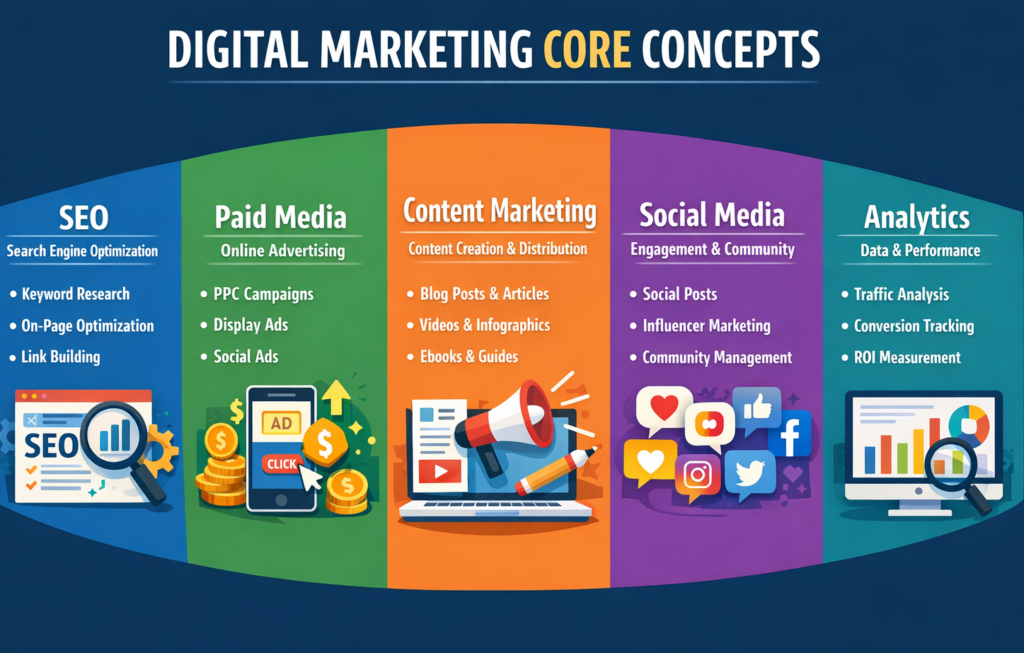
Digital marketing strategies are structured systems that help organizations attract, engage, and convert online audiences through coordinated digital channels.
Rather than treating marketing channels separately, effective strategies integrate search visibility, advertising, content distribution, and customer experience into a unified growth framework.
A common misconception is that digital marketing means simply running ads or posting on social media. In reality, it involves aligning multiple components:
- Traffic acquisition: Channels such as SEO, paid ads, social media, and email marketing bring users to digital platforms.
- Content ecosystem: High-quality content supports search visibility, user engagement, and brand credibility. Businesses often rely on specialized content writing services in Jaipur to build this foundation.
- Conversion infrastructure: Landing pages, UX design, and optimization techniques ensure that traffic converts into leads or customers.
- Data and analytics: Performance measurement ensures continuous improvement and better decision-making.
Together, these components create a scalable system that transforms digital visibility into measurable business outcomes.
How Digital Marketing Strategies Work in Practice
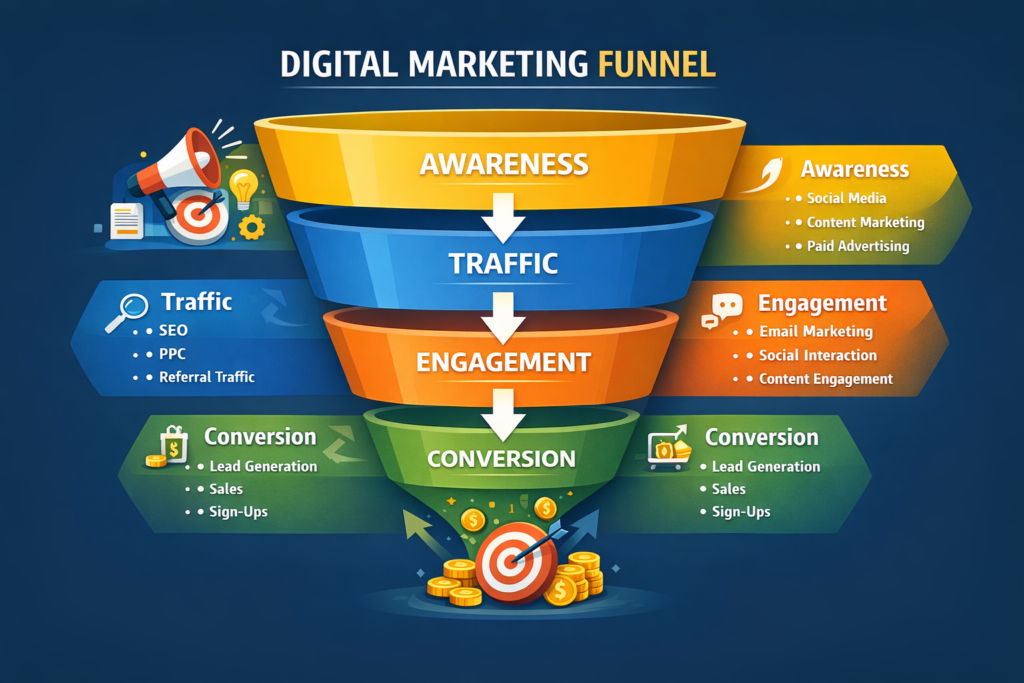
Effective digital marketing operates as a layered system where different components work together to guide users from discovery to conversion.
Acquisition Layer
This layer focuses on attracting users through channels such as SEO, paid ads, social media marketing, and search engine marketing. For example, structured campaigns from search engine marketing services in Jaipur help businesses capture high-intent search traffic.
Content Layer
Content supports both discovery and engagement. Blog posts, landing pages, and educational resources help answer user queries and build trust. Businesses often invest in strategic content creation similar to guides published in the Adclickr blog.
Engagement Layer
Once users arrive, engagement tactics such as social media interactions, remarketing ads, and email communication help nurture interest. Solutions like email marketing in Jaipur help convert interested users into qualified leads.
Conversion Layer
Conversion optimization ensures that traffic results in measurable actions. This includes optimized landing pages, calls to action, and UX improvements, often delivered through conversion rate optimization in Jaipur.
Analytics and Governance Layer
Performance metrics, user behavior tracking, and compliance policies guide continuous improvements and ensure responsible marketing practices.
Together, these layers create a predictable and scalable digital growth system.
Core Use Cases or Workflows
Use Case 1: Search Visibility Growth
Businesses improve online visibility through structured SEO strategies that target high-intent keywords. This includes on-page optimization, technical improvements, and content development.
Companies working with specialized providers such as a SEO company in Delhi often see measurable increases in organic traffic and lead generation.
Use Case 2: Paid Traffic Acceleration
Paid advertising campaigns provide immediate visibility while SEO builds long-term traffic. Platforms like Google Ads and social media advertising allow businesses to target specific audiences and measure performance in real time.
Use Case 3: Content-Driven Authority Building
Educational content builds trust and improves search rankings. Articles explaining topics such as What is SEO Service demonstrate how businesses can attract search traffic while educating potential customers.
Use Case 4: Conversion Optimization
Once traffic arrives, optimization strategies improve lead generation and sales. Businesses analyze user behavior, adjust landing pages, and test different messaging to increase conversion rates.
Together, these workflows create a complete digital acquisition and conversion system.
What Good Implementations Look Like
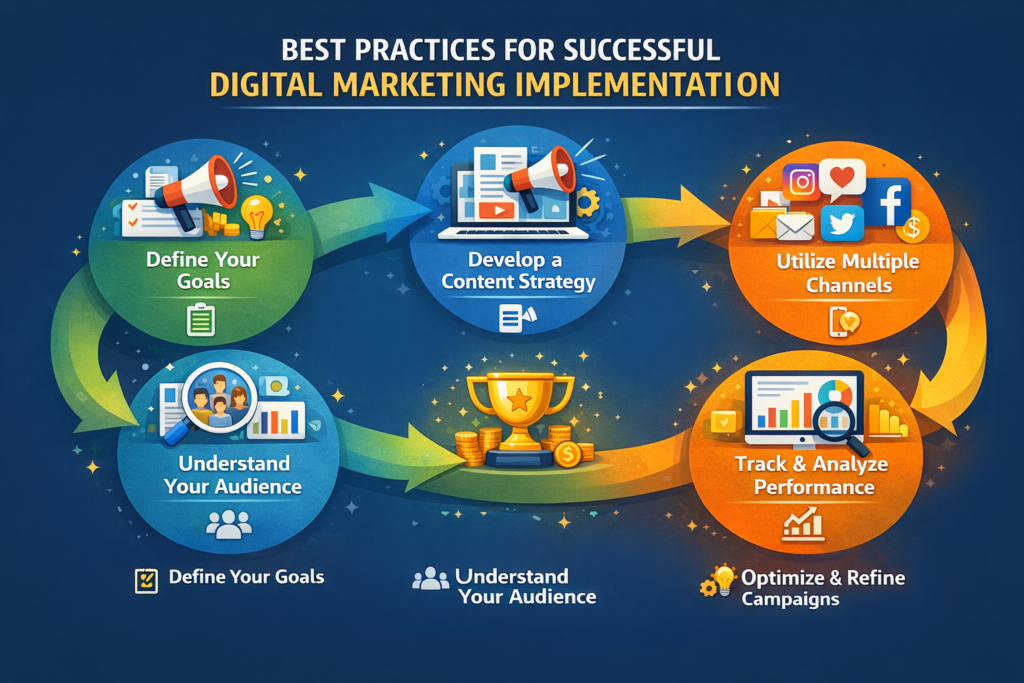
Production-grade digital marketing strategies share several key characteristics that distinguish them from experimental campaigns.
- Clear scope boundaries: Successful strategies define target audiences, channels, and measurable objectives before launching campaigns.
- Human-in-the-loop workflows: Marketing automation supports human decision-making rather than replacing it.
- Observability and monitoring: Performance tracking tools provide visibility into traffic sources, conversion rates, and campaign effectiveness.
- Consent and governance: Responsible marketing practices ensure compliance with privacy regulations and ethical data usage.
- Continuous optimization: High-performing teams regularly test new messaging, landing pages, and campaign structures.
Organizations implementing these principles often integrate services such as website development in Jaipur to ensure their digital infrastructure supports marketing performance.
Digital Marketing Trends in 2026
- AI-powered marketing
- GEO (Generative Engine Optimization)
- Social search optimization
- AI chat search visibility
- First-party data marketing
2026 Digital Marketing Statistics
- 68% of online experiences start with search
- AI-generated search traffic is growing rapidly
- Email marketing delivers high ROI
- Video content gets higher engagement
Comparison Table
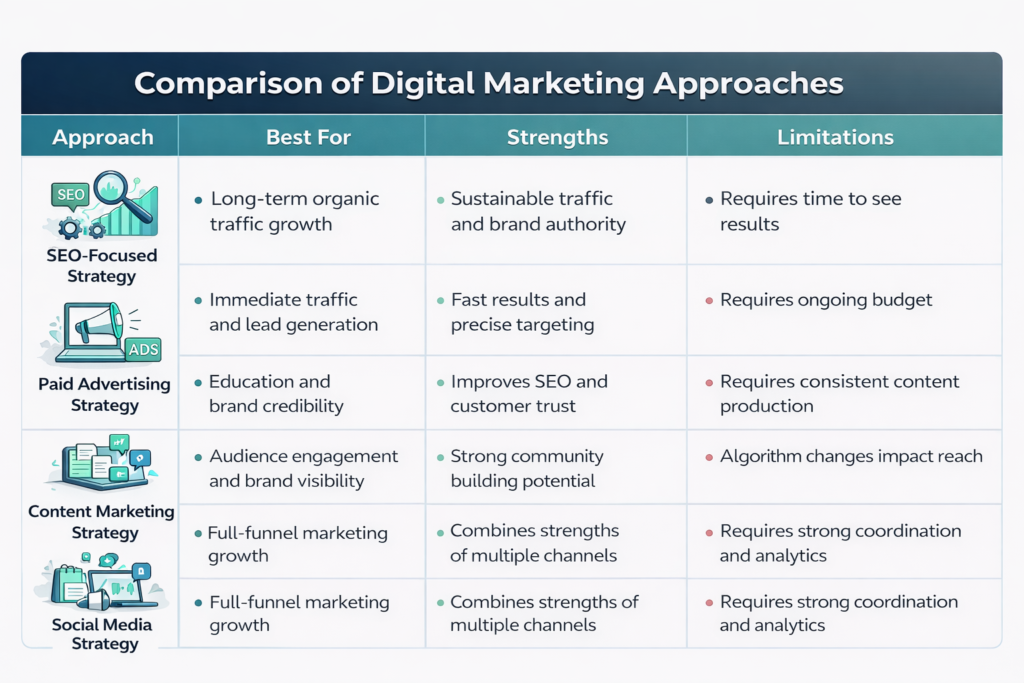
Applications Across Industries
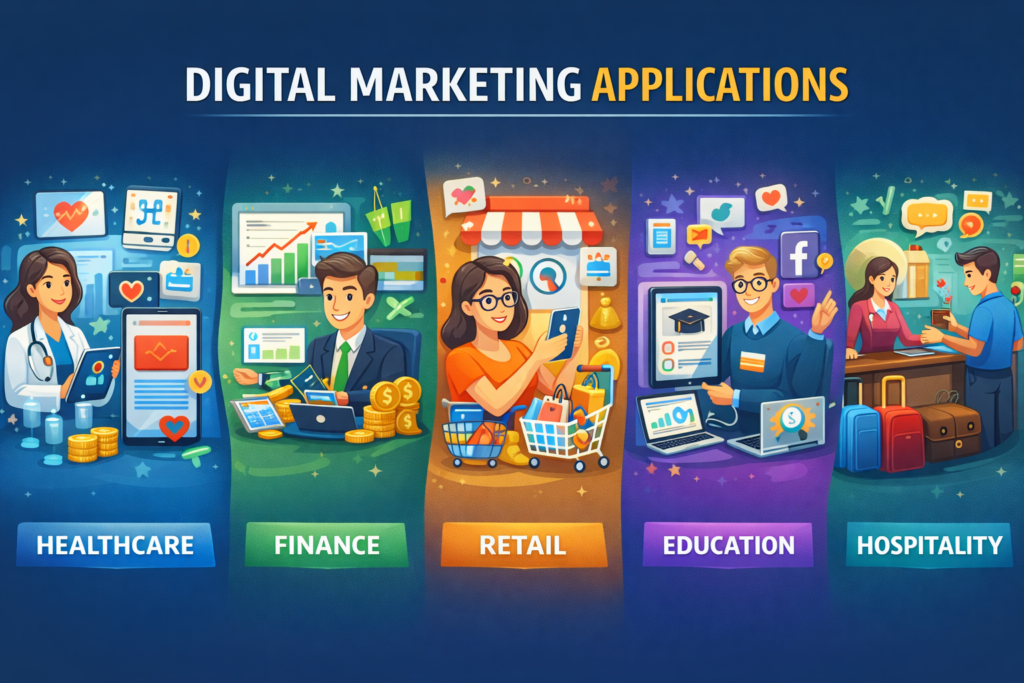
Digital marketing strategies apply across nearly every industry, enabling organizations to connect with audiences in scalable ways.
- Healthcare: Hospitals and clinics use SEO and content marketing to educate patients and improve local search visibility, as discussed in resources like SEO for Hospitals and Healthcare Website.
- Financial services: Banks and fintech companies use content marketing, email campaigns, and search advertising to generate qualified leads.
- Education: Online academies and universities rely on digital marketing to attract prospective students and promote courses.
- Retail and ecommerce: Retail businesses combine SEO, social media marketing, and paid ads to increase product visibility and online sales.
- Hospitality: Hotels and travel companies use search optimization and review management to attract bookings and build trust.
Across industries, digital marketing strategies help organizations create scalable customer acquisition systems.
Benefits
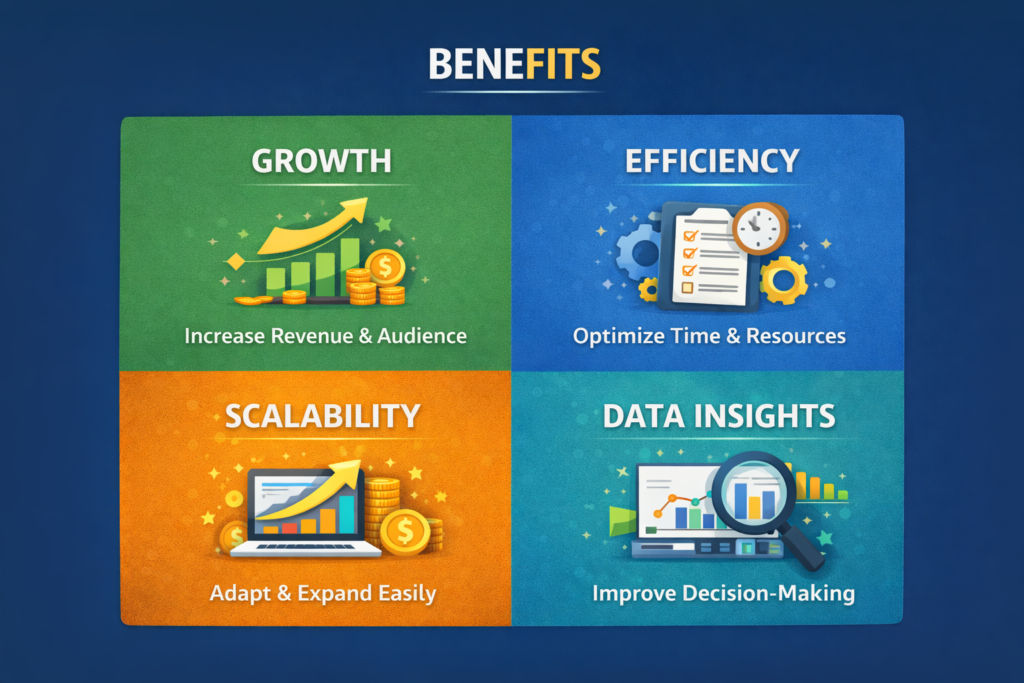
Effective digital marketing strategies deliver measurable operational and business advantages.
- Improved online visibility: SEO and content marketing increase search engine rankings and brand discovery.
- Faster customer acquisition: Paid advertising and targeted campaigns generate leads quickly.
- Operational efficiency: Automation and analytics reduce manual marketing effort while improving results.
- Scalable growth: Digital channels allow businesses to expand marketing reach without proportional cost increases.
- Better user experience: Optimized websites and personalized communication improve engagement.
- Consistent brand messaging: Structured marketing strategies maintain consistent communication across channels.
- Data-driven decision making: Analytics tools provide insights that guide marketing investments and campaign adjustments.
These benefits help organizations build reliable digital growth systems.
Future Outlook
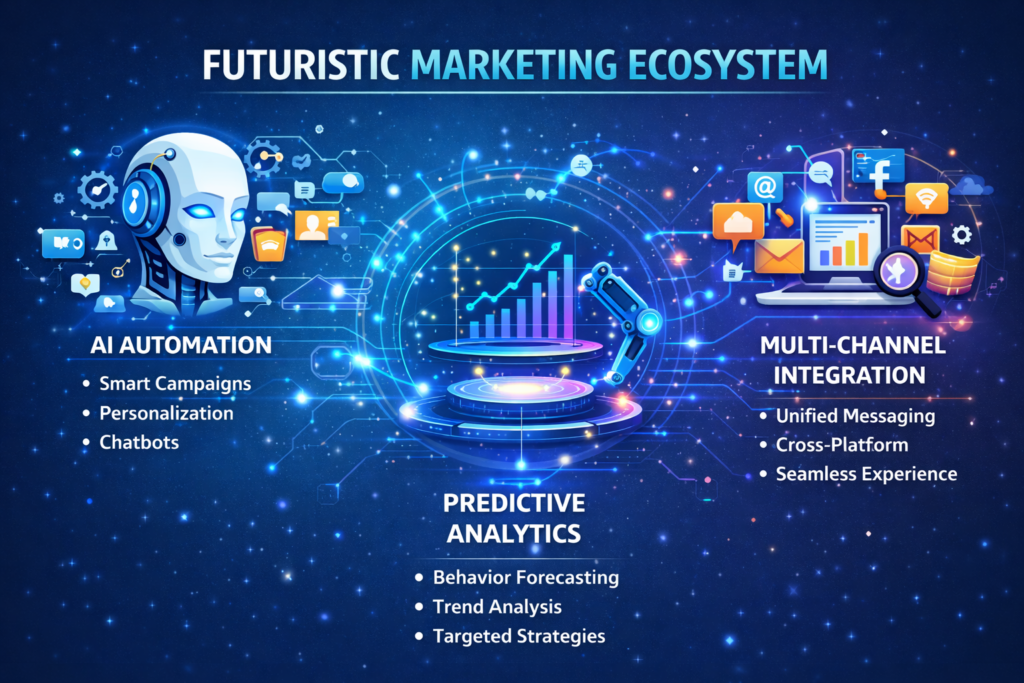
Digital marketing continues to evolve as technology and consumer behavior change.
One major trend is AI-assisted marketing workflows, where automation tools support content creation, campaign optimization, and audience segmentation.
Multichannel integration is also becoming more sophisticated. Businesses are increasingly combining search marketing, social media, and email campaigns into unified customer journeys.
Another emerging area is predictive analytics, where machine learning models forecast customer behavior and guide campaign decisions.
Improved privacy governance and consent management will also play an important role as regulations evolve globally.
Ultimately, the future of digital marketing will focus on human-AI collaboration, where technology enhances strategic decision-making rather than replacing marketers.
Organizations that adopt structured, data-driven strategies will be best positioned to compete in this evolving landscape.
FAQs
Digital marketing strategies are structured plans that use online channels like SEO, social media, paid advertising, and content marketing to attract and convert customers.
They help businesses reach target audiences online, increase brand visibility, and generate measurable revenue growth.
The most effective approach is usually a combination of SEO, content marketing, and paid advertising working together.
SEO typically requires three to six months before significant traffic improvements appear, depending on competition and optimization quality.
Conversion rate optimization improves website performance by increasing the percentage of visitors who complete desired actions like purchases or form submissions.
Yes. Digital marketing allows small businesses to compete with larger brands through targeted campaigns and cost-efficient strategies.
Content attracts search traffic, educates audiences, and builds trust with potential customers.
Metrics such as traffic, leads, conversions, and return on investment help evaluate campaign performance.
Conclusion
Digital marketing strategies have evolved from simple online promotion to structured systems that integrate traffic acquisition, content development, and conversion optimization.
Organizations that treat marketing as a coordinated ecosystem—rather than isolated campaigns—achieve stronger and more predictable growth. By combining SEO, paid advertising, content marketing, and analytics, businesses can build scalable customer acquisition pipelines.
Equally important, effective strategies rely on human expertise supported by technology. Data insights guide decisions, while experienced marketers refine messaging, optimize campaigns, and adapt to changing algorithms.
As digital ecosystems continue to evolve, businesses that implement integrated, data-driven marketing strategies will remain competitive in increasingly complex online markets.
For further information or media queries please visit:
www.adclickr.com

About the author
Ujjwal Kumawat
I specialize in SEO, website development, Google Ads and online business growth strategies. Through my blogs, I share practical insights, marketing tips and proven strategies to help businesses improve their online visibility, generate more leads and grow faster in the digital space.