ChatGPT now has over 800 million weekly users. Some brands are already making it their single biggest source of new traffic — without spending a penny on ads. AI-generated answers are changing how people find brands, products, and services — and that shift demands a new approach.
GEO (Generative Engine Optimization) is the practice of structuring your brand and content so AI platforms cite you in their generated answers. Where traditional search engine optimization earns you a ranking, GEO earns you a mention inside the answer itself. For businesses in 2025, that distinction is the difference between being discovered and being invisible.
This guide covers exactly what GEO is, how it differs from SEO, five strategies to implement it, and the mistakes to avoid.
What Exactly Is GEO (Generative Engine Optimization)?
GEO is to AI search what traditional SEO is to Google’s blue links — but the goal shifts from earning a rank to earning a citation. When someone types “what is the best project management tool?” into ChatGPT, the brands that appear in that answer have structured their content in a way that makes AI systems choose them. That is GEO at work.
A strong GEO strategy rests on four pillars:
- Content discoverability — AI can find, read, and extract your content clearly
- Entity clarity — AI understands exactly what your brand is and which category it belongs to
- Multi-platform presence — your brand appears on the sources AI tools trust, not just your website
- Technical accessibility — AI crawlers can access and render your pages without barriers
GEO vs SEO — What Is the Difference?
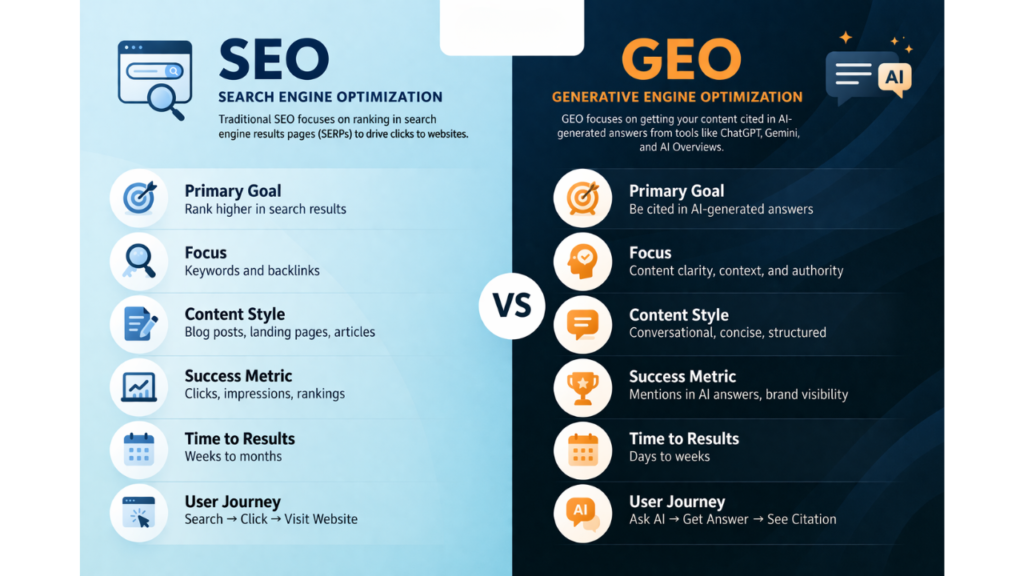
GEO does not replace SEO — it builds directly on it. A solid SEO strategy is the foundation GEO requires. Without it, even the best GEO tactics will underperform.
| What Changes | Traditional SEO | GEO (Generative Engine Optimization) |
|---|---|---|
| Primary goal | Rank in top search positions | Be cited in AI-generated answers |
| Success metrics | Rankings, clicks, organic traffic | Citations, brand mentions, share of voice |
| How users find you | Click through to your website | AI includes your brand in its response |
| Key platforms | Google, Bing | ChatGPT, Google AI Overviews, Perplexity, Gemini |
| How credibility is built | Backlinks and domain authority | Consistent brand mentions across trusted platforms |
“Think of SEO as earning your spot in the index. GEO is earning your spot in the answer. Both matter — but they require different strategies.”
Why GEO Matters Right Now
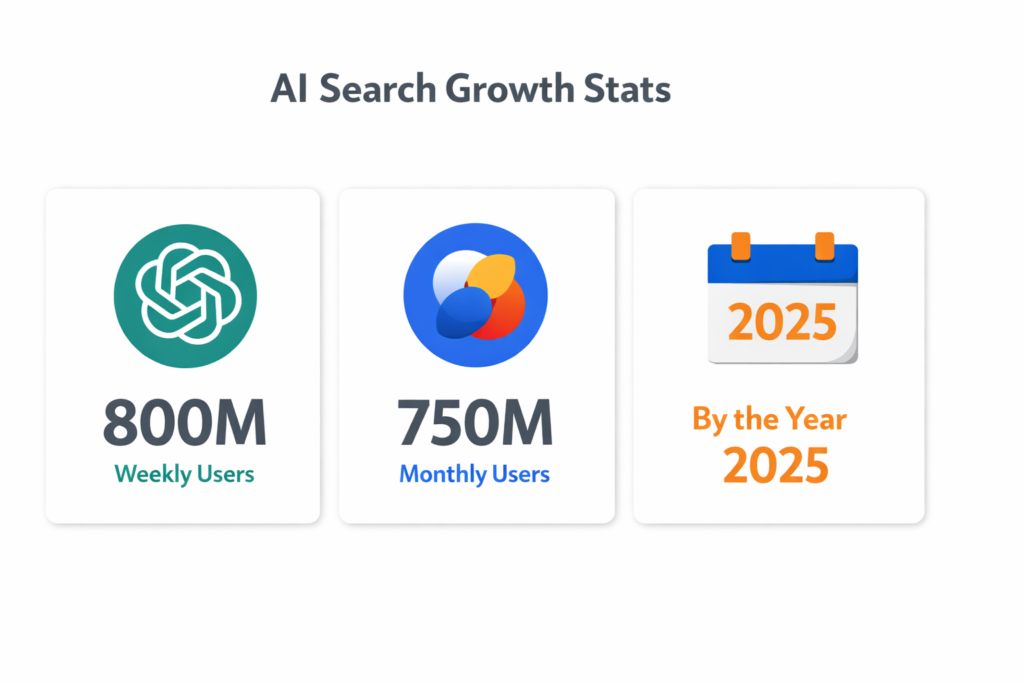
The numbers are hard to ignore. According to Semrush research:
- ChatGPT has over 800 million weekly active users
- Google’s Gemini app has surpassed 750 million monthly users
- AI Overviews now appear in at least 16% of all Google searches — significantly higher for comparison and high-intent queries
For bootstrapped form-builder Tally, ChatGPT became its single biggest referral source. They didn’t run paid campaigns. Their content appeared in AI answers because it was structured in a way AI systems trust and cite.
So what structural traits do those brands share? Here are the five strategies that drive consistent AI visibility.
GEO vs SEO vs AEO
| Factor | SEO | AEO | GEO |
|---|---|---|---|
| Goal | Rank in Google | Answer questions | Get cited in AI |
| Platform | Voice assistants | ChatGPT, Perplexity | |
| Output | Links | Answers | AI mentions |
| Strategy | Keywords | Structured answers | Entity + citations |
10 GEO Optimization Techniques (2026)
- Use clear definitions
- Add FAQ sections
- Build brand mentions
- Use schema markup
- Write simple sentences
- Get listed on trusted sites
- Create comparison content
- Use structured headings
- Add data + stats
- Keep content updated
Adclickr’s GEO Strategy
- SEO = foundation
- GEO = visibility in AI
- Focus on citations, not just rankings
- Build presence beyond website
Latest AI stats (E-E-A-T boost)
- ChatGPT → 800M+ weekly users
- Google AI Overviews → growing fast
- Perplexity → increasing adoption
5 GEO Strategies to Get Your Brand Mentioned in AI Answers
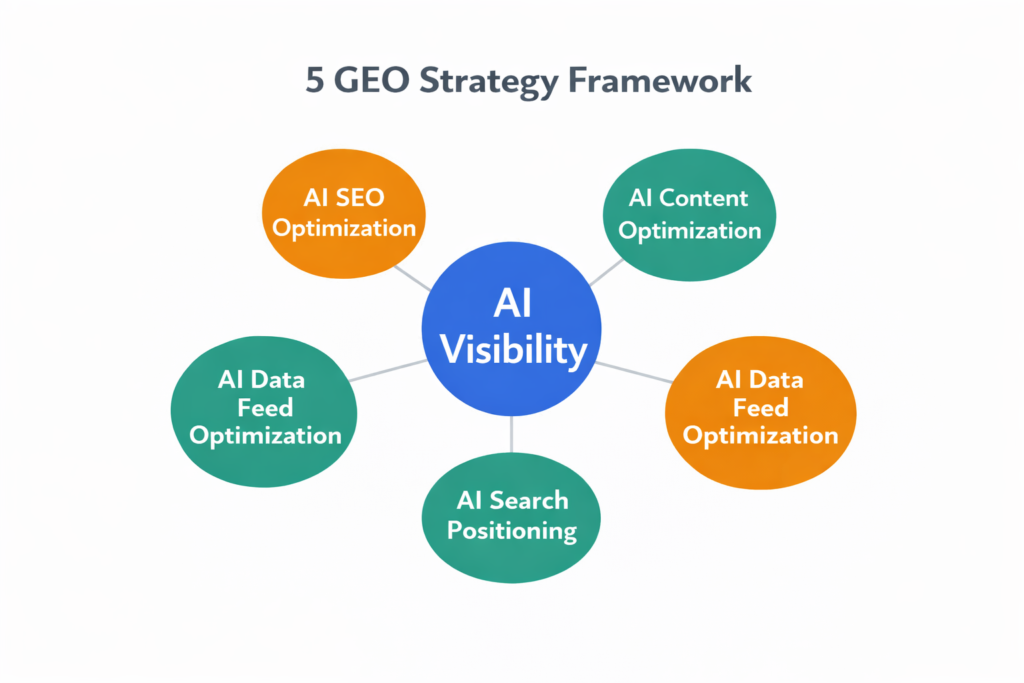
These strategies come from tracking 2,500+ AI prompts across ChatGPT, Google AI Mode, and Perplexity. The brands that appeared consistently shared specific structural characteristics — and these five strategies address each one.
Strategy 1 — Build a Strong SEO Foundation First
AI systems surface content they can consistently access, render, and trust. Your technical SEO foundation matters more than ever — not just for Google rankings, but as the infrastructure that makes AI visibility possible. AI systems assess E-E-A-T signals — Experience, Expertise, Authoritativeness, and Trust — when deciding which content to reference. Content that lacks these signals is less likely to be cited, regardless of how well-written it is.
Strategy 2 — Make Your Brand’s Identity Crystal Clear
AI platforms cross-reference signals from LinkedIn, Crunchbase, G2, and industry publications to understand who you are. This is called “entity clarity” — and it directly affects whether AI systems categorise your brand correctly. Consider monday.com: when AI crawls the web, it encounters “monday” in countless unrelated contexts. Clear, consistent descriptions across monday.com’s site and third-party profiles tell AI this refers to project management software — not the day of the week.
Align your brand description, schema markup (structured data that tells search engines what your content means), and all third-party profiles so they describe the same thing, the same way. When signals are consistent across sources, AI categorises and references your brand with greater confidence.
Strategy 3 — Write Content That AI Can Easily Extract
AI retrieves specific passages — not whole pages — and reassembles them into an answer. Therefore, how you write each sentence matters as much as what you write. Compare these two examples:
Hard to extract: “There are several reasons this approach works well. Once you try it, most people notice a big improvement. That is why many marketers use it.”
Easy to extract: “Adding structured data to your key product pages helps AI systems categorise your brand accurately. This increases the likelihood of being cited in relevant AI-generated answers.”
The second version states the action, the mechanism, and the outcome in two sentences — that is what makes it extractable. Apply this to every definition, data point, and how-to explanation in your content strategy.
Strategy 4 — Build Presence Beyond Your Website
Reddit, LinkedIn, and YouTube are consistently among the top-cited domains by leading AI platforms. Your homepage alone is not enough. Build two types of presence:
- Owned presence: content you create on other platforms — YouTube product demos, LinkedIn thought-leadership articles, participation in relevant subreddits
- Earned mentions: independent references on G2, Trustpilot, industry journalism, and community forums
When AI systems encounter both owned and earned signals, they build a comprehensive, trustworthy picture of your brand. The most effective way to accelerate this is to earn quality backlinks and brand mentions from sources AI already trusts.
Strategy 5 — Measure AI Visibility as a Separate Metric
Google Analytics and Google Search Console only track what happens after a click — they cannot capture AI-driven discovery or attribution. This is the “measurement blind spot” most brands ignore. Track these four AI-specific metrics instead:
- Citation frequency — how often AI platforms mention your brand
- Share of voice — your mention rate compared to competitors across AI answers
- Context — which specific prompts trigger your brand mentions
- Sentiment — whether those mentions are positive, neutral, or negative
Without these metrics, you are measuring only half of your organic search performance.
Common GEO Mistakes to Avoid
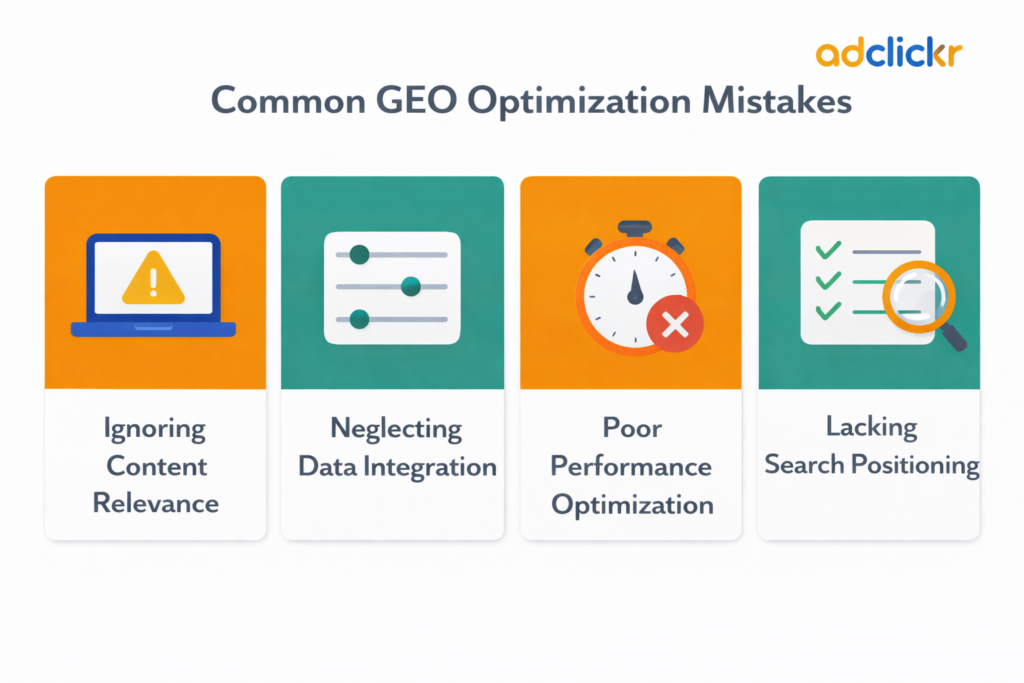
Most brands make at least one of these errors when starting with generative engine optimization — and avoiding them puts you ahead of the majority of your competitors.
- Treating GEO as a one-time task — AI citations shift between 40–60% month to month; ongoing effort is required.
- Ignoring platforms beyond your website — Reddit, YouTube, and LinkedIn are key sources AI pulls from; your homepage alone is not enough.
- Optimising only for Google — ChatGPT, Perplexity, and Gemini each weigh signals differently; a brand visible in Google results may be invisible in ChatGPT.
- Using GA4 as your only measurement tool — standard analytics cannot track AI citations; you are operating blind without dedicated AI visibility monitoring.
Frequently Asked Questions About GEO (Generative Engine Optimization)
GEO (Generative Engine Optimization) is the practice of optimising your brand and content to earn citations in AI-generated answers. It applies to tools like ChatGPT, Google AI Overviews, and Perplexity — wherever AI assembles responses rather than simply listing links.
No — GEO builds on SEO but pursues a different goal. SEO targets rankings and clicks in traditional search results. GEO targets citations and mentions inside AI-generated responses. Both disciplines work together and neither replaces the other.
Three core requirements drive consistent AI citations: entity clarity (AI knows exactly what your brand is), extractable content structure (AI can pull precise passages from your pages), and multi-platform presence on the sources AI tools already trust.
Yes. Niche clarity and consistent expertise signals matter more than brand size. A well-structured small-business site with strong entity signals can outperform a large brand with weak GEO fundamentals.
Track AI-specific metrics: citation frequency, share of voice in AI answers, the context of your mentions, and sentiment. Google Analytics and Search Console cannot capture these — you need dedicated AI visibility monitoring tools.
GEO is a long-term discipline. Structural improvements — like clearer entity signals and extractable content formatting — can influence AI citations within weeks. Broader authority signals across trusted platforms build over months of consistent effort.
Start Optimising for AI Search Today

GEO is not a future trend — it is actively shaping brand discovery right now. Applying the five strategies in this guide gives your brand a consistent, structural presence across the AI platforms your audience already uses. At Adclickr, we help businesses build visibility in both traditional and AI-driven search.
Ready to find out how your brand performs in AI search? Start with a free GEO and SEO audit from our team — and get a clear picture of exactly where you stand.
Looking to audit your existing SEO performance first? Read our guide on how to perform an SEO audit.

About the author
Ujjwal Kumawat
I specialize in SEO, website development, Google Ads and online business growth strategies. Through my blogs, I share practical insights, marketing tips and proven strategies to help businesses improve their online visibility, generate more leads and grow faster in the digital space.