Websites using schema markup appear in Google rich results far more often. Yet fewer than one in three websites uses it correctly. Schema markup adds structured data code to your HTML. Which tells search engines what your content means not just what it says.
It is one of the most impactful fixes in any technical audit. It also shapes how AI platforms like ChatGPT and Google AI Overviews cite your brand. This guide covers seven schema types, JSON-LD implementation, AI search visibility, and the most common mistakes to fix.
What Is Schema Markup and Why Does It Matter?
Think of your website as a book. HTML is the text. Schema markup is the index, the chapter headings, and the author biography. It gives search engines context without reading every word.
Structured data is the broader category any machine-readable labelling of web content. Google, Microsoft, Yandex, and Yahoo jointly maintain Schema.org the vocabulary standard that defines how you write that labelling.
| Factor | Without Schema Markup | With Schema Markup |
|---|---|---|
| Search result appearance | Plain blue link + meta description | Rich result with ratings, FAQs, images, or breadcrumbs |
| SERP features unlocked | None | Featured snippet, FAQ dropdown, Knowledge Panel, Product listing |
| AI search citability | Lower AI has less content categorization confidence | Higher structured signals help AI extract and cite content accurately |
| Technical audit status | Missing structured data flagged as an issue | GSC Enhancements report shows valid schema audit passes |
Important: Schema markup does not directly change your rankings. But it changes how prominently you appear, how often users click, and increasingly, whether AI platforms cite your brand as a trusted source.
Not sure where your site stands? Get a free SEO report to see your current structured data gaps.
The 7 Most Important Schema Markup Types (With Examples)
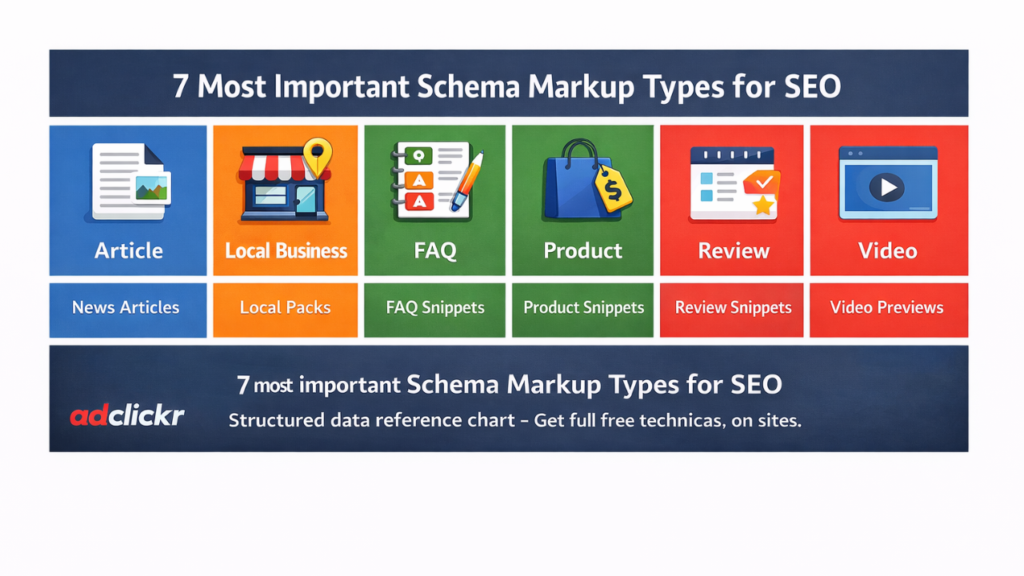
Schema.org defines over 800 types of structured data. For most websites, 7 types cover the majority of use cases. They also deliver the highest SERP impact per hour spent.
| Schema Type | Best For | Rich Result Unlocked |
|---|---|---|
| Article / BlogPosting | Blog posts, news, editorial content | Top Stories carousel, article rich result |
| FAQPage | Pages with Q&A sections | Expandable FAQ dropdown in Google results |
| LocalBusiness | Physical businesses and service areas | Knowledge Panel, Google Maps integration, star ratings |
| Product + Review | E-commerce product pages | Star ratings, price, and availability in SERPs |
| HowTo | Step-by-step guides and tutorials | Numbered steps rich result in Google |
| VideoObject | Pages with embedded video content | Video thumbnail, duration, and description in SERPs |
| Event | Upcoming events, webinars, conferences | Event listing with date, location, and ticket link |
You can use multiple schema types on the same page. A blog post can combine Article + FAQPage schema at once. This gives you an editorial rich result AND expandable FAQ dropdowns in one listing.
Creating the type of content that qualifies for these rich results requires both technical implementation and strong editorial quality. Our content writing services deliver both.
Local Business schema works best alongside dedicated local SEO services. Together, they maximize your visibility in Google Maps and search results.
How to Implement Schema Markup Using JSON-LD A Step-by-Step Guide
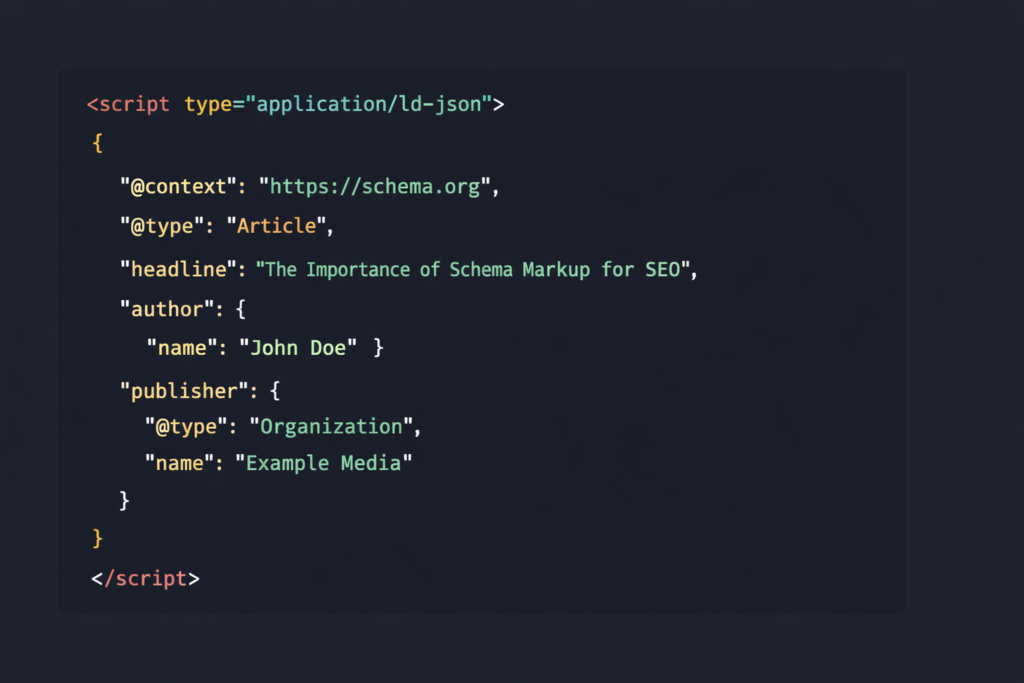
Google recommends JSON-LD as the preferred schema format. JSON-LD stands for JavaScript Object Notation for Linked Data it encodes structured data in a separate script tag. It sits inside a script tag in your page head. It never touches your visible HTML making it the safest method to use.
- Identify the primary content type of the page blog post, product, service, event, FAQ, or local business
- Choose the matching schema type from schema.org and note its required and recommended properties
- Write the JSON-LD code block with all required properties populated from your actual page content
- Paste the code inside a
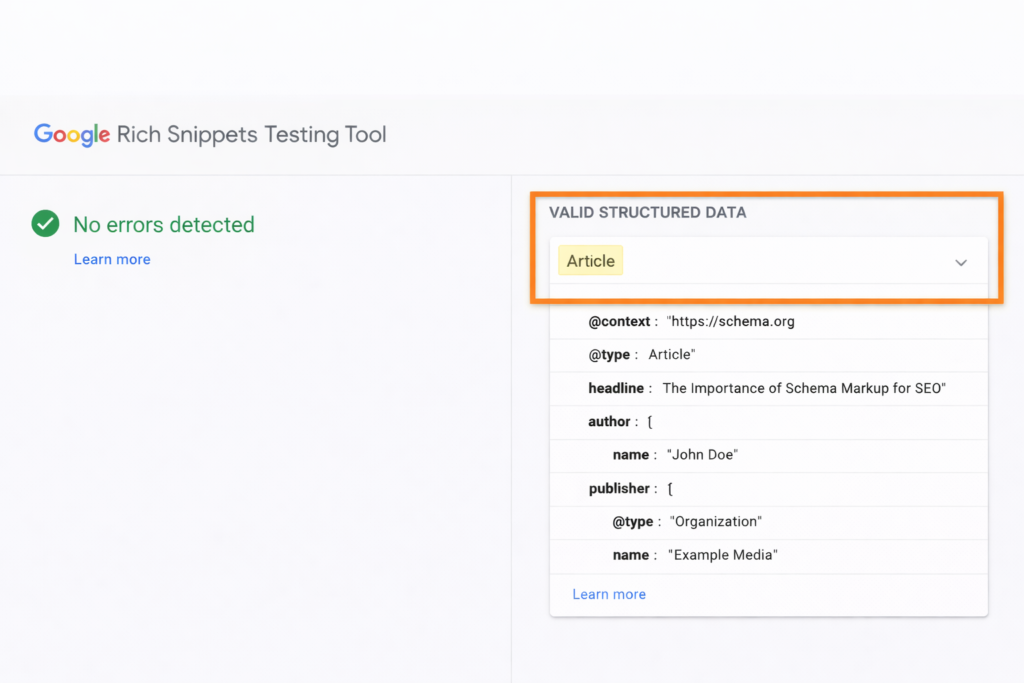
<script type="application/ld+json">tag placed in the page head section - Validate the schema using Google’s Rich Snippets Testing Tool before publishing the page
{
  "@context": "https://schema.org",
  "@type": "Article",
  "headline": "Schema Markup Complete Guide",
  "author": {
    "@type": "Person",
    "name": "Adclickr Team"
  },
  "datePublished": "2025-03-01",
  "image": "https://adclickr.com/images/schema-guide.jpg",
  "publisher": {
    "@type": "Organization",
    "name": "Adclickr",
    "url": "https://adclickr.com/"
  }
}
WordPress users can install Yoast SEO or Rank Math to auto-generate basic Article and breadcrumb schema. For FAQ Page, Product, Local Business, and How To schema, use manual implementation or a dedicated service. This ensures accuracy and ongoing validation.
Build schema into your website development process from the start. Treating it as an afterthought costs time and accuracy.
Schema Markup and AI Search: The New Visibility Layer
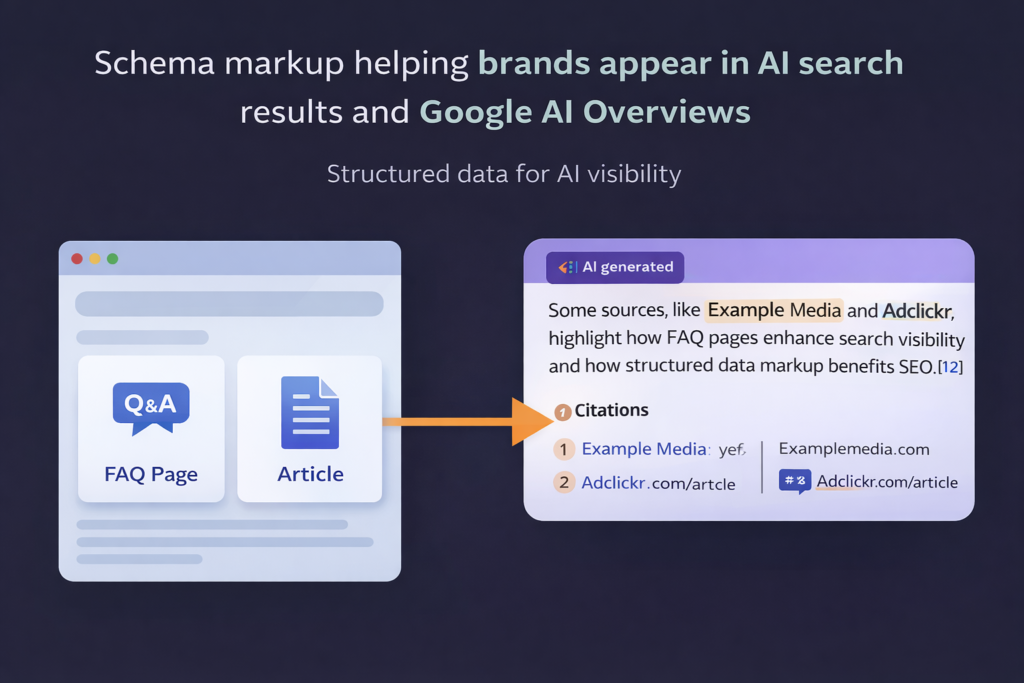
Most schema markup guides focus only on Google rich results. In 2025, structured data plays a second equally important role it is now a key trust signal for AI search platforms including ChatGPT, Google AI Overviews, and Perplexity.
AI platforms prefer content your team clearly categorizes and structures for easy extraction. FAQ Page schema presents Q&A content as self-contained, discrete answers exactly what AI systems cite. Article schema with authorship and publish date signals credibility and recency to AI retrieval systems.
If you are new to this space and want to understand how structured data fits into the bigger picture, our guide on what is SEO service explains the full landscape.
Note: Schema markup is now part of your AI search strategy not just your technical audit. Brands with clean, validated structured data get cited in AI-generated answers more consistently than those without it.
Every FAQ Page, Article, and Local Business schema you implement today achieves two goals simultaneously it strengthens your traditional SERP appearance and raises your chances of appearing in AI-generated answers.
Schema Markup in Your Technical Audit: 6 Things to Check Right Now
If you have been wondering how to know if your SEO is working, schema errors in your technical audit are often the silent culprit behind stalled rankings. These 6 checks cover the most common schema issues we find during site reviews.
- Missing schema on key pages: every blog post, service page, FAQ page, and product page needs at least one relevant schema type; pages without schema are invisible to rich results
- Broken or invalid JSON-LD: a single missing comma or incorrect property name breaks the entire schema block; always validate after every change using Google’s Rich Snippets Testing Tool
- Wrong schema type for the content: using Article schema on a product page, or Event schema on a service page, sends confusing signals to both Google and AI platforms
- Schema properties not matching visible page content: if your JSON-LD shows a different price, author, or date than what users see on the page, Google will suppress your rich result as misleading
- Multiple conflicting schemas on one page: two FAQ Page schemas or two Article schemas on the same page generate errors in Google Search Console that actively harm your technical audit score
- Schema never re-tested after content updates: every time you update a page’s content, check that the schema still reflects it accurately; build schema review into your publishing workflow
Validation tools: Google Rich Snippets Testing Tool (URL or pasted code), Google Search Console → Enhancements report (sitewide schema error overview), Schema.org Validator (vocabulary compliance check).
Remember: Schema errors are one of the most commonly overlooked issues in a technical audit and among the fastest fixes with immediate, measurable SERP impact.
5 Common Schema Markup Mistakes That Cost You Rich Results

Therefore, even well-intentioned teams make these five errors and lose their rich results.
- Using the wrong schema type: the schema type must match the primary purpose of the entire page, not just a mention of the topic within the page
- Skipping required properties: every schema type has mandatory fields; omitting even one prevents the rich result from appearing in search results
- Schema not matching visible content: if your JSON-LD describes a product at ₹999 but the page shows ₹1,299, Google will suppress your rich result as potentially deceptive
- Adding schema to irrelevant pages: schema only helps when it accurately describes the page; applying it everywhere without relevance creates errors and no SERP benefit
- Never testing or monitoring after publishing changes: a broken schema generates active errors in your Google Search Console Enhancements report that hurt your technical audit status
FAQ’s
Schema markup uses structured data code typically written in JSON-LD format placed directly in your website’s HTML to help search engines understand what your content means, not just what it says. It enables rich results like star ratings, FAQ dropdowns, and Knowledge Panels in Google search.
Schema markup is not a direct ranking factor. However, it improves rankings indirectly in three ways: rich results attract significantly higher click-through rates, better content categorization helps Google index pages more accurately, and structured data increases AI search citation frequency all of which compound over time.
Structured data is the broad concept of labelling web content in a machine-readable format. Schema markup follows the specific vocabulary standard from schema.org that you use to write it. JSON-LD, microdata, and RDFa are the three formats Google recommends JSON-LD for all new implementations.
FAQ Page schema delivers the fastest visible impact by adding expandable Q&A dropdowns to your search result. Article schema is essential for all blog content. Local Business schema is critical for any business with a physical location or service area. Implement these three first, then expand to Product, How To, and Video Object as relevant.
AI platforms like ChatGPT, Google AI Overviews, and Perplexity favor content that you clearly categorize and structure for fast extraction. FAQ Page schema presents your answers as self-contained passages exactly the format AI systems cite most confidently. Article schema with clear authorship and dates signals credibility to AI retrieval systems.
Use Google’s Rich Snippets Testing Tool paste your URL or JSON-LD code to see errors, warnings, and a rich result preview. In Google Search Console, go to Enhancements in the left sidebar for a full sitewide report of all detected schema types and their error status.
Implement Schema Markup Today Rank Better in Search and AI
Schema markup connects your content to search engine understanding and now to AI platform citability simultaneously. Every technical audit should include a full schema review missing types, broken JSON-LD, mismatched properties, and untested implementations are all fixable issues with immediate SERP impact.
At Adclickr, we implement, validate, and continuously monitor schema markup as part of every SEO engagement. Our team handles the technical setup so you can focus on your business.
Also read: how to identify the right content length · how to know if your SEO is working