Instagram has rolled out a major shift in how content is discovered one that goes far beyond the app itself. Public posts from creator and business accounts are now being crawled and indexed by search engines, allowing Instagram content to appear directly in web search results.
For brands and marketers, this change turns every Instagram post into a searchable digital asset. Your content no longer lives only inside the platform’s ecosystem it contributes to your overall online visibility.
At the center of this shift is keyword strategy. The words you use across your Instagram profile and posts directly influence how both Instagram and search engines understand your content, categorize your account and decide who should see it.
To help you navigate this new phase of Instagram discovery, this guide breaks down how Instagram’s keyword ecosystem works and how to choose terms that support long-term visibility and growth.
Read on to learn how strategic keyword selection can strengthen Instagram SEO and improve discoverability across both social and web search.
How Web Search Engines Read and Rank Instagram Content
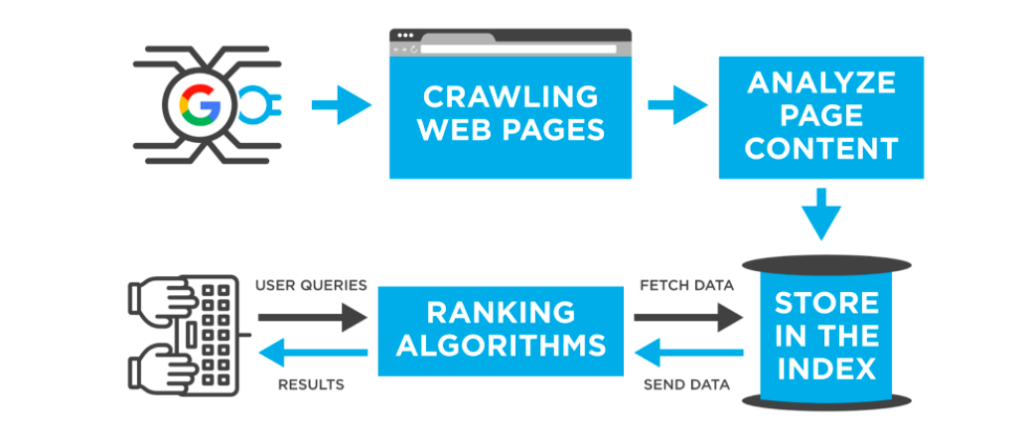
As Instagram content becomes part of the open web, search engines evaluate each post as a structured data source. They analyze text, media context and engagement patterns to determine how relevant a post is to a user’s search query.
Here are the primary signals search engines use to assess Instagram content visibility:
Relevance
Search systems scan all textual elements associated with a post to determine topical alignment. This includes captions, alt text, on-screen text, audio titles and location tags. Clear, descriptive language helps search engines accurately match your content with user intent.
Account Activity Signals
While Instagram personalizes in-app discovery, external search engines focus on broader behavior patterns. Posts that generate outbound clicks, website visits, embeds or referral traffic signal higher interest and authority, increasing their likelihood of appearing in search results.
Engagement Indicators
Strong engagement suggests content quality. Metrics such as likes, comments, shares, saves and watch time act as trust signals. Posts with meaningful interaction are more competitive for higher-volume or more challenging search queries.
Content Metadata
Search engines rely heavily on metadata to understand content themes. Captions, alt text and location data help systems classify posts accurately. Notably, a post can rank for relevant queries even without hashtags, as modern search prioritizes context and descriptive language over tag-based signals.
Together, these factors mean Instagram posts now compete within a broader search ecosystem. Strategic keyword usage supports social media SEO by helping search engines interpret your content and deliver it to users actively searching for related topics.
How to Research Keywords for Instagram
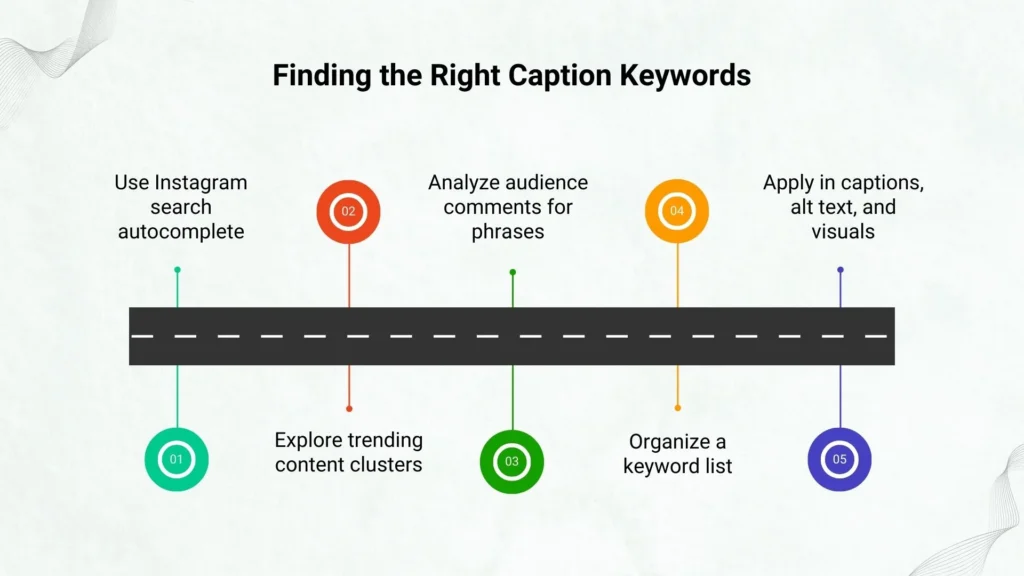
Effective keyword research is essential for Instagram search optimization. However, success depends on using a clear, repeatable process tailored to how people actually search and engage on the platform.
Below are four practical steps that help identify keywords your audience genuinely uses.
Step 1. Categorize Your Keywords
Not all keywords serve the same function on Instagram. Grouping them by intent allows for more natural application across your profile and content.
Primary keywords define your core content themes. Secondary keywords support those themes and often appear in captions or hashtags. Long-tail keywords are more specific, conversational phrases that work well in comments, Stories and detailed captions.
This layered approach gives you flexibility. Instead of repeating the same phrase everywhere, you can rotate language across formats while maintaining consistent relevance signals supporting discoverability without making content feel forced or overly optimized.
Step 2. Analyze Competitors and Industry Leaders
One of the most reliable Instagram growth strategies is studying how high performing accounts communicate. Rather than focusing solely on keyword volume, analyze how language is used in real captions, pinned comments and audience replies.
Manual review often reveals phrasing that tools miss natural expressions, questions and terminology your audience actually relates to. This insight supports Instagram profile optimization by helping you mirror authentic language patterns that resonate within your niche.
Step 3. Use Instagram’s Native Tools
Instagram offers built in cues that make keyword research practical and actionable.
- Search and autocomplete show common phrases users actively type
- Hashtag suggestions help validate relevance and competition
- Instagram Insights reveal which posts reach non-followers, indicating topics that attract new audiences
By observing which terms surface repeatedly and which posts perform best, you gain direct insight into real user behavior. These signals allow you to base decisions on data rather than assumptions.
Step 4. Validate With External Tools
External keyword tools can help generate ideas or confirm demand, but they should never replace in-platform validation. Instagram discovery behavior differs from traditional search engines, so relevance matters more than raw volume.
Use external tools to expand your keyword list, then validate those terms inside Instagram by reviewing how they appear in Reels, tags and search results. This prevents reliance on metrics that don’t reflect how content is actually discovered on the platform.
How to Effectively Integrate Keywords Into Your Profile
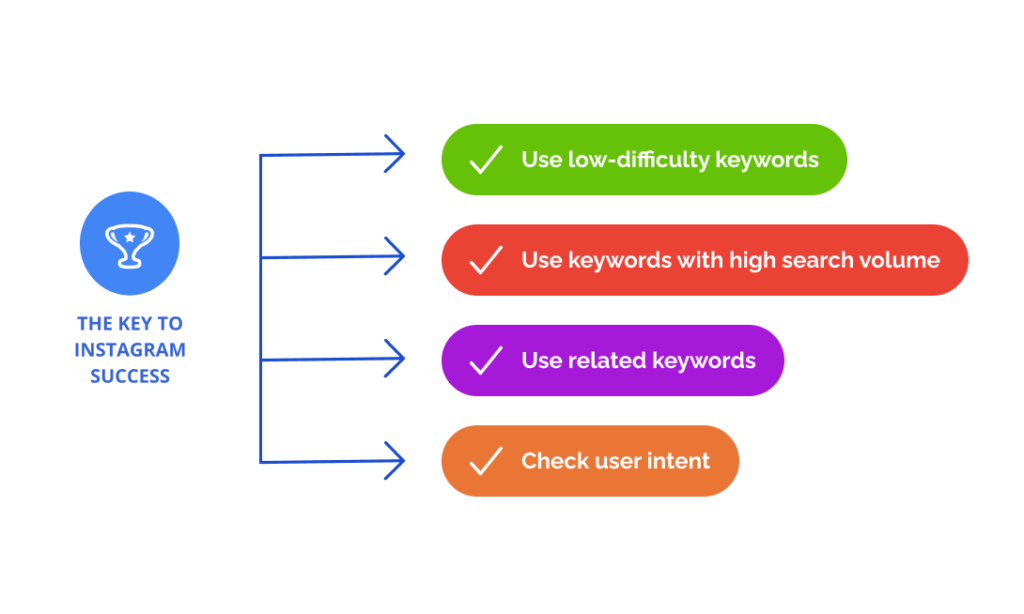
Once you identify the right keywords, placement becomes critical. Keywords must appear in areas that Instagram and search engines actively read.
Here’s how to apply them strategically across your profile and content:
- Name Field and Bio: Clearly define your niche using primary keywords. Simple, descriptive formats work best, such as “Social Media Consultant” or “Jaipur Digital Marketing Agency.”
- Captions: Write for people first. Integrate keywords naturally where they fit the message, including phrases like SEO optimized Instagram Caption when contextually relevant. Avoid stuffing or unrelated terms.
- Hashtags: Use a balanced mix of primary, secondary, niche and long tail hashtags. Avoid overly broad hashtags that offer minimal search value.
- Alt Text: Add concise, descriptive alt text with one relevant keyword. This improves accessibility and supports search engines in understanding your visuals. For deeper guidance, refer to resources like image alt text optimization best practices.
- Reels and On Screen Text: When appropriate, include keywords in text overlays. Both Instagram and search engines can read on screen text, contributing to indexing and relevance.
There is no single formula for Instagram content optimization. Visibility depends on consistency, clarity and alignment with real search behavior. Using the exact phrases your ideal audience would type into the search bar and repeating them naturally across your profile helps Instagram understand who you are and who should see your content.
FAQs:
No. Only public posts from creator and business accounts are eligible for indexing by search engines. Private accounts and personal profiles are not crawled.
Indexing timelines vary. It can take anywhere from a few days to several weeks depending on crawl frequency, account authority, engagement signals, and keyword relevance.
Natural language keywords in captions, bio, alt text, and on-screen text now carry more weight for search visibility. Hashtags still support discovery inside Instagram but are no longer the primary ranking factor.
Yes. Public Reels with descriptive captions, strong engagement, and keyword-rich context can appear in search engine results, especially for informational or trend-based queries.
Yes. Editing captions, changing keywords, or deleting posts can impact indexing and ranking. Significant edits may trigger re-crawling, temporarily affecting visibility.
Strengthen Your Instagram Marketing Strategy With Expert Support
Instagram search optimization now requires more than consistent posting or surface level tactics. As content becomes searchable across the web, keyword strategy, profile structure and engagement signals must work together to drive sustainable results.
Managing this ecosystem effectively takes experience, testing and a clear understanding of how social and search platforms intersect.
At Adclickr, we help brands turn Instagram into a measurable growth channel. Our team builds data driven Instagram and SEO strategies aligned with real search behavior and long-term visibility goals. From profile optimization to content planning, we focus on clarity, performance and trust.
Our services include:
- Social media marketing
- Social media management
- Brand positioning and growth strategy
- Instagram marketing
- Media production and product photography
- Content marketing and SEO-driven content creation
If you’re looking to improve reach, attract qualified audiences and strengthen visibility across both Instagram and web search, our team is ready to help.
Explore our work in Instagram marketing portfolios or get in touch to discuss a strategy tailored to your business goals.
Contact Adclickr today and turn your Instagram presence into a search-driven growth asset.